
Work Truck Steering Wheel Locked and Key Won't Turn: Bind, Worn Key or Worn Cylinder
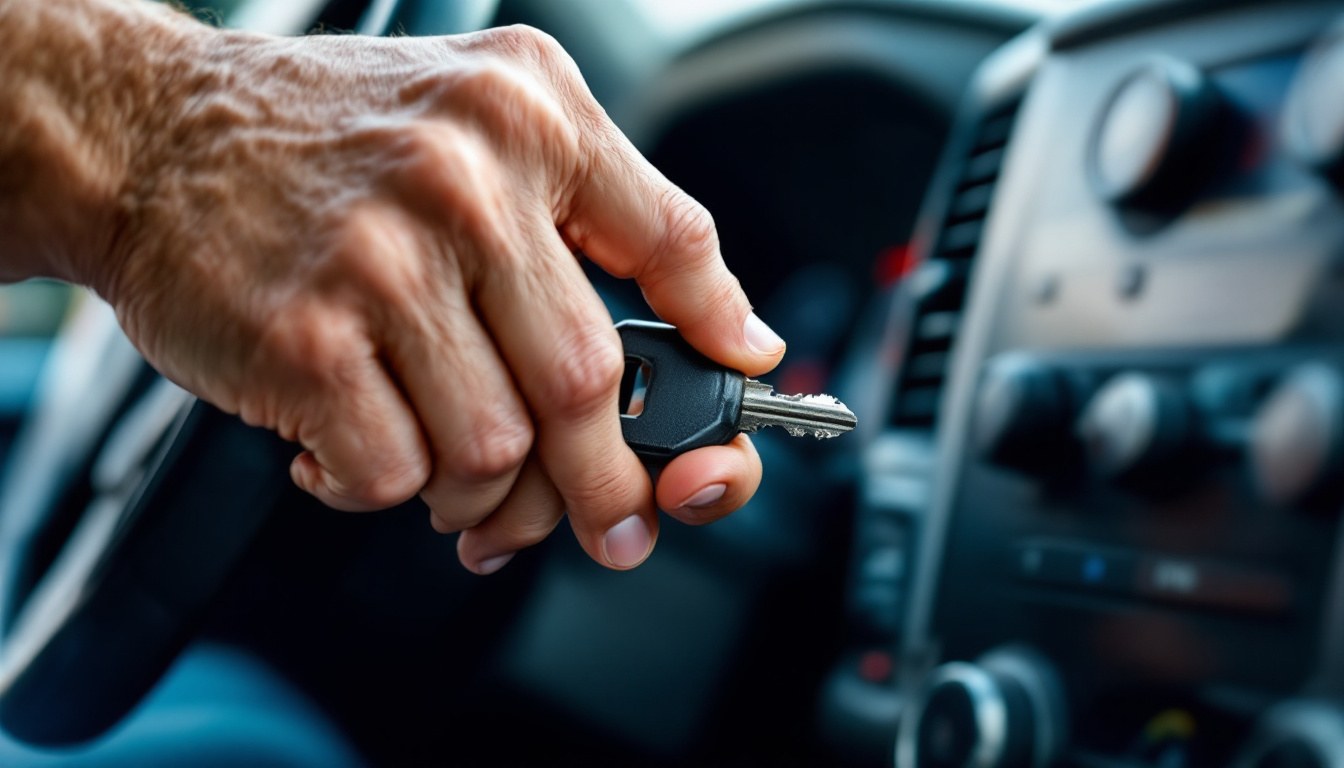
As of October 2026, a work truck with a locked steering wheel and a key that will not turn is most often a steering-lock bind, a worn key or a worn ignition cylinder. The bind costs nothing to fix. A worn key runs about $130–$250 to replace, a cylinder rebuild about $120–$280, and a new cylinder rekeyed to your key about $180–$380. We come to the truck anywhere in DFW — call (817) 813-8746.
Quick Answer: Why the Key Will Not Turn
1. The steering lock is bound against the wheel. When a truck is shut off and the wheel is turned, a steel pin drops into the steering column. If the wheels were against a curb or the driver leaned on the wheel, the pin is under load, and the ignition cylinder cannot retract it. This is by far the most common cause and the only one you can fix with your own hands.
2. The key is worn or bent. A key that has been in a toolbelt, a pocket of screwdrivers and a hundred ignitions a month stops matching the cylinder it was cut for. It may enter but not turn, or turn only when jiggled.
3. The cylinder is worn. A shared work truck can see thousands of starts. The internal wafers wear and the cylinder stops recognizing even a good key.
4. The ignition is damaged. Someone has forced it, a key has broken inside, or a theft attempt has left the cylinder deformed.
Start with the first one. It takes thirty seconds and no tools.
Step One: Free the Steering Lock
With the key fully inserted, turn the steering wheel gently left and right. One direction will move slightly; that is where the pin is loaded. Hold the wheel pressure in that direction and try the key with moderate, steady force. Do not hammer the key and do not use a pair of pliers, a wrench or a screwdriver on the key head, because the key blade is the weakest part of the whole system and it will shear. A key that breaks off inside the cylinder turns a free fix into a repair; the key broke off in ignition guide shows how that goes.
If the wheel moves slightly and the key turns, the problem is solved and probably tells you nothing about the key. A truck parked with its wheels cranked against a curb or a wheel stop is the classic setup, and drivers who park on loading docks or job sites that slope hit this one often. If the wheel does not move at all, or the key will not enter fully, stop and move to the next section.
Step Two: Look at the Key Before You Blame the Truck
Take the key out and look at it in good light. Compare it to the spare if one exists. Look for a blade that is bent, a worn tip, polished or rounded cuts, or a cracked head. A key whose cuts have rounded off will enter the cylinder but cannot lift the wafers high enough, which feels like a locked wheel but is really a worn key.
If the spare works and the primary does not, you have your answer, and the fix is a new key cut by code rather than copied from the worn one. Duplicating a worn key copies the wear. We cut replacement keys from the vehicle’s code whenever we can, which is a reason to call a locksmith rather than a hardware kiosk. Our key duplication page explains the difference.
Also note whether the key has a transponder chip. A cracked head on a chip key can be an immobilizer problem even if the blade still turns the cylinder, and it is cheaper to resolve before the truck is stuck. The key stuck in ignition article covers the reverse symptom, when the key goes in and will not come out.
Likely Causes and What They Cost
These are the ranges we quote for mobile work in DFW. The comparison most fleet managers should make is with a tow to a service lane, which can add $100–$250 before any repair begins.
| Cause | Typical DFW mobile range | How you recognize it |
|---|---|---|
| Steering lock bound against the wheel | No service needed | Wheel moves slightly; key turns when you hold pressure |
| Worn or bent key, spare works | $130–$250 for a replacement key | Spare turns the cylinder, primary does not |
| Worn cylinder, rebuildable | $120–$280 | Every key feels loose or catches; high-mileage truck |
| Cylinder replacement, rekeyed to your key | $180–$380 | Cylinder worn past rebuilding |
| Ignition switch, electrical | $150–$350 | Key turns but electrics are dead or partial |
| Theft or force damage, rebuild | $250–$500 | Visible damage, cracked column cover |
| Diagnosis when the cause is unclear | $75–$150, credited into the repair | Nothing above clearly fits |
The first row is the one to remember. A locked wheel is usually a driver technique problem, not a parts problem, and no invoice should result from it.
Why Shared Work Trucks See This More Often
A personal car goes through two or three starts a day. A work truck on a shared crew goes through a dozen, driven by whoever got to it first, parked wherever the job sent it. That produces three conditions that make a locked wheel more likely.
The first is the parking angle. Crews park on slopes, against curbs and at loading docks, and shut off with the wheels cranked. That loads the steering pin and makes a bind likely the next morning. The second is wear. Every start moves the wafers inside the cylinder, and a cylinder that has seen years of daily use stops tolerating small differences between keys. The ignition wear and shared drivers guide covers that pattern in depth.
The third is the key itself. A key copied from a copy is a degraded key. Fleets that never cut from the original code end up with keys several generations from the first, each a little less accurate. That is the quiet reason a cylinder that worked last month feels sticky today.
If the same truck binds repeatedly, the cylinder is probably worn. Our fleet ignition repair cost page prices rebuild versus replacement across a group of units, which is usually the better frame than one repair at a time.
Is It the Key or Something Electronic?
Many late-model trucks have no mechanical key cylinder in the ignition at all. A push-button truck with a locked wheel is a different problem from a keyed one. Some platforms use an electronic steering lock, a small motor that releases the wheel when the truck recognizes the fob and the brake is pressed. When that motor or its module fails, the wheel stays locked, the dash may show a message about the steering lock, and no amount of wheel wiggling helps.
If the dash shows a steering-lock message, a flashing security lamp or a “key not detected” warning, check the fob battery and try the spare first. If neither helps, the problem is electronic and belongs on the steering lock repair list, not the key list. An immobilizer fault can look similar; the key turns, nothing happens guide separates an electrical switch fault from a security fault.
A low main battery can also stop a push-button steering lock from releasing. If the truck has been sitting, check the battery before anything else. The fleet truck sat for months article walks through the order of checks.
When to Stop and Call a Pro
Call when the wheel will not move at all, when the key will not enter fully, when you see damage on the column or the cylinder, or when a key has already bent. Also call if you have tried the wheel trick several times without success; repeated force on a worn key is how a $130–$250 replacement key turns into an extraction job.
A mobile call means the truck does not leave. We work on the cylinder where it is parked, at the yard, job site or driveway, which avoids the tow and the lost day. The Denton crews and the Hurst shop yards get the same service as a Dallas dispatch. You will get a quote for the likely cause before we start, and if the cause changes, we tell you before we do anything else.
Real-World Example: The Plumbing Van That Would Not Turn
Situation: A plumbing van in a Tarrant County yard would not turn its key one Monday morning. The driver had tried for ten minutes, bent the head of the key slightly with a pair of pliers, and called in. The van had one key.
What we did: We freed a bound steering lock first, which did not work because the wheel did not move at all. The key was visibly rounded. We pulled the cylinder, rebuilt it, and cut a new transponder key from the vehicle’s code, then programmed a second key in the same visit.
Result: The van was running before the first dispatch, the cylinder no longer caught, and the company now had two keys instead of one.
Many of these calls start with a key that someone tried to force. The wheel is rarely the problem; the pliers are. — senior mobile technician, Metroplex Locksmith
Ownership, Licensing and Safety
For a company vehicle, we verify ownership before cutting a key or removing a cylinder: registration or insurance plus a photo ID, and a call to the fleet manager if the names differ. Locksmith licensing in Texas is the DPS Private Security Program; ask any vendor. The FTC’s consumer guidance describes the bait-and-switch pattern to avoid, ALOA and NASTF publish professional and vehicle-security standards, and locksmithing appears as a skilled occupation in Bureau of Labor Statistics data. If the column shows signs of forced entry, treat it as theft: report it, and note that the National Insurance Crime Bureau and your insurer will want details. Check the VIN against the NHTSA recall lookup too, since some ignition and steering-column components have been subject to recalls on certain models.
What to Have Ready When You Call
Tell us the year, make, model and trim, whether the truck has a keyed ignition or a push button, how many keys exist, and what the wheel does when you turn it. Say whether the key enters fully and whether it turns at all. And tell us where the truck is: a yard in Lewisville or a job site in Fort Worth is the same trip for us. If the truck has recent electrical work, mention it. Our ignition repair page lists what we handle on a call.
Frequently Asked Questions
Why will my work truck key not turn and the steering wheel will not move?
The most common cause is a steering lock that is bound against the wheel. Turn the wheel gently in each direction while holding light pressure on the key. If the wheel does not move at all, the key is probably worn or the cylinder has failed, and forcing it risks breaking the key.
Can I fix a locked steering wheel myself?
Often, yes. Gently rock the wheel left and right while turning the key. Never use pliers, a wrench or a hammer on the key. If the wheel or key will not move after a few careful tries, stop, because forcing a worn key is how it breaks off in the cylinder.
How much does it cost to fix an ignition cylinder that will not turn?
A replacement key typically runs $130 to $250, a cylinder rebuild about $120 to $280, and a new cylinder rekeyed to your existing key about $180 to $380. A bound steering lock costs nothing to free. Diagnosis is $75 to $150 and is credited into the repair.
Does a push-button work truck have a steering lock problem too?
It can. Some push-button platforms use an electronic steering lock that releases when the truck recognizes the fob. If the dash shows a steering lock message, try a fresh fob battery and the spare fob first. A failed lock motor or module needs a technician.
Will you come to the truck or does it need to be towed?
We come to the truck anywhere in Dallas-Fort Worth. Cylinder work, key cutting and programming are done where the truck is parked, so there is no tow to a service lane. That saves the tow cost of about $100 to $250 and the lost day.
Should I replace all the keys on a truck with a worn ignition?
Often it is sensible. Keys copied from copies lose accuracy, and a worn cylinder will keep catching on them. We cut replacement keys from the vehicle's code, so every key matches the cylinder as built, and extra keys in the same visit run about $70 to $180.
The Bottom Line
A work truck that will not turn its key looks like a serious fault, but the commonest cause costs nothing: a steering lock bound against the wheel. The next two, a worn key and a worn cylinder, are cheap compared with a tow and a lost day. The expensive outcome is the one where somebody forces the key with pliers.
If the wheel trick does not work, stop and call. We will quote the likely cause up front and come to wherever the truck is parked. Reach us at (817) 813-8746 or through our contact page.