
Work Truck Ignition Wear in a Shared-Driver Fleet: The Symptoms, in Order
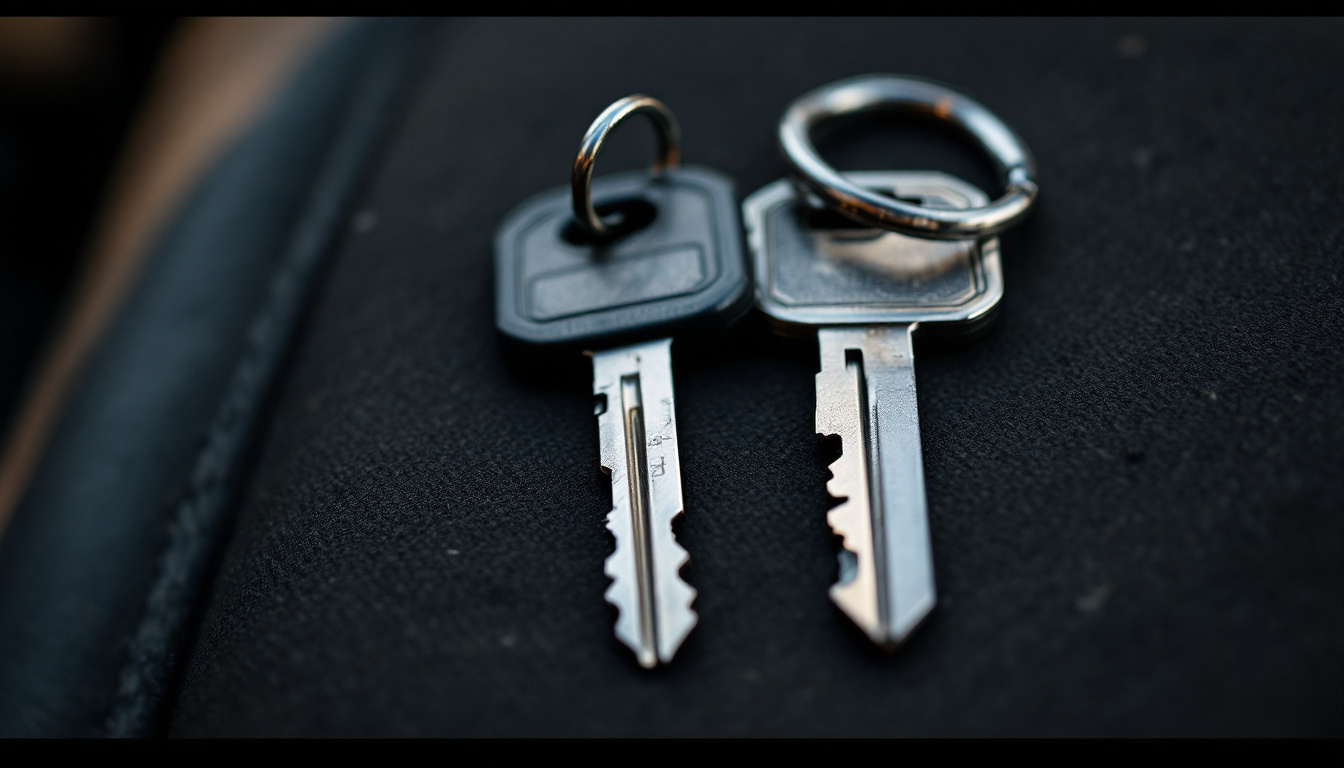
As of August 2026, a work-truck ignition that needs a wiggle to turn is not a quirk — it is the first rung of a failure that ends with a stranded truck mid-route. Rebuilding a worn cylinder runs $120–$280, and a full cylinder replacement rekeyed to your existing key runs $180–$380, with diagnosis at $75–$150 credited toward the repair. Catch it on the early rung: (817) 813-8746.
Quick Answer: Ignitions Fail Slowly and Get Discovered Suddenly
1. Nothing about this is sudden. A shared work truck gets started thirty or forty times a day. The cylinder that refuses to turn on a Tuesday afternoon has been warning somebody for months. It just warned a different driver each time.
2. Nobody owns an intermittent fault in a shared truck. A driver who wiggles the key and gets going assumes it is normal, or somebody else’s problem to report. The fault never reaches a work order because it never stopped anyone for long.
3. The symptoms arrive in a predictable order. Wiggle, then only-the-original-key-works, then flickering dash, then the key will not leave START, then nothing. Where a truck sits on that ladder tells you what is worn and what it costs.
4. The cheap rungs are the early ones. A rebuild caught at the wiggle stage happens in a planned service window. The same truck caught at the last rung is a tow, a lost day of billable work and a crew standing around. The part costs the same either way.
The Symptom Ladder, in Order
Ignition wear is mechanical and electrical at once, and the two degrade on different schedules. A unit can skip a rung or sit on one for a year, so read this as a ranking of probability, not a schedule.
| Symptom rung | What is usually wearing | Typical DFW mobile range | Typical dealership path |
|---|---|---|---|
| Key needs a wiggle or a lift to turn | Cylinder wafers worn; key blade rounded | $120–$280 rebuild | Tow in, column work, appointment |
| Only the original key works; copies quit | Cylinder worn to the shape of one blade | $70–$180 per key cut and programmed same visit | Dealer key pricing, appointment first |
| Dash flickers or truck dies over a bump | Electrical ignition switch behind the cylinder | $150–$350 switch replacement | Tow in, diagnostic appointment |
| Key will not spring back out of START | Switch detent or cylinder retainer failing | $150–$350 switch or $180–$380 cylinder | Tow, column disassembly |
| Key will not turn at all | Seized wafers, or steering lock under load | $180–$380 replacement rekeyed to your key | Tow plus column work |
| Key snapped off in the barrel | Fatigued blade forced against a tight cylinder | $120–$280 rebuild once the blade is out | Tow, parts wait |
| Punched or forced barrel after a break-in | Theft damage to the lock assembly | $250–$500 rebuild with new keys | Tow, parts order, days out |
Rung one: the wiggle. The key goes in, stops, and turns only after a small lift. Two causes feel identical from the seat: the wafers have worn until they no longer line up, or the key blade has rounded off and no longer lifts them far enough. A worn key is cheap. A worn cylinder is not, but it is the cheapest it will ever be here.
Rung two: only the original works. This is widely misread as a bad copy. Usually it is the opposite: the cylinder has conformed to the one blade shoved into it forty times a day, so a correctly cut new key is too accurate for the worn lock. Our guide to Chevy and GMC key replacement covers the same pattern on the platforms that dominate DFW fleets.
Rung three: flicker and stall. Now the electrical half is speaking. Behind the cylinder sits a switch — contacts telling the truck it is in ACC, ON or START. When those wear, a bump in a caliche yard breaks the run circuit. The dash flashes, the engine dies, it restarts immediately, and everybody blames the fuel. This is the rung where fleets spend money in the wrong department.
Rung four: it will not come back from START. The key stays hard over, the starter keeps engaging and the driver hears grinding. Stop immediately — a starter driven against a running engine is expensive. That is a switch detent or a cylinder retainer letting go.
Rung five: nothing. Before assuming the worst, remember the steering lock. If the front wheels are turned against a curb, the column lock pin is pinched and no key will turn. That is a free fix. If the wheel rocks freely and the key still will not move, the cylinder has seized.
Why a Heavy Key Ring Kills a Work-Truck Ignition
Look at the ring hanging out of any shared truck: ignition key, trailer padlock key, gate key, fuel fob, carabiner, sometimes a tape measure. It all hangs off one small brass blade inside a cylinder, and every pothole swings it like a pendulum.
The wear is not theoretical. The weight loads the blade sideways in the keyway, grinding the wafers unevenly and rounding the blade shoulders. It also drags the cylinder slightly out of alignment, which is why the wiggle usually begins as an upward lift. On a truck started forty times a day by six people, a loaded ring takes years off an ignition.
The cheapest preventive policy costs nothing: the ignition key rides on its own ring, everything else on a second, and the two clip together only when the truck is parked. Keys are consumables here too — cutting a fresh set from code every couple of years, as covered under key duplication, keeps a rounded blade from wearing out the cylinder.
Five Checks Your Crew Can Do in the Yard in Five Minutes
1. Try the newest key. If a newer, less-worn key turns better, the blade is the problem and the cylinder may still be serviceable. If it turns worse, the cylinder has worn to the old blade’s shape and you are on rung two.
2. Try it with nothing else on the ring. Take the ignition key off the loaded ring and try it bare. If it starts cleanly bare and fights with the full ring attached, you have the diagnosis and the prevention policy at once.
3. Rock the steering wheel. Left and right, firmly, while turning the key with light pressure. If it frees up, that was the steering lock. Never force a key against a loaded column lock — that is how blades snap, and then you are into broken key extraction as well.
4. Check whether accessories work in ACC. See whether the radio and blower come alive in ACC, then check the dash in ON. If one position works and the next does not, that is an electrical complaint pointing at the $150–$350 range rather than the cylinder.
5. Note the temperature and the time of day. Faults appearing only on the first cold start, or only after a truck has baked in an August yard, are almost always electrical — contacts expand and contract. Faults that appear regardless are mechanical.
Why a Fresh Key Sometimes Buys Months and Sometimes Hides the Fault
Cutting a new key to the vehicle’s factory code is the first thing a good technician tries, because it is the cheapest thing that can work. When the blade was the worn part, a fresh key restores full wafer lift and the truck turns like new.
The trap is that a fresh key also masks a worn cylinder. A sharp new blade has enough shoulder to force worn wafers into position, so the truck improves — then degrades again over a few months as the blade wears down to match. Fleets read that as a bad key. It was never the key.
So ask what happened after the last new key. Fixed permanently means it was the blade. Fixed, then the wiggle returned, means the cylinder is worn and the next key buys less time than the last. That is the point to schedule the rebuild. None of this is a credential problem, so it sits apart from the module work in our car computer programming cost guide — though a truck can have both, which is why a no-start deserves our cranks-but-will-not-start walkthrough first.
Real-World Example: The Truck Everybody Had Complained About
Situation: A plumbing contractor in Hurst had a three-quarter-ton truck shared by four techs. Three had mentioned a sticky ignition in passing over eight months. Nobody wrote it up. On a Thursday morning it would not turn at all, loaded with material and two calls already booked.
What we did: Confirmed the steering lock was not loaded, then looked at the keys. Both were visibly rounded, one had a bent shoulder, and both rode on a ring with a padlock key, a gate key and a fuel fob. The cylinder had worn past what a fresh key could rescue. We replaced it in the yard, rekeyed it to the existing key so no other lock changed, and cut a second key on the spot.
Result: Back in service the same morning, no tow, and the truck kept its original key so the toolbox and cap locks were untouched. The contractor split the rings on all six trucks that week.
Every fleet ignition we replace had been complained about for months. The part never surprises us. What surprises people is that the early rung and the late rung are the same repair — one of them just happens on your schedule. — senior mobile technician, Metroplex Locksmith
What It Costs, and When to Stop and Call
The honest mobile ranges across DFW: a cylinder rebuild for worn wafers is $120–$280. A full replacement rekeyed to your existing key is $180–$380, which matters on a work truck because it leaves the cap, toolbox and trailer locks alone. An electrical ignition switch is $150–$350. Theft damage rebuilt with new keys is $250–$500. Diagnosis is $75–$150, credited toward the repair, and extra keys cut and programmed on the same visit are $70–$180 each.
Stop turning the key and call when it will not return from START, the engine has died while driving, the blade is visibly bent, the key has snapped, or the barrel has been forced. Those are not wait-and-see conditions. The rest of the ladder is schedulable, which is the argument for preventive replacement on high-cycle units.
Run it the way a fleet manager does. A rebuild in a planned service window costs the part, the labor and no downtime, because the truck was parked anyway. After a failure the same rebuild adds a tow at $100–$250, a driver standing still and whatever the missed calls were worth. The repair did not get more expensive. Everything around it did.
Work trucks are worth protecting for a second reason. The National Insurance Crime Bureau reported 850,708 vehicles stolen nationally in 2024, down 17 percent from 1,020,729 — the largest drop in four decades — yet the Chevrolet Silverado 1500 still accounted for 21,666. A sloppy ignition on a loaded truck is not a security feature. Background sits on our ignition repair page and in the Fort Worth ignition repair guide.
Texas Licensing, and the Quote That Changes on Arrival
Ignition work is an easy place for a fleet to get taken, because the truck is already immobile and the pressure to say yes is enormous. Two protections matter before you dial anybody. First, licensing. In Texas, automotive locksmith work sits with the DPS Private Security Program — not the general trade-licensing agency people commonly name. Ask for the license, and ask about the NASTF Vehicle Security Professional registry and ALOA standards. This is skilled work: the Bureau of Labor Statistics tracks locksmiths and safe repairers as a distinct occupation averaging roughly $50,000 a year nationally, a useful check against a quote that sounds impossibly cheap.
Second, the bait-and-switch pattern the Federal Trade Commission has warned about for years: a very low phone quote, an unmarked vehicle, and an invoice several times the agreed number. Get the range in writing before dispatch, ask whether the diagnostic is credited, and ask what the price becomes if the cylinder needs replacing. Dealer pricing runs high on keys too — Kelley Blue Book puts dealer fob replacement at $150 to $500 and up. While the truck is down, run the VIN through the NHTSA recall lookup; column hardware has been recalled before, and a covered repair is free.
What to Have Ready When You Call
The VIN. It decides the cylinder, the key blade and whether the truck can be rekeyed to your existing key — the difference between one lock changing and five.
Which rung the truck is on, in the driver’s own words. Wiggles, flickers, a key that will not leave START and a key that will not turn are four different repairs, and knowing which saves a trip for parts.
How many keys exist and their condition. Bring every key on the property to the truck, including the sticky one in the office drawer. Note whether the fault is weather- or time-dependent, and what is on the ring.
Finally, where the truck is. We are fully mobile across the Metroplex, from a yard in Bedford to a job site in Arlington, and an immobile truck is exactly what mobile service exists for. Our contact page reaches us too.
Frequently Asked Questions
Why does my work truck key need a wiggle to turn?
Either the wafers inside the cylinder have worn down and no longer line up, or the key blade has rounded off and no longer lifts them far enough. A fresh key sorts the second cheaply. A worn cylinder needs a rebuild at $120 to $280 or a replacement at $180 to $380.
Why does only the original key work and the copies stopped?
That usually means the cylinder is worn, not that the copies were cut badly. A cylinder started forty times a day conforms to the one blade being used, so an accurately cut new key no longer matches it. Treat it as an ignition complaint, because more copies will not fix it.
Can a heavy key ring really wear out an ignition?
Yes, and on a shared work truck it is one of the biggest factors. A padlock key, a fuel fob and a carabiner load the blade sideways in the keyway on every bump, grinding wafers unevenly. Splitting the ignition key onto its own ring costs nothing and extends cylinder life.
My dash flickers and the truck dies over bumps. Is that the ignition?
Frequently, yes. Behind the mechanical cylinder is an electrical switch, and worn contacts can momentarily break the run circuit when the truck is jolted. Replacement typically runs $150 to $350. Faults appearing only when the truck is very cold or very hot point here rather than at the cylinder.
Can you replace the ignition without changing all my other keys?
In most cases the new cylinder is rekeyed to your existing key, so the door locks, cap, toolbox and trailer locks stay on the same key. That is usually the $180 to $380 path, and it is worth asking for specifically on a truck carrying multiple keyed accessories.
Is it worth replacing an ignition before it fails completely?
On a high-cycle shared truck, generally yes. The repair costs the same in a planned service window or on a shoulder, but the failure version adds a tow at $100 to $250, a stopped driver and missed calls. Once a truck reaches the second or third symptom, schedule it.
The Bottom Line
A shared work truck tells you its ignition is dying long before it strands anyone. The message just arrives in pieces, spread across four drivers who each decide it is not worth writing up. Give the ladder a name, put it on the pre-trip sheet, and the same repair moves from an emergency to a line item.
If your truck is already on rung four or five, we come to the yard, job site or roadside anywhere in DFW, rekey the new cylinder to your existing key where the platform allows, and cut spares while we are there. Call (817) 813-8746 or reach us through our contact page.