
Fleet Ignition Repair Cost in DFW (2026): Cylinder, Switch and the Key That Comes With It
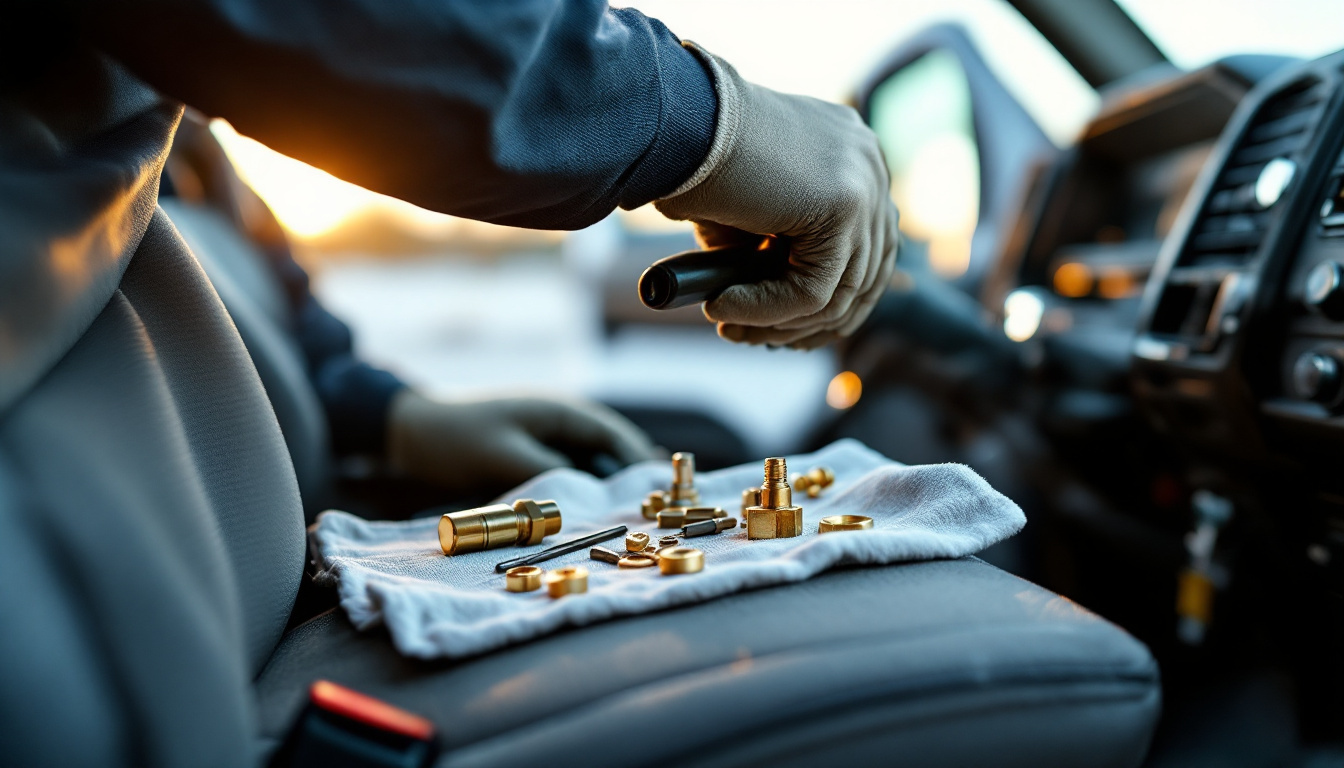
As of September 2026, fleet ignition work in Dallas–Fort Worth runs $120–$280 to rebuild a worn cylinder, $180–$380 to replace one and rekey it so your driver keeps carrying the same key, $150–$350 for the electrical ignition switch behind the cylinder, and $250–$500 for a theft-damage rebuild with new keys — with diagnosis at $75–$150, credited into the repair. The number that decides a fleet budget is not on that list, though: it is whether the shop rekeys the new cylinder to your existing key or hands the driver a second key to carry. Call (817) 813-8746 with the unit number and the VIN.
Quick Answer: Four Jobs, Four Prices
Cylinder rebuild — $120–$280. The wafers inside the lock are worn, the key rattles in it, and the truck needs a wiggle to start. Rebuilding replaces the wafers and springs in the housing you already have. This is the majority of what we do on fleet units and dealers rarely offer it.
Cylinder replacement, rekeyed to your key — $180–$380. When the housing itself is damaged rather than worn, the lock gets replaced. Rekeying the new lock to the key already in the driver’s pocket is the part that matters operationally, and it is quoted in that number, not added to it.
Ignition switch (electrical) — $150–$350. A separate part behind the cylinder. The key turns freely through every detent and nothing happens electrically, or accessories come on and the starter never engages.
Theft-damage rebuild with new keys — $250–$500. Somebody has attacked the lock with a screwdriver or a slide hammer. The cylinder is destroyed, the housing usually survives, and the job includes cutting and programming replacement keys.
Diagnosis — $75–$150. Charged when the cause is genuinely unclear and credited into the repair. Most fleet ignition calls do not need it because the symptom ladder is short and the driver has already climbed most of it.
The Line by Line, and the Thing Most Quotes Leave Out
These are our own first-party mobile ranges, quoted at your yard rather than at a service drive. The dealership column is what operators report back to us, not a published tariff.
| Job | Typical DFW mobile range | Dealership route, typically |
|---|---|---|
| Ignition cylinder rebuild (worn wafers) | $120–$280 | Rarely offered — replacement only, plus the tow |
| Cylinder replacement, rekeyed to your existing key | $180–$380 | New cylinder on a new key — drivers carry two |
| Ignition switch, electrical | $150–$350 | Comparable part, higher labour, vehicle stays in the queue |
| Theft-damage rebuild with new keys | $250–$500 | Often quoted as a steering column assembly |
| Extra key cut and programmed during the same visit | $70–$180 | Separate appointment |
| Second and subsequent units in the same visit | $70–$180 per unit of marginal cost | One vehicle per appointment |
| Diagnosis when cylinder vs switch is unclear | $75–$150, credited into the repair | Diagnostic fee, not credited |
The line most fleet quotes omit is the last but one. Ignition wear is a duty-cycle problem, which means it does not arrive one truck at a time — it arrives across a group of units bought in the same year and driven the same way. Booking them together turns four call-outs into one, and the per-unit economics of that are set out in our guide to fleet locksmith visit cost per truck in DFW.
Rekeying to the Existing Key Is the Whole Fleet Argument
On a personal car, getting a new ignition on a new key is a mild annoyance. On a fleet vehicle it is an operational defect that outlives the repair by years.
Here is what actually happens. The truck comes back with a shiny new cylinder and a new key. The driver now carries two keys for one vehicle: one that opens the doors and the fuel cap, and one that starts it. Within a month somebody has taped them together, somebody else has lost the door key, and the spare in the office drawer starts nothing. Two years later nobody in the company can tell you which key in the cabinet belongs to which unit.
A mobile locksmith rekeys the replacement cylinder to the code already cut into your key, so the truck goes back to one key per vehicle. It is not an upsell and it is not extra time on site — it is a decision made at the bench, and it is why the $180–$380 line above is the whole job rather than the start of one. Keeping one key per unit is also what makes a spare programme workable at all, which we cover in what a fleet spare key programme costs in DFW.
The same logic applies to door locks on older work trucks, which often have their own cylinders. If a door lock has been replaced at some point with a different key, the cheapest moment to bring the whole vehicle back onto one key is while a technician already has the ignition apart. See key duplication for what that costs alongside the main repair.
Why Ignitions Fail Faster on a Fleet Than on a Family Car
Three things compress the life of a fleet ignition, and none of them are manufacturing defects.
Cycles. A work truck on a service route is started and shut off fifteen or twenty times a day. A commuter car manages four. The lock does not know how many miles are on the odometer; it knows how many times it has been turned, and the fleet unit reaches a given number of turns in roughly a quarter of the calendar time.
Weight on the key. Drivers hang gate keys, padlock keys, shop keys and a fob or two off the ignition key, and then the whole assembly swings on a rough road for eight hours. That sideways load wears the wafers oval. It is the single most preventable cause of fleet ignition failure and we have written about it in detail in work truck ignition wear with shared drivers.
Shared keys. A fleet key is copied, copied again from the copy, and then cut from a worn original. Each generation drifts a little further from the factory code, and a slightly wrong key wears a lock much faster than a correct one. By the time the ignition is failing, the keys in circulation are usually part of the cause rather than an innocent bystander.
The practical consequence is that a fleet ignition repair without fresh, correctly cut keys is half a repair. A new cylinder fed the same worn keys starts the clock again on the same failure — which is why the $70–$180 same-visit key line is worth taking whenever the cylinder comes out.
Real-World Example: Six Trucks, One Model Year, One Morning
Situation. A plumbing contractor running out of Arlington had three half-ton trucks from the same model year that all needed a jiggle to start. Two more were showing the earlier symptom — the key going in stiffly — and a sixth had already failed and was parked. A dealership had quoted the parked one, including a tow, and the office wanted to know whether to do the rest one at a time as they failed.
What we did. One visit, six units, all on site. Four cylinders were rebuildable at the $120–$280 line. The failed truck needed a full replacement, rekeyed to the key its driver already carried so the unit stayed on one key. The sixth turned out not to be an ignition fault at all — its switch was fine and its key was simply cut from a third-generation copy, so a fresh key from the code solved it for the price of a key.
Result. No tows, no trucks off the road overnight, and the five still-working units never reached the stage where a driver is stranded at a customer’s house. The marginal cost of units two through six was a fraction of what six separate emergency call-outs would have been.
A fleet ignition almost never surprises anybody. It tells you for weeks, the driver mentions it to somebody who is not writing it down, and then it fails on the one morning the schedule is full. The cheap version of this repair is the one you book. — senior mobile technician, Metroplex Locksmith
The Dealership Route, and the Tow That Comes With It
A dealership can do ignition work competently. The difficulty is geometric rather than technical: the vehicle has to get there, and a truck with a failed ignition does not drive.
So the dealership quote starts with a tow, which is real money before anything has been diagnosed, and it continues with a vehicle sitting in a queue for a day or more. For a fleet that is not one bill; it is the bill plus a unit off the road, plus in many cases a rental or a crew standing around. Operators tell us the tow and the wait routinely cost more than the repair being waited for.
The second difference is the rebuild. Dealers overwhelmingly replace rather than rebuild, because replacement is a parts-and-labour operation that fits a service department and a rebuild is a bench skill. That is a legitimate business choice, but it takes the $120–$280 option off the table entirely and starts the conversation at the replacement line — usually on a new key. The broader comparison of the two routes, on keys as well as ignitions, is in auto locksmith versus dealership in DFW, and the pricing baseline for keys themselves is in car key replacement cost in Fort Worth.
Domestic work trucks are the clearest case, because the parts are common and the bench work is routine. GM half-tons and heavy-duties in particular pass through our vans constantly, and the key side of that family is covered in Chevy and GMC key replacement in DFW.
Texas Licensing and the Quote That Should Survive Arrival
Ignition work sits at the point where a fleet is most exposed to a bad vendor, because the vehicle cannot be driven away from a bad decision.
Texas locksmiths are licensed by the Department of Public Safety Private Security Program — not TDLR, which licenses other trades entirely. Ask for the licence number before anybody touches a steering column. For late-model units where the repair touches the anti-theft system, ask whether the technician is registered with the National Automotive Service Task Force Vehicle Security Professional programme, which governs legitimate access to manufacturer security data.
On price, apply the Federal Trade Commission’s guidance on locksmith bait-and-switch directly: the number quoted on the phone should survive contact with the truck. A quote that rises on arrival because the technician has “found” that the ignition is worn is describing the thing you called about. Professional standards published by the Associated Locksmiths of America describe the baseline conduct, and the Bureau of Labor Statistics treats locksmiths and safe repairers as a distinct skilled occupation with a national average wage near $50,000 a year — useful context for what an hour of this work legitimately costs.
Two free checks worth doing before you spend anything. The National Highway Traffic Safety Administration recall lookup takes a VIN and occasionally returns an ignition or steering-column campaign, and a covered repair beats a paid one. And for context on what replacement keys cost generally, the Kelley Blue Book survey of dealership fob pricing is a reasonable outside benchmark at $150–$500 and up.
What to Have Ready When You Call
The VIN, not the year and model. Ignition hardware changes mid-generation and within a model line by cab and trim. The VIN tells us which cylinder, which switch and which anti-theft architecture the truck actually left the factory with.
Which symptom, in the driver’s words. “Needs a jiggle” is a cylinder. “Turns all the way and nothing happens” is usually the switch. “Will not go in” is a key or a debris problem. That one sentence usually decides the price band before anybody arrives.
How many keys exist and where they came from. A fleet that cannot produce an original factory key is a fleet whose keys are copies of copies, and that changes what we cut.
The other units. If three trucks of the same vintage are showing early symptoms, say so on the phone. Adding them to one visit is $70–$180 of marginal cost each; calling us back next month is a fresh visit each time.
We work on ignitions at yards, job sites and depots from Irving to Mansfield and across the metroplex. See ignition repair for the service detail, or go straight to our contact page.
Frequently Asked Questions
Can the new ignition use the key our driver already carries?
Yes, and on a fleet vehicle it should. Rekeying the replacement cylinder to the existing key code is bench work included in the $180–$380 replacement line rather than an extra. It keeps the truck on one key, which is the difference between a key cabinet that works and one nobody trusts within two years.
Is a rebuild a temporary fix compared with a new cylinder?
No. A rebuild replaces the wafers and springs that actually wore out, inside a housing that is usually undamaged, and the result has the same service life as a new lock. Dealers rarely offer it because it is bench work rather than a parts swap, not because it fails early. Replacement is correct when the housing itself is damaged.
The truck starts but we have to wiggle the key. How long can we run it?
Weeks, usually, and then it strands somebody without further warning. The wiggle means the wafers no longer align cleanly and each start is wearing them further. Booking it while the truck still runs costs $120–$280 and no tow; waiting until it does not costs the same repair plus a recovery and a lost day.
Do you need to tow the vehicle anywhere?
No. Ignition cylinders, switches and theft-damage rebuilds are all mobile work, done at your yard or wherever the unit is parked, which is the main reason the fleet arithmetic differs from the dealership route. The tow is usually the largest single line on a dealership ignition quote and it disappears entirely.
Should we replace the keys at the same time as the ignition?
On a fleet, almost always. Worn keys are frequently part of why the lock failed, and feeding a fresh cylinder the same copies restarts the same wear. Cutting keys from the code during a visit where the ignition is already apart is $70–$180 each rather than a separate call-out later.
Several trucks of the same year are showing symptoms. Do we wait for each to fail?
No, and the arithmetic is not close. Ignition wear is a duty-cycle failure, so units bought and driven together fail together. The first vehicle of a visit carries the trip charge and each unit after it is $70–$180 of marginal cost, so a batched morning costs a fraction of five separate emergency call-outs spread over a quarter.
The Bottom Line
Fleet ignition work is one of the few repairs where the cheap version and the expensive version are the same job booked at different times. A rebuild on a truck that still runs is $120–$280 and nobody misses a stop. The same truck recovered from a customer’s driveway three weeks later is a replacement, a tow and a lost day.
Ask for two things when you book: that the new cylinder is rekeyed to the key the driver already carries, and that any other unit showing early symptoms is added to the same visit. Call (817) 813-8746 with the VINs, or use our contact page, and we will come to the yard.