
Work Truck Key Broke Off in the Ignition: What to Do and What It Costs in DFW
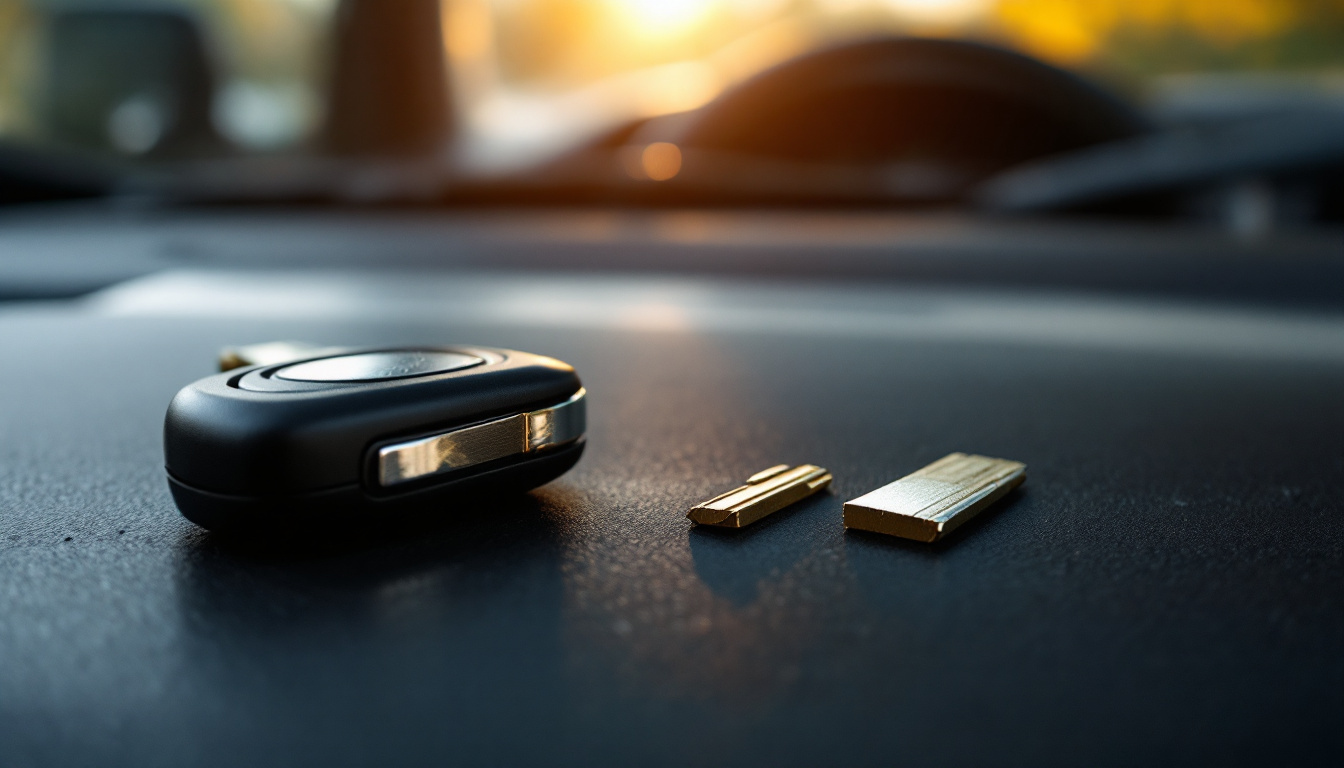
As of October 2026, getting a snapped key out of a work truck in Dallas–Fort Worth runs $120–$300 when the piece is in the ignition and $75–$185 when it is in a door lock, with the replacement key at $120–$400 on top — and a failed attempt with pliers or glue typically adds $50–$200. The fragment is rarely the real problem. A key that breaks was already worn thin, and on a fleet truck the lock it broke in is usually worn too. Call (817) 813-8746 before anyone reaches for a tool.
Quick Answer: The First Five Minutes
Stop turning. If half the key is in the ignition and the truck is running, leave it running and do not touch the cylinder. If it is off, do not try to turn the stub with a screwdriver. Every attempt pushes the fragment deeper and scores the wafers it is sitting between.
Keep the head. The half still in the driver’s hand carries the transponder chip on most trucks and half of the cut pattern on all of them. It is evidence and it is useful. Do not throw it in the cup holder with the receipts.
No glue, no pliers, no magnets. Superglue bonds the fragment to the lock. Needle-nose pliers cannot grip a piece that sits flush and will chew the face of the cylinder. A magnet does nothing because nearly all key blanks are brass or nickel silver.
Note where it broke. Ignition or door, and whether the key was turned or straight when it went. That one sentence decides the price band before we leave.
Call it in with the VIN. Extraction and a new key are one visit, done where the truck is parked.
What It Costs, Line by Line
These are typical DFW mobile ranges from our own work. The dealership column is what fleet operators report back to us.
| Job | Typical DFW mobile range | Dealership route, typically |
|---|---|---|
| Fragment extracted from a door or tailgate lock | $75–$185 | Lock replaced rather than cleared |
| Fragment extracted from the ignition | $120–$300 | Cylinder replaced, plus the tow |
| Replacement key cut to code and programmed | $120–$400 | Parts counter plus programming appointment |
| After a failed do-it-yourself attempt | Add $50–$200 | Usually pushes the job to replacement |
| Ignition cylinder rebuild, if the lock is worn out | $120–$280 | Rarely offered |
| Cylinder replacement, rekeyed to the existing key | $180–$380 | New cylinder on a new key |
| Extra key cut in the same visit | $70–$180 | Separate appointment |
| Tow to a service lane | Not needed — mobile | $100–$250 |
The honest total for the common case — fragment in the ignition, clean extraction, one new key — is the sum of the second and third lines. Where the bill grows is the fourth line, which is entirely avoidable, and the fifth, which is the truck telling you something it has been saying for months.
Why Keys Break on Work Trucks
A car key does not snap because of one hard turn. It snaps because the metal has been bending slightly, thousands of times, at the same spot — usually the deepest cut on the blade, where there is the least material. The break is the last event in a long process. On a fleet vehicle that process runs faster for four reasons.
The key does more cycles. A route truck is started and stopped fifteen or twenty times a shift. The blade flexes a little on every turn, and the count climbs four or five times faster than on a commuter car.
The lock fights back. A worn ignition does not turn smoothly. Drivers learn to lean on the key, wiggle it and force it past the sticky spot. That extra torque goes straight into the thinnest part of the blade. We describe how the lock gets that way in work truck ignition wear with shared drivers.
The key is a copy of a copy. Fleet keys are duplicated from whichever key is nearest, which is itself a duplicate. Each generation drifts from the factory cut, sits a little wrong in the lock, and binds. A binding key is a key being bent.
The key is used as a tool. It opens boxes, scrapes labels, pries the lid off a paint can and gets a seized padlock turned with a pair of grips on the bow. None of that is a guess; we see the witness marks.
The plain-English version for a safety meeting: a key that has needed a wiggle for a month is a key that is going to break, and it will do it in a customer’s driveway. The general physics, for personal cars as well as trucks, is in why car keys snap and how extraction works.
Diagnosing the Break: Four Cases
Where and how the key failed tells you most of what the visit will involve. Work down this list with the driver on the phone.
Case one: broke in the ignition, straight in, truck off. The easiest version. The fragment is sitting in the keyway with the wafers resting on it and nothing under load. Extraction is quick, and if the lock turns smoothly afterward with the new key, the job ends there.
Case two: broke in the ignition while turned. The fragment is trapped with the cylinder rotated, the wafers are loaded against it and the steering lock may be engaged or half-engaged. This is the upper end of the $120–$300 band and the case where amateur attempts do the most harm. If the truck is running, leave it running until we arrive; a running truck with the cylinder in the on position is easier to deal with than a dead one stuck between detents. A related failure, where the whole key will not come back out, is covered in a work truck key stuck in the ignition.
Case three: broke in a door or tailgate lock. Cheaper, at $75–$185, and the truck may still be drivable if a second key exists. Door locks on work trucks get less use than ignitions but far more dirt, and a blade that snaps in a door usually met a cylinder packed with dust or seized from a year of nobody using it because the fob did the work.
Case four: somebody has already been in there. Glue, a broken drill bit, a jigsaw blade snapped off beside the fragment, a cylinder face chewed by pliers. We can usually still recover it, at the $50–$200 adder. Tell us on the phone. It changes which tools go in the bag.
After extraction, the lock itself gets tested with a correctly cut key. If it turns cleanly, you needed an extraction and a key. If it binds, the lock is what broke the key, and the conversation moves to a rebuild at $120–$280 or a replacement rekeyed to your existing key at $180–$380 — numbers set out in full in fleet ignition repair cost in DFW.
The Replacement Key: Cut From Code, Not From the Pieces
It is tempting to tape the two halves together and have a hardware store trace them. Do not. A key that broke was worn, and tracing a worn key produces a new key with the same wrong cuts that helped cause the break.
The right replacement is cut to the factory code for that truck, which restores the original depths, and then programmed to the immobilizer if the vehicle has one. That is the $120–$400 line, and where a truck falls in it depends on the key technology. A plain or basic transponder blade on an older half-ton sits at the low end. A remote-head key or a proximity fob with an emergency blade sits higher. GM trucks are the most common visitors to this particular problem in our vans, simply because DFW fleets run more of them than anything else; the key families are covered in Chevy and GMC key replacement in DFW. Toyota pickups last a long time in fleet service and their original keys are often well past retirement by the time they break; see Toyota key replacement in Fort Worth.
Two fleet-specific points. First, every other key for that unit was probably copied from the one that just broke, so they carry the same wear and are next in line. Replacing them in the same visit is $70–$180 each. Second, the transponder chip in the broken head can sometimes be reused or cloned, which matters on older trucks where it saves a programming step; bring the head.
Real-World Example: A Landscaping Crew at Seven in the Morning
Situation. A landscaping company based in Mansfield had a crew-cab pickup hitched to a loaded trailer at the first stop of the day. The driver turned the key to restart after unloading a mower and came away with the plastic head and about a third of the blade. The truck was off, the rest of the key was in the ignition, and a four-man crew was standing on a customer’s lawn. The foreman had a pair of needle-nose pliers in his hand when the office told him to stop and call.
What we did. Extraction from the ignition with the cylinder at rest — the easy case, at the lower end of the $120–$300 band. The new transponder key was cut to the code pulled from the VIN and then programmed right there at the curb. Tested with the correct key, the cylinder still caught on the way to the start position, which was the reason the old key had been getting forced for weeks. The office approved a cylinder rebuild in the same visit rather than booking a second one, and we cut a spare at the same-visit rate.
Result. The crew lost about ninety minutes instead of the day. No tow for the truck or the trailer. The office later sent two more trucks of the same age through for new keys cut from code before theirs broke.
The pliers are what turn a one-hour job into a two-hour job. A fragment sitting flush in a lock comes out with the right tool almost every time. A fragment that has been pushed a quarter inch deeper and smeared with glue is a different morning. — senior mobile technician, Metroplex Locksmith
Dealership Versus Mobile for a Truck That Cannot Move
A truck with half a key in its ignition does not drive to a service department. It gets towed there, at $100–$250, and if it is hitched to a trailer the trailer has to be dealt with separately. That is the first cost and it arrives before anyone has diagnosed anything.
The second difference is the repair itself. A service department’s standard answer to a foreign object in an ignition is to replace the cylinder, usually with one keyed differently from the doors, so the driver ends up carrying two keys for one truck. Extraction is bench-style locksmith work and is not a line on most service menus. The broader comparison is in auto locksmith versus dealership in DFW.
The third is the clock. A mobile visit is one session at the truck. A towed vehicle waits its turn. For a crew-cab that carries four people and a trailer of equipment, the wait is where the money goes.
Texas Licensing and Not Getting Taken at the Curb
A driver stranded with a crew watching is exactly the customer a bad operator hopes for. A few checks protect the company card.
Locksmiths in Texas are licensed by the Department of Public Safety Private Security Program — not TDLR. Get the license number while you are still on the call. For trucks new enough that the replacement key touches manufacturer security data, ask whether the technician is listed with the National Automotive Service Task Force Vehicle Security Professional registry. The Associated Locksmiths of America publishes the conduct standards a professional should be working to.
The Federal Trade Commission’s consumer guidance spells out the trick to watch for — a cheap figure by phone that swells the moment the technician is standing beside the vehicle. Extraction and a key can be quoted as a range by phone and firmed up from the VIN and a description of the break. As a benchmark for the key itself, Kelley Blue Book’s dealership survey puts fob replacement at $150–$500 and up, and for the labor, the Bureau of Labor Statistics treats locksmiths as a distinct skilled occupation with a national average wage of roughly $50,000 a year.
If the ignition has failed on a truck that is not especially old, run the VIN through the NHTSA recall lookup before paying for a cylinder. It takes a minute and occasionally turns a paid repair into a covered one.
Keeping It From Happening Again
Broken keys are preventable in a way most truck faults are not, and the prevention is cheap.
Retire keys on a schedule. A key cut from code costs $70–$180 in a batched visit. Replacing the keys on high-cycle units every few years, before they thin out, costs less than one extraction.
Stop copying copies. Keep one key per unit that is never used and never duplicated from, or better, have new keys cut from the code so wear cannot accumulate across generations.
Take the weight off the ring. A truck key should not carry the gate key, the shop key, three padlock keys and a bottle opener. That mass swings on the blade all day.
Listen for the wiggle. Ask drivers one question at the weekly meeting: does any truck need a jiggle to start? Every yes is a booked repair instead of a roadside one. Keeping after small warnings like that is the theme of our older piece on keeping up with your vehicle.
What to Have Ready When You Call
The VIN. It gives us the key code path and the key technology before we arrive.
Where the fragment is and how it broke. Ignition or door; turned or straight; truck running or off.
Whether anyone has tried to get it out. No judgment. We just need to know what is in there with it.
The broken head. Keep it. The chip and the remaining cuts are both useful.
Whether a second key exists. If it does, do not use it in that lock until the fragment is out.
We extract broken keys at job sites and yards from Grand Prairie and Hurst up to Denton and across the metroplex. Service detail is on our broken key extraction and ignition repair pages, or go straight to our contact page.
Frequently Asked Questions
How much does it cost to get a broken key out of a truck ignition in DFW?
As of October 2026, extraction from an ignition typically runs $120 to $300 and from a door or tailgate lock $75 to $185. A replacement key cut to code and programmed adds $120 to $400 depending on the key type. A failed do-it-yourself attempt with glue or pliers usually adds $50 to $200 to the extraction.
The truck is still running with half the key in the ignition. Should the driver shut it off?
Not by touching the cylinder. If the truck is running and safely parked, leave it running and call. A cylinder sitting in the on position is easier to work with than one stuck between detents with the steering lock half engaged. If it must be shut down for safety, tell us exactly how that was done.
Can you make a new key from the two broken halves?
We use them as a reference but we do not trace them. A key that broke was worn, and copying it reproduces the wrong cuts that helped break it. The replacement is cut to the factory code for the truck, which restores the original depths, and the chip in the old head can sometimes be reused.
Does a broken key mean the ignition needs replacing?
Often not. After extraction we test the lock with a correctly cut key. If it turns smoothly, the job is finished. If it binds, the lock is what broke the key, and it needs a rebuild at $120 to $280 or a replacement rekeyed to your existing key at $180 to $380.
Will superglue on a stick pull the fragment out?
Almost never, and it is the most expensive thing a driver can try. Glue wicks past the fragment and bonds it to the wafers inside the lock. What was a clean extraction becomes a contaminated one, the $50 to $200 adder applies, and in the worst cases the cylinder has to be replaced.
Do you need to tow the truck or unhitch the trailer?
No. Extraction, the replacement key and any cylinder work are done where the truck is parked, trailer attached. That avoids a tow that typically costs $100 to $250 and the separate problem of what to do with a loaded trailer while the truck waits in a service queue.
The Bottom Line
A key snapped off in a work truck is a $120–$300 extraction from the ignition or $75–$185 from a door, plus a $120–$400 key, done at the curb in one visit. What makes it more is a pair of pliers before the phone call, and what makes it happen in the first place is a worn key in a worn lock that somebody has been forcing for a month.
Tell the driver to stop, keep the head, and leave the fragment alone. Then call (817) 813-8746 with the VIN, or use our contact page, and we will come to the truck.