
Work Truck Key Fob Dead and the Door Will Not Unlock: Five Causes and What Each Costs in DFW
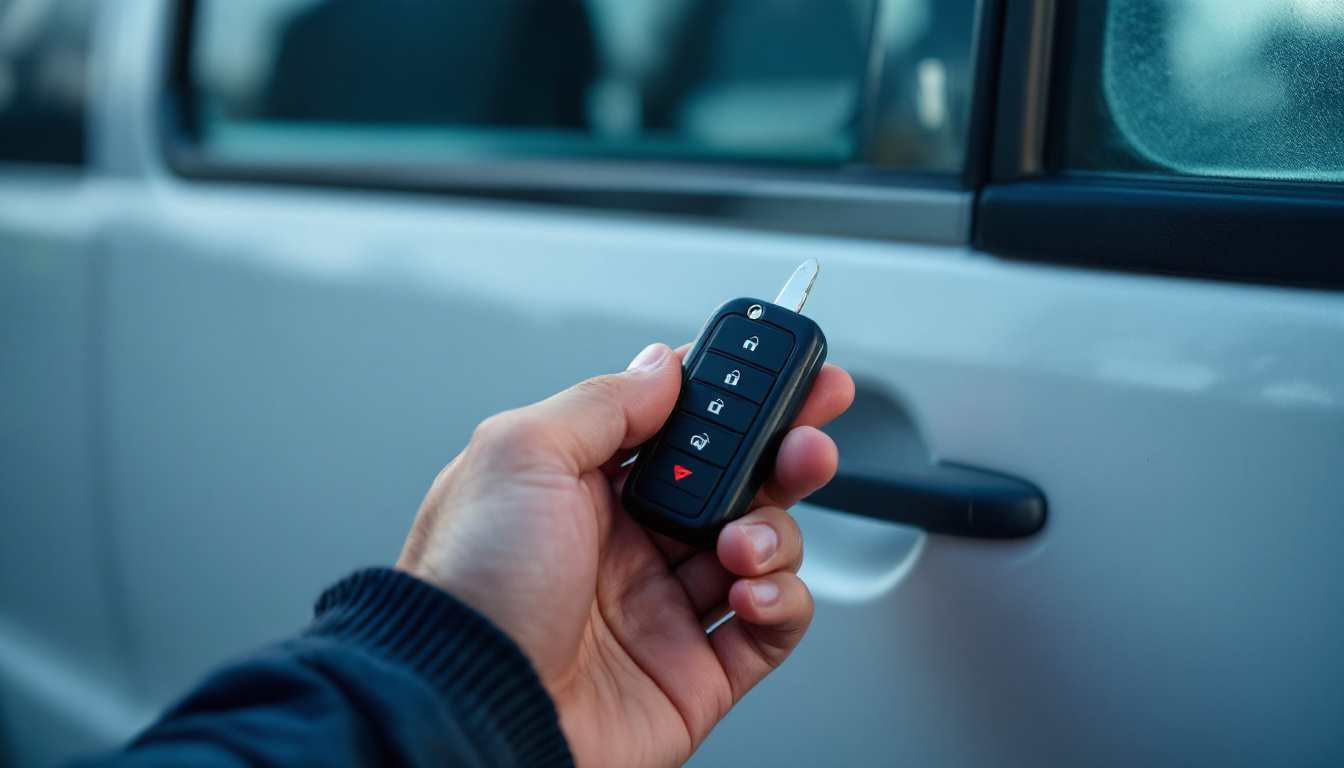
As of October 2026, getting into a work truck whose key fob has stopped unlocking the doors runs $75–$150 for a standard opening across Dallas–Fort Worth, $95–$185 when only the cargo area is the problem and $125–$225 after hours, and the missing emergency blade that would have prevented the call is $75–$140 to cut. Most of these trucks do not have a failed fob. They have a backup that was never set up: a blade nobody cut, a door cylinder nobody has turned in six years, or a dead truck battery that makes a healthy fob look broken. Call (817) 813-8746 if the driver is standing outside a locked unit right now.
Quick Answer: Check These Four Things First
Is the truck dead, or the fob? Look through the glass. If the dash security light is not blinking and the interior stays dark when a handle is pulled, the truck’s own battery is flat. No fob opens a truck with no power to its lock motors.
Is there a blade inside the fob? Almost every proximity fob hides a metal emergency key behind a small release catch. Slide it out. If the blade is smooth, with no cuts along it, it was never cut for this truck.
Where is the keyhole? Many late-model trucks hide the driver’s door cylinder under a plastic cap at the end of the handle. It is there. It pries off from a slot on the underside.
Does the blade turn? If the key goes in and will not rotate, stop. A cylinder that has not been used in years is often seized, and a thin emergency blade will snap before a seized cylinder gives.
If none of that gets the door open: it is a lockout call, quoted at $75–$150 during business hours.
What It Costs, Line by Line
These are first-party mobile ranges from our own fleet work in DFW. The dealership column is what operators report when they try that route for the same problem.
| Job | Typical DFW mobile range | Dealership route, typically | Notes for a fleet |
|---|---|---|---|
| Standard cab opening, business hours | $75–$150 | Not offered | Dead fob, dead truck battery or seized cylinder |
| Cargo or rear-door access only | $95–$185 | Not offered | Vans with a separately locked load area |
| After-hours or overnight opening | $125–$225 | Not offered | Early crews and late returns |
| Emergency blade cut to the truck | $75–$140 | Parts-counter order | Opens the door; does not start the truck |
| Replacement remote-head or fobik key | $180–$350 | $250–$500 plus tow | When the fob itself has failed |
| Replacement proximity fob | $250–$500 | $350–$650 plus tow | Push-button trucks and vans |
| Additional key in the same visit | $70–$180 | Usually full price | The spare that ends repeat calls |
| Door lock cylinder repair | Quoted after diagnosis | Body-shop or service-lane work | Depends on what seized and why |
| Tow instead of an opening | Not needed — mobile | $100–$250 | Moves the truck; does not open it |
The row that pays for itself is the fourth one. A blade cut once, at $75–$140 or as part of another visit, turns the next dead-fob morning from a service call into a ten-second inconvenience. The full schedule for commercial openings is in fleet vehicle lockout cost in DFW.
Five Causes, in the Order We Find Them
A fob that will not unlock a truck is a symptom with several unrelated causes. On fleet units they turn up in roughly this order.
1. The fob’s coin cell is flat. The most common cause and the cheapest. Range shrinks for a few weeks first: the driver has to stand closer, then press twice, then hold the fob against the glass. Then nothing. On pool vehicles nobody notices the warning period because nobody drives the same unit two days running. A new coin cell costs a few dollars and takes a minute. The complication is that the truck is now locked and the battery is inside the fob in the driver’s hand, which is fine, or the spare fob is locked in the cab, which is not.
2. The truck’s own battery is flat. A healthy fob transmits to a truck that cannot answer. Door lock motors need vehicle power. A unit that sat over a long weekend with a telematics device, a dash camera or an interior light drawing current will not respond to any remote. The hood release is inside the locked cab, so the battery cannot be reached to jump it. This is a lockout call in every practical sense, and it is the version drivers least expect. The longer-term version is in a fleet truck that sat for months and will not start.
3. The emergency blade was never cut. Replacement fobs bought as bare hardware arrive with a blank blade. Programming the fob to start the truck and cutting the blade to open the door are two separate operations, and the second is easy to skip because the fob works without it. Fleets that buy fobs in bulk and have them programmed often have a drawer of working fobs with uncut blades. Every one of those is a future lockout.
4. The door cylinder has seized. A lock cylinder that is never used fills with dust and dried lubricant. On a truck that has been opened by remote for its entire life, the first time a key goes into the door is the day the remote fails, and that is the day the cylinder decides it will not turn. Forcing it is how blades break. We covered why keys fail under load in why car keys snap and how extraction works.
5. The fob has actually failed, or lost its pairing. Water, a drop onto concrete, a cracked circuit board, worn button contacts. Less often the truck has lost the fob from its memory after a battery event or module work. This is the only cause on the list that needs a new or reprogrammed fob, and it is the least common of the five; what that costs for the common fob types is in key fob replacement cost in DFW. When a spare behaves the same way, read why a fleet spare key stopped working.
The reason the order matters: four of the five are solved without buying a fob. A vendor who quotes a replacement fob over the phone before asking whether the dash light is blinking has skipped the diagnosis.
Why This Is a Fleet Problem More Than a Personal One
A private owner carries one fob, drives one vehicle, and notices when the range starts to fade. A fleet has none of those advantages.
Keys rotate. A fob that lives on a board in the dispatch office and goes out with a different driver each morning has no one watching its battery. The first person to learn it is weak is the one locked out with it.
Units sit. Seasonal trucks, spare vans and vehicles between drivers drain their batteries in the yard. The fob is fine. The truck is asleep.
Spares are bought cheaply and never finished. A fob that starts the truck passes every test anyone thinks to run. The uncut blade inside it is discovered months later, in a parking lot.
Door cylinders are never exercised. Nobody on a crew has ever opened the truck with a key. Many drivers do not know the cylinder exists, because it is hidden under a trim cap.
The truck cannot wait. A locked personal car is an annoyance. A locked service van at seven in the morning is a crew standing in a parking lot and a customer waiting. That is why the response time matters as much as the price, and why we publish realistic numbers in mobile locksmith arrival times across DFW.
What the Driver Should and Should Not Try
Worth trying. Hold the fob directly against the driver’s door handle or the glass and press unlock; a nearly flat coin cell sometimes has enough left at zero distance. Try the passenger door and the rear doors with the blade if the driver’s cylinder is stiff; a less-used cylinder is occasionally the freer one. Check whether a second fob for the unit is in the office.
Not worth trying. Forcing a blade that will not turn. Wedging the door frame with a pry bar or a screwdriver. Feeding a wire or a strap past the weatherstrip. Late-model doors carry side airbags, wiring and window regulators exactly where improvised tools go, and a bent door frame leaks wind and water for the rest of the truck’s life. An opening that costs $75–$150 is cheaper than a door.
If a child, a pet or a person is locked inside, or the engine is running in an enclosed space, call 911 first. The American Automobile Association reports rescuing roughly four million locked-out drivers a year, and the urgent ones are always the ones with someone inside.
A professional opening uses tools made for the job and leaves no mark. Our general guide for drivers is locked out of a car in DFW: what to do now.
Real-World Example: Three Vans, One Cold Monday
Situation. A plumbing company in Bedford called at 6:40 on a Monday morning. Three of its seven vans would not unlock. The dispatcher assumed the fobs had all failed over the weekend and wanted three replacements.
What we did. One visit to the yard. The first van had a flat vehicle battery; an interior work light had been left on Friday. We opened the cab at the standard rate, the crew released the hood and jumped it. The second van’s fob had a dead coin cell, and its emergency blade was an uncut blank from a fob bought online the previous year. We opened the van, replaced the cell and cut the blade. The third van had a working blade and a driver’s door cylinder that would not rotate. We opened it through another door, freed and lubricated the cylinder, and confirmed the key turned it. While we were there the owner had blades cut for the four other fobs in the office that turned out to be blank.
Result. Three vans on the road within the hour, no fobs purchased, and seven units that can now be opened by hand.
Nobody tests the backup until the morning they need it. I can tell you in thirty seconds whether a fleet has ever cut its emergency blades, and most have not. That blank strip of metal inside the fob is the cheapest lockout prevention there is. — senior mobile technician, Metroplex Locksmith
Keeping It From Happening Again
This is a short list and none of it requires us.
Pull the blade out of every fob and look at it. Cuts along the edge mean it was finished. A smooth blade is a blank. Count the blanks and have them cut in one visit.
Turn each door cylinder with a key twice a year. It keeps the mechanism free. If one is stiff, find out in the yard rather than in a parking lot.
Change fob coin cells on a schedule. Once a year, all of them, the same week. It costs a few dollars per unit.
Keep a working second key for every unit. A second key in the office is the difference between a five-minute delay and a service call. The numbers for doing this across a fleet are in what a fleet spare key program costs.
Show drivers where the keyhole is. Two minutes at a safety meeting. Most have never seen the cap come off.
Dealership Versus Mobile for a Locked Truck
A dealership service department does not open locked vehicles in the field. Its route for a truck that will not unlock is a tow, at $100–$250, to a service lane where the truck waits for a technician. The tow moves the problem without solving it, and the truck is still locked when it arrives.
Where the dealer route does make sense is a failed fob on a unit still under warranty, after the truck has been opened. For everything else a mobile opening costs less than the tow alone. If the visit turns into a fob replacement, the Kelley Blue Book survey of dealership fob pricing, at $150–$500 and up, is the outside benchmark. The broader comparison is in auto locksmith versus dealership in DFW.
Texas Licensing and Lockout Pricing That Holds
Lockouts are where the trade’s worst operators work, because the customer is stranded and in a hurry. Federal Trade Commission guidance for consumers on locksmith bait-and-switch describes the pattern exactly: a very low price in an advertisement, a much higher one at the vehicle. A fleet should have a vendor chosen before the morning it needs one.
In Texas, locksmith companies are licensed by the Texas Department of Public Safety Private Security Program. Get the license number and keep it on file. The Associated Locksmiths of America publishes the conduct standards a professional should meet, and credentialed access to vehicle security data runs through the National Automotive Service Task Force.
A fair price reflects a trained person arriving with proper tools. The Bureau of Labor Statistics classes locksmiths and safe repairers as a distinct skilled occupation with a national average wage of roughly $50,000 a year. A quoted opening far below the bands on this page is not a bargain. It is the first half of a different price.
What to Have Ready When You Call
Where the truck is. A street address or a cross street, and whether it is in a yard, a parking structure or on a job site.
Year, make and model, and the unit number. The VIN helps if a key or a blade has to be cut.
What the truck does. Dash light blinking or dark. Interior lights or none. Whether the blade goes into the cylinder and whether it turns.
Whether anything or anyone is inside. Keys, a phone, tools, a running engine, a passenger.
How many other units might have the same problem. If the fleet has never cut its blades, one visit can fix all of them.
We open work trucks and vans across the metroplex, from Hurst and Arlington to Dallas. Service detail is on our lockout service and key fob programming pages, and booking is through our contact page.
Frequently Asked Questions
What does it cost to get into a work truck when the key fob is dead?
As of October 2026, a standard cab opening in Dallas–Fort Worth runs $75 to $150 during business hours, $95 to $185 for cargo-only access, and $125 to $225 after hours. Cutting the emergency blade so the driver can open the door by hand next time is $75 to $140.
The fob has a new battery and the truck still will not unlock. Why?
The most likely cause is the truck’s own battery. Door lock motors need vehicle power, so a flat truck battery makes a healthy fob appear dead. Look for a blinking security light on the dash; if the dash is completely dark, the truck needs opening and a jump rather than a new fob.
Where is the keyhole on a truck with push-button start?
On many late-model trucks and vans the driver’s door lock cylinder is hidden under a plastic cap at the end of the door handle, removed from a small slot underneath. The emergency blade stored inside the fob fits it, provided that blade was cut for the truck when the fob was made.
The emergency key goes in the door but will not turn. What now?
Stop turning. A cylinder that has not been used in years is often seized with dust and dried lubricant, and a thin emergency blade snaps easily. We open the truck another way, free the cylinder and confirm the key operates it. Cylinder repair beyond that is quoted after diagnosis.
Do I need a new key fob?
Usually not. Of the five common causes, only a physically failed or unpaired fob needs replacing, at $180 to $350 for a remote-head or fobik key and, for a proximity fob, $250 to $500. A flat coin cell, a flat truck battery, an uncut blade and a seized cylinder are all fixed without one.
Can you cut the emergency blades for all our fobs in one visit?
Yes, and it is the most cost-effective way to do it. A single blade cut alone is $75 to $140, while work added to a visit we are already making is priced at the same-visit rate. Have every fob for every unit on hand, along with the VINs.
The Bottom Line
A work truck that will not unlock with its fob is a $75–$150 opening during business hours and $125–$225 after hours, and it is rarely a failed fob. It is a flat coin cell, a flat truck battery, a blade that was never cut or a door cylinder that has not turned in years. Four of those five cost almost nothing to prevent.
Pull the blade out of every fob in the office this week and look for cuts. If the driver is locked out now, call (817) 813-8746 or use our contact page, and tell us whether the dash light is blinking.