
Your Fleet Spare Key Stopped Working: What Actually Failed
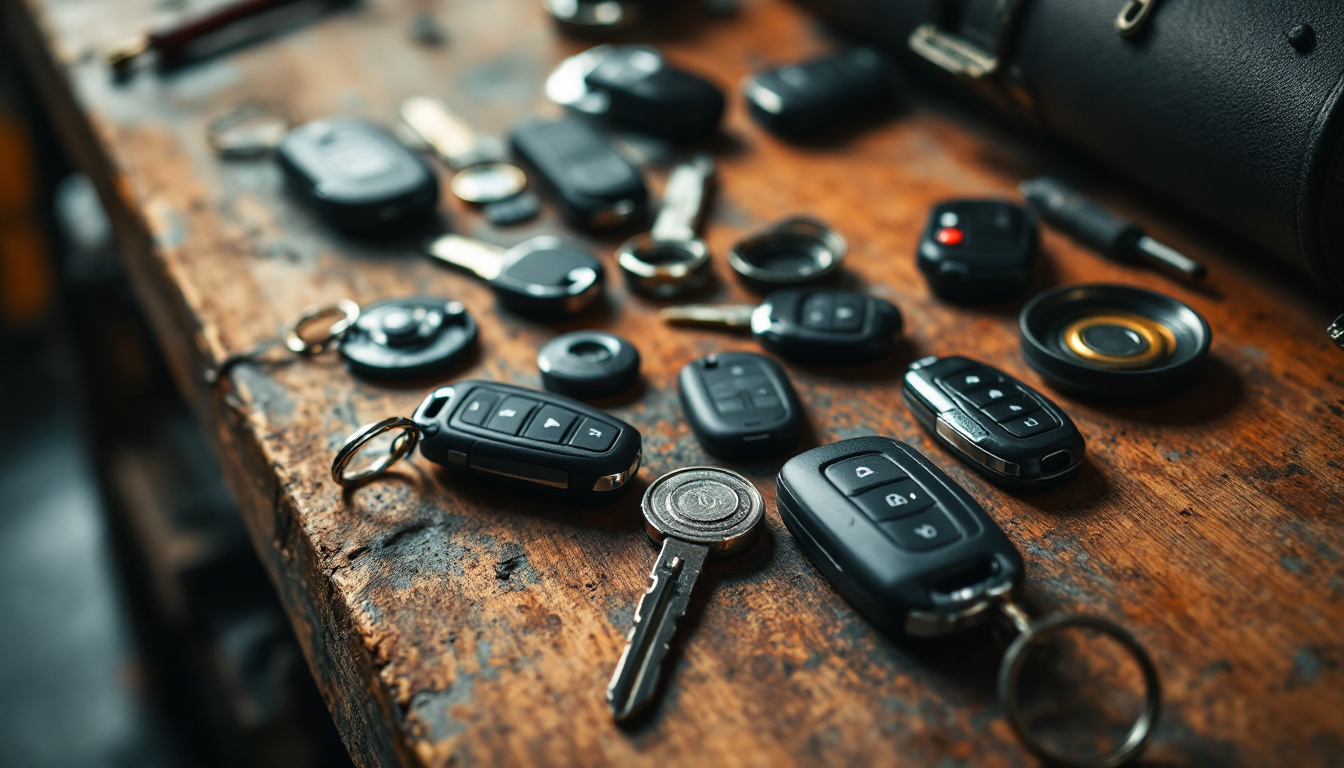
As of August 2026, a fleet spare key that suddenly stops working almost always comes down to five faults: a flat fob battery, a remote that dropped its pairing, a key cut without ever being properly programmed, a worn blade or ignition cylinder, or credentials wiped by module work on the vehicle. Fixes across Dallas–Fort Worth start at the price of a coin cell and run to $120–$250 for an immobilizer resync and $130–$500 for a replacement key by type. Find out which one you have before a driver is stranded — call (817) 813-8746.
Quick Answer: Separate the Three Jobs a Key Does
A key opens the door. That is mechanical, or a radio remote. It can work perfectly while the rest of the key is useless.
A key turns the ignition or wakes the start button. Also largely mechanical or proximity-based. Still no engine involved.
A key proves it is allowed to start the engine. That is the immobilizer credential, and it is the part that fails where you cannot see it. A key can do the first two jobs flawlessly and fail the third, which is why “the key works but the truck will not start” is such a common and confusing fleet complaint.
Which of the three failed tells you the price. A remote that stopped unlocking is a cheap problem. A credential that stopped being accepted is a programming problem. They are not the same call and should not get the same quote.
The Five Causes and What Each Costs to Fix
Ranges below are our typical DFW mobile pricing. For context, Kelley Blue Book’s dealership survey puts dealer fob replacement commonly between $150 and $500 or more before a tow, which is why diagnosing correctly matters before anyone orders a part.
| What failed | How it shows up | Typical DFW mobile fix | How urgent |
|---|---|---|---|
| Fob battery dead | Buttons do nothing; push-start may still work held to the column | Coin cell, minutes | Low |
| Remote lost its pairing | Doors ignore the buttons but the engine still starts | $120–$250 resync | Low |
| Key cut but never programmed | Turns the ignition, engine cranks and dies or never fires | $130–$500 by key type | High — it was never a spare |
| Worn blade or worn cylinder | Sticks, needs jiggling, works on some doors and not others | New key, or ignition repair after diagnosis | Medium, worsens fast |
| Credentials cleared by module work | Every key stops starting the truck at once | $120–$250 relearn | High — truck is down |
| Antenna ring or receiver failed | All keys refused, security light active, no recent repairs | Quoted after diagnosis | High — truck is down |
Rows one and two are inconvenience. Rows three through six are a truck that will not earn today.
The One That Catches Fleets: A Key That Was Never Really a Spare
This is the failure we see most often on work vehicles, and it is not a failure at all — the key never worked in the first place. Somebody had a blade cut at a hardware counter or a kiosk. It opens the doors and turns the ignition, so it went into the key box labelled “spare for unit 7.” Nobody ever tried to start the truck with it.
Then the primary key is lost on a Friday, the driver grabs the spare, and the engine cranks and refuses to fire. What the company thought was a $0 backup turns out to be a full all-keys-lost recovery, at the worst possible moment, at the highest price the job ever costs.
The test takes thirty seconds and should be part of every fleet handover: start the engine with the spare, let it run, then shut it off. Not the door, not the ignition turn — the engine. Any key that has never done that is not a spare, and a fleet with a box full of untested keys has a box full of door keys.
Cutting versus programming is a genuinely different service. Our pages on key duplication and transponder keys explain where the line sits, and key fob programming covers the electronic half that a blade-only cut never touches.
When Every Key Stops Working at Once
If one key stops starting the truck, suspect the key. If every key stops at the same time, stop suspecting keys entirely. The vehicle has lost its stored credentials or the hardware that reads them.
The usual triggers are module work, a battery event, or interference with the vehicle. A body control or immobilizer module that was replaced or disconnected during an unrelated repair frequently drops every key credential it was holding. That is normal behavior, not damage, and it needs a relearn rather than new keys — the details are in our BCM programming guide.
A truck that has been broken into is a different matter. Treat it as a security event: any key that could have been copied or any credential that could have been added should be invalidated, which is the argument our recovered vehicle rekey guide makes at length. The National Insurance Crime Bureau recorded 850,708 US vehicle thefts in 2024, down 17 percent year over year but still a substantial number, and tool-laden work vehicles are a standing target.
Finally, if every key is refused with no recent repair and no break-in, the reader hardware around the ignition may have failed. That is diagnosis territory, and it is covered alongside the other no-start causes in our guide to a work truck that cranks but will not start.
Real-World Example: The Spare That Was Never Tested
Situation: A landscaping company in Mansfield lost the only working key to a crew truck on a Friday afternoon. They had a spare in the office — cut two years earlier at a hardware counter for about fifteen dollars. It unlocked the doors and turned the ignition. The engine cranked and died instantly, over and over.
What we did: Went to the yard the same afternoon. The blade was correct, but the key had no programmed credential at all, so with the original lost this was a genuine all-keys-lost job. We built new credentials on site, programmed two working keys, and tested both by starting the engine before leaving.
Result: The truck ran Monday morning. The company now starts every spare in its key box once a quarter, and found two more door-only keys doing the same impression of a backup.
A spare key that has never started the engine is not a spare. We prove every key we cut by starting the vehicle with it before we pack up, and we tell fleets to do the same with whatever is already in the drawer. — senior mobile technician, Metroplex Locksmith
A Fleet Key Routine That Prevents All of This
Two working keys per unit, minimum. The least expensive key a fleet ever buys is a second one cut during a visit already being paid for — roughly $70–$180 rather than full price, as laid out in our fleet key replacement cost guide.
Start-test every key quarterly. Thirty seconds per key. It finds door-only keys, dying fob batteries and worn blades before a driver finds them at a job site.
Log which key belongs to which VIN. Most fleets have plenty of keys and no map. A one-line record per key ends the guessing and makes it obvious when one goes missing.
Change fob batteries on a schedule. They are consumables, they cost a few dollars, and replacing them annually across the fleet removes the single most common false alarm.
Treat a missing key as a security event. A key that broke is a maintenance issue. A key that vanished is a risk decision, and on a truck full of tools it deserves a conversation about invalidating credentials.
Bundle key work with other visits. If a unit is already getting module programming, the immobilizer session is open anyway. That is the moment to bring the unit up to two keys.
Texas Licensing and Who You Let Near Your Keys
Anyone making keys to your vehicles should be licensed. In this state that means the Texas DPS Private Security Program — not the trade-licensing agency people assume and name incorrectly. Ask for the license number and proof of insurance before a technician touches a truck.
Expect ownership verification too, and be suspicious of any vendor who skips it. We ask for registration or insurance for the vehicle plus a photo ID, and we call the owner or fleet manager when the names do not match. It is a minor inconvenience that exists so nobody else can have keys made to your trucks.
The Federal Trade Commission’s locksmith guidance covers the bait-and-switch pattern worth avoiding: a very low phone quote that grows once the technician is on site. Honest ranges are wider and hold. Credentialing through the NASTF vehicle security registry and professional standards from ALOA are fair things to ask about, and the trade itself is tracked as a distinct skilled occupation by the Bureau of Labor Statistics.
What to Have Ready When You Call
Tell us exactly what the key does and does not do. Does it unlock the doors? Does the ignition turn or the start button respond? Does the engine crank? Does it fire and die? Each answer eliminates whole categories of cause.
Have the VIN and the year, make, model and trim, and count the keys that genuinely start the engine. If the honest answer is zero, say so — it changes what we bring.
Say what happened recently to the vehicle: repairs, a replaced battery, a break-in, a module swap. That single sentence often identifies the cause before dispatch.
And tell us where the truck sits. We work across the Metroplex from Irving to Hurst, at yards and job sites, and a vehicle that cannot move is the whole reason mobile service exists. More background: lost car keys, car key replacement, dealership key replacement cost and Audi and Volkswagen key replacement for European service vans. Reach us any time through our contact page.
Frequently Asked Questions
Why did my spare key suddenly stop working?
Five faults account for nearly all of them: a flat fob battery, a remote that dropped its pairing, a key cut without ever being programmed, a worn blade or ignition cylinder, and credentials wiped by module work on the vehicle. Which one applies is usually clear from whether the doors, the ignition and the engine each respond.
How do I know if a spare key was ever properly programmed?
Start the engine with it and let it run. Unlocking a door or turning the ignition proves nothing, because a blade cut without programming does both. Any key in your fleet that has never started its vehicle should be treated as untested, and quite possibly as a door key rather than a spare.
All of our keys stopped starting one truck at the same time. What happened?
When every key fails at once the vehicle has lost its stored credentials or the hardware that reads them. Common triggers are a replaced or disconnected module, a significant battery or voltage event, or a break-in. It is normally fixed with an immobilizer relearn at $120 to $250 rather than by buying new keys.
Is a hardware-store key cheaper than a locksmith key?
Only if it works, and for anything with an immobilizer a blade-only cut will not start the engine. That is the false economy that turns a lost primary key into a full all-keys-lost recovery. A properly programmed key runs $130 to $500 by type, and a second one cut in the same visit is roughly $70 to $180.
How many keys should each fleet vehicle have?
Two working keys per unit is the practical minimum, with each one verified by actually starting the engine. The second key is far cheaper when it is made during a visit you are already paying for than as an emergency months later, and it is the difference between a delay and a day of downtime.
Can you test our existing spare keys while you are on site?
Yes, and it is worth asking for. On a fleet visit we can check the keys in your key box against their vehicles, identify any that were never programmed, replace weak fob batteries and flag worn blades. Most fleets discover at least one key that would have failed on the day it was needed.
The Bottom Line
A spare key either starts the engine or it does not, and most fleets have never checked. The failures that matter — a key that was cut but never programmed, or credentials cleared by a module swap — are silent right up until the morning a driver needs the backup. Both are cheap to prevent and expensive to discover.
Start-test every key in your box this quarter. If any of them fail, or if you would rather we test and top up the whole fleet in one visit, we will come to your yard anywhere in Dallas–Fort Worth. Call (817) 813-8746 or reach us at our contact page.