
Fleet Vehicle Lockout Cost in DFW (2026): Work Trucks, Vans and Equipment
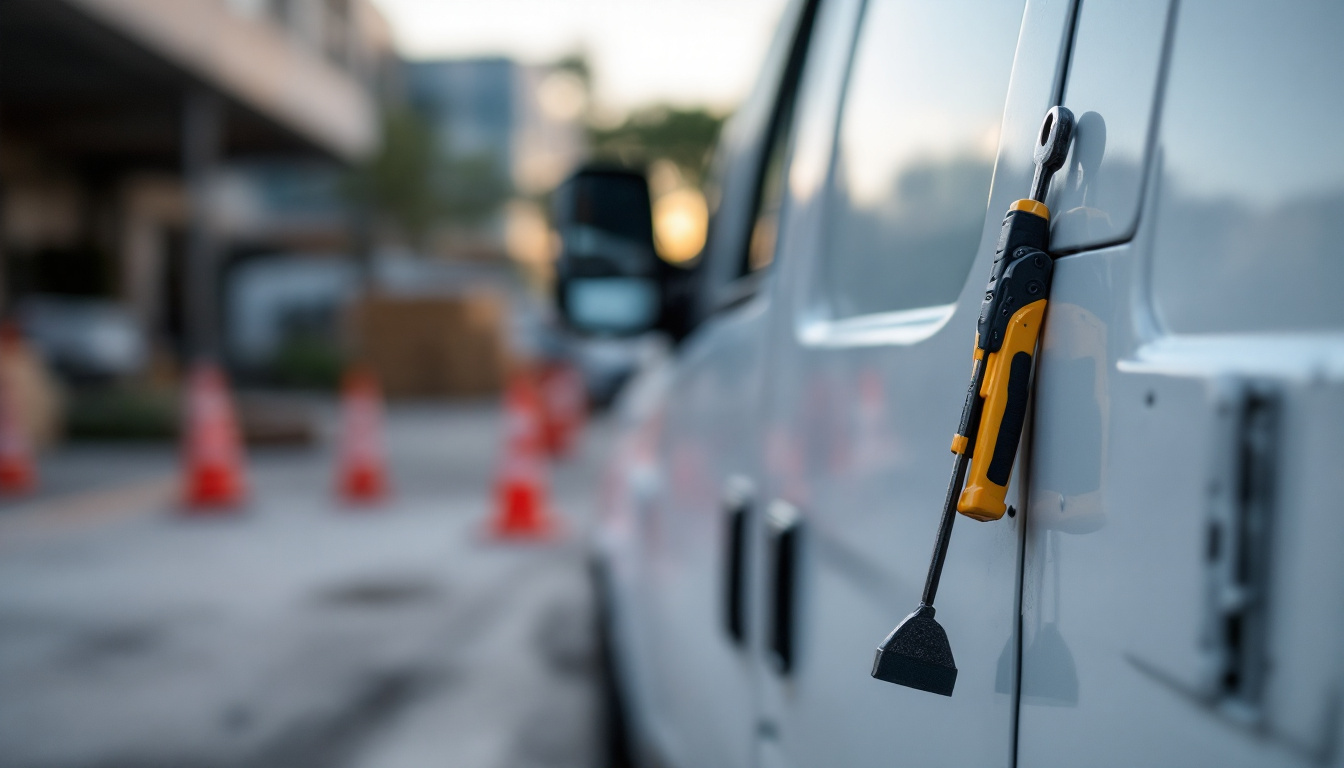
As of August 2026, a commercial vehicle lockout across Dallas–Fort Worth runs about $75–$150 for a standard cab opening, $85–$175 when the engine is still running, $95–$185 for trunk or cargo-only access, and $125–$225 after hours or overnight. A job-site call sits at $75–$175. If no key survives anywhere, the visit becomes a key job at $150–$500 or more. Call (817) 813-8746 for a range before we roll.
Quick Answer: Four Things That Decide a Fleet Lockout Invoice
1. Whether a working key still exists anywhere. Opening a door is a mechanical problem. Starting a truck with no key left in the world is a security problem. The first is $75–$175. The second starts at $150. Everything else is secondary to that question.
2. Which opening the driver needs. A cab door, a sliding side door, a swing-out cargo pair and a roll-up box door are four mechanisms, not one. That is why cargo-only access is quoted separately at $95–$185.
3. What time the phone rings. Crews roll before dawn and finish after dark. A call at five in the morning lands in the $125–$225 band because a technician is being pulled out of a night, not out of a queue.
4. What the truck was doing when it locked. A parked pool car and a loaded box truck blocking a dock are the same lock and very different money on your side of the ledger. We price the opening. You are paying for the hour.
Typical DFW Commercial Lockout Pricing, Line by Line
These are the ranges we quote across the Metroplex before anyone looks at the vehicle, drawn from our own mobile work on work trucks and vans rather than a national consumer average. For scale, AAA reports it rescues roughly four million locked-out drivers a year. Run twelve vehicles and eight drivers and you simply hold more tickets than a household does.
| Line item | Typical DFW mobile range | Typical dealership path | Notes for a fleet |
|---|---|---|---|
| Standard cab lockout, business hours | $75–$150 | Not offered | Pool cars, pickups, service vans |
| Keys locked in with the engine running | $85–$175 | Not offered | The most common fleet version |
| Trunk or cargo-area only | $95–$185 | Not offered | Tools and parts locked away from the crew |
| Job-site lockout | $75–$175 | Not offered | Access, mud and traffic control all matter |
| After-hours or overnight | $125–$225 | Closed | Pre-dawn roll-outs and night shifts |
| Lockout that turns out to be all keys lost | $150–$500+ | Tow plus appointment | Now a key job; ownership proof required |
| Tow instead of an opening | $100–$250 | Plus dealer labor | Buys you nothing but a change of address |
Read the last row against the one above it. A tow is not a cheaper option; it is the same problem relocated, with the truck now out of your control and a service lane between you and it.
Why the Engine Is Usually Still Running
Consumer lockouts happen in grocery store parking lots with a cold, quiet car. Fleet lockouts rarely look like that. The truck is idling, for a reason the driver considers non-negotiable.
In a DFW August, the reason is air conditioning. A crew working a line in Dallas is not shutting a van down at two in the afternoon and coming back to a cab that has been baking. The engine stays on, the doors get shut out of habit, and the keys are on the seat.
The second reason is the equipment. A compressor, a welder, a reefer unit, a lift gate, an inverter running chargers — plenty of upfitted vehicles are generators on wheels, and what they power stops when the engine does. Shutting off the truck means shutting down the job.
The third reason is the least discussed. On many push-button platforms, letting the doors auto-lock with the fob inside is a two-second mistake with no warning attached, usually made by whichever crew member moved the truck last.
All of this is why the running-engine line item exists at $85–$175 as its own number rather than a footnote on a consumer price list. The vehicle is live, exhaust is going somewhere, and fuel burns the entire time we are en route. Our guide to keys locked inside a running vehicle walks through that scenario; the fleet version differs mainly in how much is idling behind the locked door.
Cab, Cargo Area and Box Doors: Three Jobs at Three Prices
Ask a fleet manager what a lockout costs and the honest answer starts with a question: which door? Commercial vehicles have several, and they are not equivalent.
The cab. The closest thing to a consumer lockout, and where the $75–$150 band lives. A crew-cab pickup or service van front door uses hardware a trained technician can work non-destructively. On most units it is the fastest part of the day.
The sliding or swing-out cargo doors. Cargo-side hardware is heavier, often further from the actuator, and has been slammed thousands of times by people carrying things. That is the $95–$185 line, and it comes up constantly — the cargo bay is where every tool lives, and a crew that can sit in the cab but cannot reach the tools still cannot work.
The box or roll-up door. Medium-duty box trucks add padlocks, cam locks and roll-up latch assemblies that have nothing to do with the vehicle’s automotive locks. Sometimes the answer is a key, sometimes a rekey of the cargo hardware. Variation between upfitters is enormous, so anything past a straightforward opening is quoted after diagnosis rather than over the phone.
One case catches companies out regularly: a cab that is locked with a cargo area that is not, or the reverse. Have the driver try every handle before you call. Trucks are often already half open.
Whatever the door, the standard is non-destructive entry. Every year we see units where somebody worked a rod down a window channel and bent the linkage, or levered a frame for a wedge and left a door that never sealed again. A $95 opening becomes a body-shop invoice. Our mobile car locksmith service exists to keep that from being the story.
Why a Loaded Truck Is Priced Against Downtime, Not Minutes
Here is the part most cost guides skip. The invoice for a lockout is small and predictable. The cost of one is neither, and the two numbers are not related.
Run the arithmetic. A three-person crew stands down for forty-five minutes: loaded wages, the truck, the appointment that now slides, and the two jobs behind it. Against that, an $85–$175 opening is not the expense — it is the thing that ends the expense. Fleets that understand this call immediately; the rest shop for an hour to save less than the hour cost them.
Locksmithing is a distinct skilled trade tracked by the U.S. Bureau of Labor Statistics, with a national average wage near $50,000 a year. The practical meaning is that the person who shows up is a trained technician with tooling. Price a lockout as skilled labor delivered on demand and the ranges stop looking arbitrary.
Time of day is the second lever. Construction, landscaping, plumbing and delivery crews in this metro roll at five in the morning, and a lockout at 5:10 a.m. falls inside nobody’s business hours — hence the $125–$225 band. This one is partly controllable: a yard check before crews load out costs nothing and catches the truck nobody can find a key for while there is still time.
The third lever is whether we already know you. A standing fleet arrangement is a dispatch shortcut, not a discount card. With your vehicle list, VINs, key inventory and authorized approvers on file, the call stops being an interview and nobody is spelling a model name over a diesel engine. We know whether the unit is a proximity platform before we leave, so the right tooling is aboard the first time.
The fourth lever changes the bracket entirely: a lockout that is really a lost-key job. The driver says the keys are locked in. Sometimes they are not — they are in a gravel lot, in another truck, or in a pocket that went home at shift change. We open the door and nothing is inside. The visit is now key work at $150–$500 or more, because a credential has to be made and programmed rather than a door simply opened.
That crossover is cheaper handled on the spot than discovered later. A technician already at your yard with the unit open moves straight into cutting and programming; the alternative is a tow at $100–$250, an appointment, and a truck you cannot see. If the immobilizer or body module is the real fault, that is a third category again — our breakdown of car computer programming cost covers where the boundary sits.
Which brings up the spare-key math, the only genuinely cheap answer on this page. Most fleet lockout calls we run would never have been placed if a second key existed and was reachable. Additional keys cut during a visit you are already paying for run $70–$180 each, against $130–$250 for a first transponder key, $180–$350 for a fobik and $250–$500 for a proximity fob. Our fleet key replacement cost guide works that program through unit by unit; car key replacement covers the service itself.
Two rules make spares work. Label every key to a unit number, and keep at least one spare somewhere other than the vehicle it opens. A spare in the glovebox of its own van is not a spare. It is a second key locked inside the same truck.
Real-World Example: A Pre-Dawn Lockout on a Grand Prairie Yard
Situation: A mechanical contractor in Grand Prairie called at 5:40 on a summer morning. A crew lead had started a cargo van for the A/C while he loaded, shut the sliding door, and the vehicle locked itself with the fob on the seat and the engine idling. Three vans were boxed in behind it, so four crews were stopped, not one.
What we did: Mobile response to the yard, non-destructive entry on the cab door, engine still running, keys recovered from the seat. While the technician was on site the manager asked about the rest of the fleet; two other vans had exactly one key each. Those were scheduled for spares later that week rather than sold as an emergency on the spot.
Result: The van was open and all four crews were rolling well inside the hour. The company paid one after-hours lockout instead of losing a morning across four teams, and the follow-up visit put labeled spares on every single-key unit.
The lockout calls I run at five in the morning are almost never about a lock. They are about a company that has one key for a truck that four people drive. Open the door, then fix the reason. — senior mobile technician, Metroplex Locksmith
Licensing, "Free Lockout" Ads and Texas Consumer Protection
Locksmith licensing in Texas sits with the DPS Private Security Program — not with the trade-licensing agency people assume constantly. Ask any vendor for license and insurance before they touch a company vehicle. A real one answers without hesitating.
The advertising trap is worth naming plainly, because fleets meet it more than consumers do. A listing promises a $19 or $29 lockout, or a free lockout bundled with something else. A van arrives, the on-site price bears no resemblance to the phone quote, and the invoice is written after the work. The FTC’s consumer guidance on locksmith bait-and-switch describes exactly this pattern. Treat an unusually low advertised price as information about the vendor.
Three questions filter most of it out. Will you give me a range before you dispatch? What is your Texas license number? Will the invoice carry the company name I called? A vendor who deflects on all three has told you what you needed to know. Professional standards through ALOA and vehicle-security credentialing tracked by NASTF are fair to ask about too, particularly if the visit might turn into key or module work.
Security belongs in the same conversation, because loaded work trucks are targets. Vehicle theft in the United States fell 17 percent in 2024 to 850,708 units, per the National Insurance Crime Bureau — the largest drop in forty years, though the Chevrolet Silverado 1500 still sits on the most-stolen list at 21,666. If a key has gone missing rather than been shut inside, treat it as a security event.
What to Have Ready When You Call
Lockout calls quote faster and finish faster when the caller has five things in front of them.
The exact location, in the terms a driver would use. Not just a street in Irving but which gate, which lot, whether the yard is fenced, and whether a badge or escort is needed. On active job sites this matters more than the address; a closed gate at six in the morning costs everyone twenty minutes.
Year, make, model and body configuration. A cargo van, the passenger version of that same van and a cutaway with a box on the back are three different vehicles wearing similar badges.
Which door needs to open, and whether the engine is running. Say it up front. It changes the tooling and the quote, and finding out on arrival helps nobody.
An honest answer about the keys. Are they visibly inside, or does nobody actually know where they are? That single answer decides whether this is a $75–$175 opening or the start of key work. Guessing optimistically to keep the phone quote low is the most expensive habit in fleet dispatch.
Who is authorized to approve the work. We verify ownership before doing anything: registration or an insurance card plus a photo ID from the person on site, and a call to the fleet manager when names do not match. Keep a short list of who may authorize work on which units, and a registration copy in each glovebox. It is the reason nobody can have your trucks opened while your crew is at lunch.
Two things worth planning while nothing is broken. Check your units by VIN against the NHTSA recall lookup — occasionally a door-lock or ignition condition is a known campaign rather than a fleet quirk. And if a call in Mansfield may turn into key work on a European unit, our Mercedes key replacement cost guide sets expectations before anyone is standing in a parking lot. Straightforward openings are booked through mobile lockout service.
Frequently Asked Questions
How much does a commercial vehicle lockout cost in DFW?
A standard cab lockout during business hours runs about $75 to $150. Keys locked in with the engine running run $85 to $175, trunk or cargo-only access $95 to $185, and after-hours or overnight calls $125 to $225. A job-site lockout falls between $75 and $175 depending on access.
Can you open a work truck while the engine is running?
Yes, and it is the most common fleet lockout we handle. Crews leave vehicles idling for air conditioning, compressors, lift gates and reefer units, then shut a door on the keys. Tell us the engine is running when you call so the technician arrives set up for it. That job is quoted at $85 to $175.
Do you open cargo areas and box doors, or only the cab?
Both, though they are priced separately because they are different mechanisms. Cargo or trunk-only access runs $95 to $185. Box truck roll-up hardware, padlocks and cam locks vary widely by upfitter, so anything beyond a straightforward opening is quoted after diagnosis rather than over the phone.
What happens if the keys are not actually inside the vehicle?
The visit changes from a lockout to key work. With no key surviving anywhere, a new credential has to be cut and programmed to the vehicle, which puts the job in the $150 to $500 or more range. Handling it on site during the same visit is normally far cheaper than a tow at $100 to $250 plus a dealership appointment.
Why do some companies advertise a free or nineteen-dollar lockout?
Because the advertised number is not the invoice. The FTC warns about exactly this locksmith bait-and-switch pattern, where the on-site price bears no relationship to the phone quote. Ask for a range before dispatch, ask for the Texas DPS Private Security license number, and confirm the invoice will carry the company name you called.
How do we stop having lockouts in the first place?
Put a labeled spare on every unit and store at least one spare away from the vehicle it opens. Additional keys cut during a visit you are already paying for run about $70 to $180 each, compared with $130 to $500 for a first key on a unit. Most fleet lockout calls we run would never have been placed if a reachable spare existed.
The Bottom Line
A fleet lockout is a cheap invoice attached to an expensive hour. The opening is a known number between $75 and $225 depending on the door and the clock. What it buys is a crew back at work this morning instead of this afternoon, and a truck that never leaves your yard on a hook.
Call the moment it happens rather than after half an hour of shopping, tell us honestly whether anyone knows where the keys are, and let the same visit put spares on your single-key units. We are fully mobile across Dallas–Fort Worth — yards, job sites, docks, lots and roadsides. Call (817) 813-8746 or reach us through our contact page.