
New Module In, Fleet Truck Still Will Not Start: What Programming Got Skipped
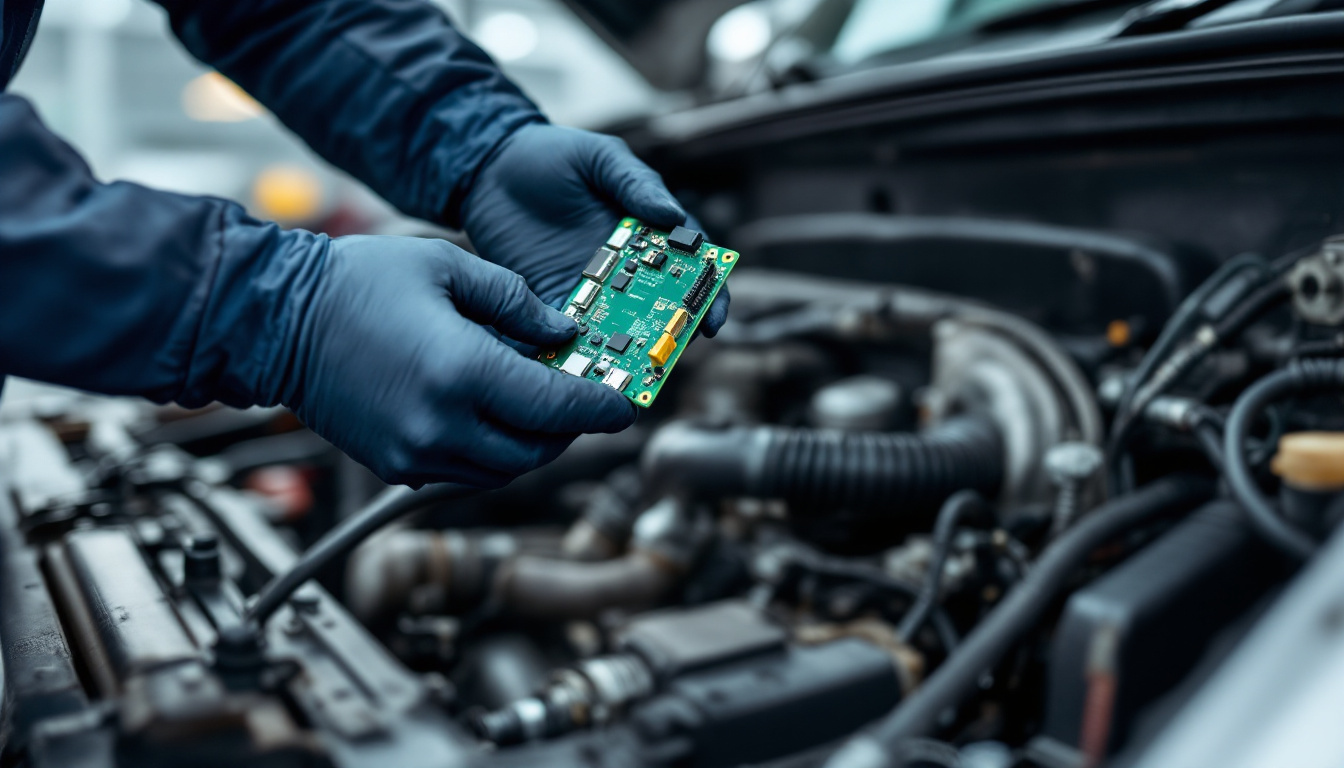
As of September 2026, a fleet truck that still will not start after a new module went in is almost always an unprogrammed module rather than a bad one, and in Dallas–Fort Worth the fix runs $180–$400 for programming a correctly chosen part, $250–$700 when the module itself also has to be sourced, and $95–$185 for the diagnosis that tells you which of those you are buying. A module is a blank computer until it is coded to your truck. Fitting one and turning the key changes nothing on most vehicles built this century. Call (817) 813-8746 and we bring the programming equipment to the yard.
Quick Answer: What Usually Happened
The module was never programmed. By far the most common cause. A replacement engine, body or transmission controller ships without your truck’s VIN, its immobilizer relationship or its configuration. It bolts in, it powers up, and it refuses to let the engine run.
The module is programmed but not married to the keys. On anything with an immobilizer, the controller and the key data have to agree. A freshly coded module that has never met your keys will crank and cut out, or crank and do nothing at all.
It is the wrong part number. Superseded numbers, cross-year listings and marketplace photos that do not match the box catch out good mechanics regularly. A near-miss part sometimes powers up and still will not accept coding.
It was never the module. A surprising share of the trucks we see with a new controller in them had a key, ignition switch or wiring fault all along. The module was replaced on a guess and the original fault is still there.
Work Through It in This Order
Before anybody buys another part, five checks separate the cheap answers from the expensive ones. Most can be done in your own yard in under half an hour.
1. Confirm the truck cranks. Crank and no start is a fuel, spark, immobilizer or programming conversation. No crank at all points more often at a battery, a starter circuit, a neutral safety switch or an ignition switch, and a new engine controller was never going to fix any of those.
2. Watch the security or immobilizer light. A light that flashes rapidly, stays on solid or comes on the moment you crank is the vehicle saying it does not recognise the key or the controller. That is a programming conversation, not a mechanical one.
3. Try the other key. If the truck has a second key, use it. Identical behaviour on both keys points at the vehicle. Different behaviour points at a key. It costs nothing and it eliminates an entire branch of the fault tree.
4. Check the battery properly. Programming is unusually sensitive to voltage, and a marginal battery that cranks well enough to fool you will abort a coding session halfway through and leave the module in a worse state than it started. A truck that has sat is its own particular case, which we covered in our write-up on the fleet truck that sat for months.
5. Photograph the old module and the new one. Part number, hardware number, software number, connector count. Send both photographs when you call. Roughly one no-start-after-replacement call in five is resolved by that photograph alone, because the part is visibly not the right one.
What Each Outcome Costs in DFW
These are our own first-party mobile ranges for commercial work across the metroplex. The diagnosis fee is credited into the repair when you proceed.
| What it turns out to be | Typical DFW mobile range | Time on site |
|---|---|---|
| Diagnosis to identify the actual fault | $95–$185 | Under an hour in most cases |
| Programming a correct module already fitted | $180–$400 | One to two hours |
| Module sourced, fitted and programmed | $250–$700 | Depends on part availability |
| Immobilizer or key relationship rebuilt | $120–$250 | Often same visit as programming |
| It was a key all along | $130–$250 | Same visit |
| It was the ignition switch or cylinder | $150–$350 | Same visit |
| All keys lost discovered during the job | Add $75–$200 | Longer, ownership proof needed |
| Second unit handled the same visit | $70–$180 per key | Marginal, no second trip |
Why a New Module Does Not Just Work
A modern vehicle controller is a general-purpose computer that becomes your truck’s computer only when it is told to. Three things have to happen, and a parts counter cannot do any of them.
First, the VIN and configuration are written in. The controller needs to know the engine, the transmission, the axle ratio, the emissions calibration and often the body options. Two trucks that look identical in a yard can need different configurations because they were built for different markets or specifications.
Second, the software is loaded or updated. A replacement part frequently arrives with older software than your truck expects, and the two have to be reconciled before anything runs.
Third, on anything with an immobilizer, the controller has to be introduced to the keys. That relationship is a security feature by design, and it is exactly why a stolen controller from a donor vehicle does not simply transfer. The full breakdown of what each module costs on fleet work is in our guide to fleet ECM and PCM programming cost in DFW, and the general consumer version sits in car computer programming cost in Arlington and DFW.
Which Module Are You Actually Buying?
Fleet offices frequently call the whole category the computer, but the four common ones fail differently and cost differently.
The engine or powertrain controller runs fuelling, timing and emissions. A failure here is usually a no-start or a truck that runs badly and throws powertrain codes. That is the ECM and PCM programming category.
The body controller runs doors, lights, wipers, alarm and much of the immobilizer logic. Its symptoms are electrical oddities rather than mechanical ones — interior lights behaving strangely, locks that stop responding, a security light with no engine fault. We wrote that failure pattern up separately in our piece on BCM programming near me in DFW, and the service page is BCM programming.
The transmission controller produces shift faults, limp mode and stuck gears, and is covered under TCM programming. The immobilizer or security module is its own animal and lives under immobilizer repair. On European commercial vans the security function is bundled into a single expensive unit, which is why Sprinter-based fleets quote higher than domestic ones; the pricing shape for that platform family is visible in our guide to Mercedes key replacement cost in DFW.
Real-World Example: Two Controllers and a Twelve-Dollar Fault
Situation. A plumbing contractor with a yard in Bedford had a one-ton service truck that cranked and would not fire. An independent shop replaced the engine controller. No change. The shop sourced a second controller from a different supplier. Still no change. Three weeks and two modules later the truck had not moved and the office called us because somebody suggested the key.
What we did. We diagnosed it at the yard. The second controller was the correct part and had been coded properly — but it had never been married to the truck’s keys, and the truck’s only remaining key had a failed transponder chip inside an intact-looking head. Two faults stacked on top of each other, which is why swapping controllers kept changing nothing.
Result. We rebuilt the immobilizer relationship, cut and programmed two fresh keys, and the truck started that afternoon. The controller that had been condemned first was fine. The customer kept it as a shelf spare, which was the only good thing to come out of three weeks of downtime.
Nobody replaces a module twice on purpose. It happens because a no-start gets treated as a parts problem when it is usually a data problem, and data problems do not show up on a parts counter. — senior mobile technician, Metroplex Locksmith
Used, Remanufactured or New
Fleet budgets push managers toward used controllers, and sometimes that is the right call. It depends entirely on the platform.
A used module from a matching vehicle can often be cleared and recoded to your truck. On some platforms it cannot, because the part is locked to the donor VIN in a way that is not reversible outside the manufacturer. Buying one of those is buying a paperweight, and it is not obvious from the listing which kind you have bought.
Remanufactured units are usually the safer middle ground: supplied blank or reset, expecting to be coded. New from the manufacturer is the most predictable and the most expensive, and on some late-model platforms it is the only path that works at all.
The honest position is that we tell you which category your truck falls into before you spend anything, and we say so plainly when a unit is dealer-only. Getting that answer costs a diagnosis fee and saves the three-week version of the story above. Aftermarket upfit wiring adds a further wrinkle, which we covered in our write-up on a van showing no key detected after an upfit.
When to Stop and Call Somebody
Stop as soon as the free checks are exhausted. Specifically: stop if the security light behaves abnormally, if both keys act the same, if the truck cranks strongly and simply will not fire, or if a module has already been replaced once without improvement. Every one of those points at programming, and no amount of further parts swapping resolves a programming fault.
Stop also if anyone suggests towing the truck to a dealership as the only option. Mobile programming exists precisely so a truck that cannot drive does not have to. A tow across the metroplex is $100–$250 before any work begins, and on a chassis cab with a service body it is considerably more.
Do check the free things first. Run the VIN through the National Highway Traffic Safety Administration recall lookup — ignition and electrical recalls on commercial-chassis vehicles are not rare, and a covered repair is better than a paid one. The background on what we can and cannot reach on late-model platforms is governed by the National Automotive Service Task Force Vehicle Security Professional framework, which is how legitimate access to manufacturer security data works.
Choosing Who Touches the Truck
Module work is where the gap between a competent vendor and a confident one costs the most, because the failure mode is a truck that stays broken while the invoices accumulate.
Texas locksmiths are licensed through the Department of Public Safety Private Security Program, not TDLR. Ask for the licence. Ask what equipment will be on the van for your specific platform, and ask directly whether your truck is one they have programmed before — a straight answer to that question is the most useful thing you will hear.
On pricing, the Federal Trade Commission’s guidance on locksmith bait-and-switch is as relevant to a $400 programming job as to a $90 lockout. A diagnosis fee quoted on the phone should be the diagnosis fee on the invoice. Professional standards from the Associated Locksmiths of America describe what ordinary competent practice looks like, and the Bureau of Labor Statistics recognises locksmiths and safe repairers as a distinct skilled occupation with a national average wage near $50,000 — useful context for why programming is not priced like an oil change.
One security note worth keeping in view: immobilizer and controller security exists because vehicles are stolen in volume. The National Insurance Crime Bureau recorded 850,708 vehicles stolen in the United States in 2024, down 17 percent from 1,020,729 in 2023, with full-size pickups prominent in the model list. The friction you are fighting during a module job is the same friction that keeps your truck in the yard overnight.
What to Have Ready When You Call
The VIN. Not year and model. The VIN determines the module variant, the configuration and whether the platform can accept a used part at all.
Photographs of both modules. Old and new, showing every number on the label. This resolves the wrong-part cases immediately.
What has already been done. Who replaced what, in what order, and whether anything changed. A history saves diagnosis time and diagnosis time is billable.
How many keys exist. One working key is a much shorter visit than none. If the answer is none, say so on the phone so we bring what an all-keys-lost job needs and you are not surprised by the surcharge.
We program modules at yards and job sites from Arlington to Irving and across the rest of the metroplex. The full range of what that covers is on our advanced services page, and the near-me version of this question is answered in ECM programming near me in Fort Worth.
Frequently Asked Questions
We fitted a brand-new module from the dealer. Why will the truck still not start?
Because a new module arrives blank. It has no VIN, no configuration and no relationship with your keys until somebody writes those in. On most vehicles built this century, fitting the part is roughly half the job and the programming is the other half, which is why the truck behaves exactly as it did before.
Can you tell over the phone whether it is the module or the key?
Not reliably, but we can narrow it a long way. Whether it cranks, how the security light behaves and whether a second key acts differently eliminate most of the fault tree in a two-minute conversation. The remaining ambiguity is what the $95–$185 diagnosis resolves, and that fee is credited into the repair.
Do we have to tow the truck to a dealership for programming?
No. We bring the programming equipment to your yard, job site or the roadside, which is the whole reason mobile module work exists. Towing a commercial chassis across the metroplex costs $100–$250 before any work starts, and on an upfitted one-ton it is usually more than that.
Will a used module from a matching truck work?
Sometimes, and it depends on the platform. On some vehicles a used controller can be cleared and recoded to your VIN; on others it is locked to the donor and cannot be moved. We tell you which category your truck is in before you buy anything, because the wrong answer means the part is unusable.
The shop already replaced the module twice. Is the truck worth fixing?
Usually yes, because two failed replacements is strong evidence the module was never the fault. Stacked faults are common: a correct part coded correctly, plus a separate key or wiring problem that was there the whole time. A proper diagnosis finds both, which repeated parts swapping cannot.
How long does programming take once you are on site?
One to two hours for a straightforward module on a truck with a working key, longer where the immobilizer relationship has to be rebuilt from nothing or the platform enforces a timed security wait. We give you the expected window when we see the VIN, before the visit rather than after.
The Bottom Line
A module is hardware plus data, and the data is the part that makes the truck run. Replacing the hardware and skipping the data produces exactly the symptom you are looking at: a new part, an unchanged no-start and an invoice with nothing to show for it.
Before a third module goes in, get the truck diagnosed where it sits. Call (817) 813-8746 with the VIN and a photograph of both modules, or reach us through our contact page. We come to the truck.