
Your Van Says No Key Detected After an Upfit: Trackers, Inverters and Antennas
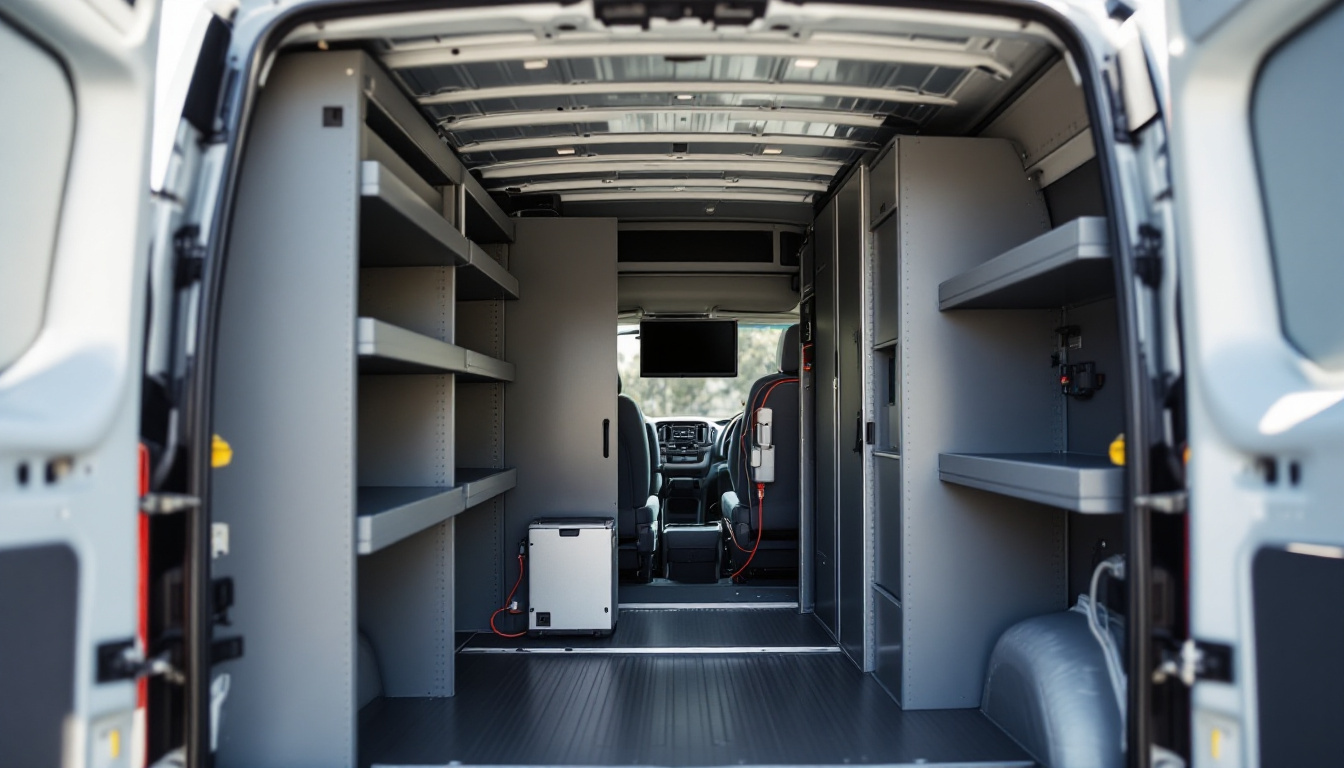
As of August 2026, a work van that starts reporting no key detected right after an upfit almost never has a broken fob. Something moved. Most of these are an antenna disturbed behind trim, a module left unsynced by a long battery disconnect, or electrical noise from new equipment. A diagnostic-only visit runs $95–$185 and an immobilizer or key sync $120–$250. Before you buy a fob, call (817) 813-8746.
Quick Answer: Ask What the Upfitter Took Apart
1. Timing is the whole diagnosis. If the van was fine on the way to the shelving shop and intermittent on the way back, it did not spontaneously develop a security fault. Something was unplugged, pinched, relocated, powered down or added.
2. Rule out the free thing first. A flat coin cell in the fob costs nothing to eliminate and produces exactly this complaint. Try the second fob before anything else. If both behave the same way, the fob is almost certainly innocent.
3. Position-dependent faults point at antennas. A fob that works from the driver’s seat but not the passenger seat, or up front but not near the cargo area, is describing an antenna problem — one unplugged during trim removal, or one whose radio picture changed when a steel bulkhead went in.
4. Intermittent-with-equipment-running points at noise. If the fault appears only when the inverter is on, the light bar is lit or the charger is working, you are looking at interference rather than a failed part. That is a wiring conversation, not a key purchase.
Six Causes, Ranked by How Often We See Them
These are ordered roughly by frequency on upfitted work vans across DFW, and the costs are what the security-side repairs run mobile. Electrical rework on aftermarket equipment belongs to the upfitter or an auto electrician, and we say so rather than selling hardware the van does not need.
| Likely cause | What it usually means | Typical DFW mobile range | Typical dealership path |
|---|---|---|---|
| Flat fob battery | Coincidence, not the upfit — rule it out free | No charge to eliminate | Appointment to be told the same thing |
| Antenna unplugged, pinched or relocated | Trim came out and a connector never went back | $95–$185 diagnostic-only visit | Drive or tow in, diagnostic appointment |
| Long battery disconnect during the upfit | Module needs a relearn or a fresh key sync | $120–$250 immobilizer or key sync | Appointment, dealer relearn pricing |
| Inverter, light bar or charger radiating noise | Interference across the frequency the fob uses | $95–$185 to confirm, then quoted after diagnosis | Often declined as aftermarket |
| Tracker spliced into a security-adjacent circuit | Wrong feed tapped instead of a clean one | Quoted after diagnosis | Often declined as aftermarket |
| Bulkhead or steel shelving changed the RF picture | A rear antenna can no longer see the fob | Quoted after diagnosis | Rarely diagnosed as an upfit issue |
| BCM disturbed, replaced or reconfigured | Body module lost or never received its configuration | $180–$450 BCM programming | Appointment plus programming fee |
| Fob genuinely failed or was lost in the shop | A real key job, once the above are excluded | $250–$500 proximity fob; $70–$180 extra same visit | $150–$500 and up at dealers |
One: the antenna nobody knew was there. Push-button vans carry several low-frequency antennas that tell the vehicle where the fob is — commonly behind lower dash trim, in a pillar, under a seat, in the console and somewhere rearward on longer bodies. Shelving, a partition and a floor all mean panels and seats come out. A connector unplugged for access and never reseated, or a harness pinched under a new bracket, produces a van that reads the fob from some seats and not others.
Two: the battery was off for six hours. Upfitters disconnect for good reasons — drilling, welding, running new feeds. On many platforms a long disconnect leaves modules in a state needing a relearn, and on some it disturbs stored key data outright. Depending on generation this shows as no key detected, as a fob that works only at the backup start location, or as a van that starts once and then refuses. A sync at $120–$250 usually settles it, and the same pattern sits behind much of our guide to a fleet spare key that stopped working.
Three: the new equipment is shouting. Cheap inverters, unfiltered LED light bars and some charging systems radiate broadband electrical noise. The fob and the vehicle antennas talk at low power and lose that argument. The fingerprint is unmistakable: fine with everything off, intermittent with the equipment live. No key or module fixes this. Filtering, relocating or properly grounding the device does.
Four: the tracker was spliced into the wrong wire. Telematics units need switched power, and the fastest place to find it is often a wire also doing security or ignition-authorization work. Tapping it can load the circuit or inject noise onto it. A tracker on a clean, fused feed causes no trouble — we are not against them, only against the shortcut.
Five: the van became a steel box. A full steel bulkhead plus floor-to-ceiling shelving changes the radio environment inside a cargo area considerably. If detection was already marginal at the rear doors, the upfit can push it past the edge, and a driver loading from the back finds the van will not see a fob four feet away through a partition. Depending on generation that can be normal for the body rather than a fault.
Six: the boring one. Fobs die, and they get dropped in shops. Once the rest is excluded it is a key job: a proximity push-button fob is $250–$500, with additional fobs programmed the same visit at $70–$180 each. Our key fob replacement cost guide breaks the ranges down by type, and key fob programming covers the work.
Five Checks Before You Call Anyone
1. Try the second fob. Free, thirty seconds, and it splits the problem in half. Different behavior means the first fob is suspect. Identical behavior means the vehicle is.
2. Use the backup start location. Many push-button vans have a marked spot — often in the console, a cupholder or on the column — where you hold the fob against the vehicle to start when the antennas cannot see it. Location and behavior vary by generation, so check the owner’s manual. If the van starts that way, the fob is alive and the antennas or their wiring are the issue.
3. Start it with everything switched off. Inverter off, light bar off, charger unplugged, tracker fuse pulled if your fleet does that safely. If it behaves perfectly with the equipment dead and misbehaves with it live, you have your answer and have spent nothing.
4. Test from several positions. Driver’s seat, passenger seat, side door, rear doors. Write down which work. That map is genuinely diagnostic — it tells a technician which antenna to look behind first.
5. Ask the upfitter two direct questions. Which panels, seats or trim came out, and was the battery disconnected and for how long. Those answers routinely cut an hour off the diagnosis. Nobody is being accused of anything; the information just lives with whoever did the work.
Real-World Example: The Van That Only Started From One Seat
Situation: An HVAC contractor in Lewisville had a new cargo van come back from an upfit with shelving, a bulkhead and a roof-mounted light bar. Within a week the crew reported no key detected two or three times a day. It always started eventually. The installer said it was a vehicle problem; the dealer kept it a day, found no stored fault and handed it back.
What we did: Ran the position test first. It started reliably from the driver’s seat and almost never from the passenger side, pointing at an antenna rather than a fob. Both fobs behaved identically, so the fob was ruled out for free. Pulling the lower passenger trim found a low-frequency antenna connector hanging loose behind a new bracket — unplugged for access, never reseated. We reconnected it, secured the harness, and ran a key sync.
Result: Fixed in the contractor’s own yard for a diagnostic visit and a sync. No fob was purchased. The dealer visit had cost a day of downtime and found nothing, because an intermittent antenna connection frequently stores no fault code at all.
When a van starts misbehaving the same week it comes back from an upfit, the answer is behind a panel far more often than it is inside the fob. We have replaced far fewer fobs on these calls than people expect. — senior mobile technician, Metroplex Locksmith
What to Tell the Upfitter Before the Next Van Goes In
This failure is almost entirely preventable, and the fix is four lines on a work order.
Photograph trim before removal. A phone picture of every connector before a panel comes off takes seconds and removes all doubt about what was plugged into what. It protects the upfitter too, which is why good shops adopt it happily.
Never splice into security or ignition-authorization circuits. Trackers, inverters and accessories get their own clean, fused feed. If a shop cannot say which circuit it tapped, that is the answer to your diagnostic question.
Reconnect and secure every antenna. Any connector unplugged for access gets reseated and the harness routed clear of new brackets and shelf rails. A pinched harness that works today can fail after a month of vibration on DFW concrete.
Note the battery disconnect on the work order — date, duration, and whether a memory saver was used. Sprinter-style and other European-based vans are upfitted constantly and are least forgiving about voltage events, so the discipline matters most there; our Mercedes key replacement cost guide covers what those platforms charge when it goes wrong. Japanese-based commercial vans are more tolerant, though not immune — see Toyota key replacement for how those are priced.
When It Is a Key Job and When It Is a Module Job
The line matters, because the two sit in different price brackets and the wrong guess is expensive.
It is a key job when one fob works and the other does not, when a fob has physically failed, or when a fob went missing during the upfit. A proximity push-button fob is $250–$500 and additional fobs on the same visit are $70–$180 each. All-keys-lost adds $75–$200 per unit — a real consideration if a van went into a shop with one fob and came out with none.
It is a sync job — the most common outcome after a battery disconnect — when the fobs are fine but the vehicle stopped trusting them. Immobilizer or key sync after module work runs $120–$250; see immobilizer repair for the detail.
It is a module job when a body module was replaced, disturbed or reconfigured and no longer holds the right configuration. BCM programming runs $180–$450, with background on our BCM programming page. If the powertrain side was touched, a reflash is $150–$250 and a new module programmed to VIN is $200–$350; more on car computer reprogramming. A diagnostic-only visit at $95–$185 determines which of the three you are buying.
It is not our job when the fault is the aftermarket equipment itself. Noise from an inverter or light bar, a badly grounded charger, or a tracker on the wrong feed is rework for whoever installed it. We show you the evidence and say so.
Texas Licensing and the Quote That Grows on Arrival
Fleet security work attracts the same bait-and-switch operators the Federal Trade Commission has warned consumers about for years: an unrealistically low phone quote, an unmarked vehicle, and an invoice several times larger once the van is apart. Ask three questions before dispatch — what the diagnostic fee is, whether it is credited, and what the price becomes if this is a module rather than a key.
Ask for the license too. Automotive locksmith work in Texas is regulated by the DPS Private Security Program, not the general trade-licensing agency people usually name. Credentials worth asking about include the NASTF Vehicle Security Professional registry, which governs legitimate access to secure vehicle data, and ALOA standards. The Bureau of Labor Statistics tracks locksmiths and safe repairers as a distinct occupation averaging roughly $50,000 a year nationally — useful context when a quote sounds too good to be true.
On the parts side, Kelley Blue Book puts dealer fob replacement at $150 to $500 and up. Security matters for loaded vans too — the National Insurance Crime Bureau recorded 850,708 US vehicle thefts in 2024, a 17 percent drop from 1,020,729 and the largest decline in forty years, but commercial vehicles carrying tools stay attractive. Before spending anything, run the VIN through the NHTSA recall lookup: keyless-entry and module issues have been recall subjects, and a covered repair costs nothing.
What to Have Ready When You Call
The VIN, so the security architecture and antenna layout can be identified before anybody is dispatched. Body length and roof height matter too, because they change how many antennas are fitted.
What the upfit included — shelving, bulkhead, floor, roof rack, light bar, inverter, tracker, charger — roughly when, and whether the battery was disconnected and for how long. That last fact decides whether we arrive expecting a sync or an antenna.
Your position map from the five checks: which seats and doors work, and whether the backup start location works. Also how many fobs exist and whether all came back from the shop.
Finally, where the van is. We are fully mobile across the Metroplex — a yard in Irving, a job site in Mansfield, or a shop apron anywhere between — and an intermittent van is far easier to diagnose where it misbehaves than after a tow. Our contact page reaches us too.
Frequently Asked Questions
Why does my van say no key detected after an upfit?
Most often a proximity antenna behind trim or under a seat was unplugged or pinched when panels came out, or the battery was disconnected long enough to leave a module needing a relearn. Electrical noise from a new inverter or light bar is the third common cause. A flat fob battery is worth ruling out first because it is free.
Can a GPS tracker cause a no key detected fault?
It can, if the installer tapped a security-adjacent or ignition-authorization circuit instead of a clean fused feed, or if the unit injects noise onto the harness. A tracker installed on its own proper feed causes no trouble. Ask the installer exactly which circuit was used before assuming the vehicle is at fault.
Why does my fob work from the driver’s seat but not the passenger seat?
Position-dependent behavior points at the vehicle’s antennas rather than the fob, because a failing fob behaves the same everywhere. One antenna is likely unplugged, pinched or relocated. Map which seats and doors work before calling; that map often identifies which panel to open first and saves diagnostic time.
Does disconnecting the battery during an upfit really cause this?
On many platforms, yes. A long disconnect can leave body and security modules in a state that needs a relearn, and on some generations it disturbs stored key data. An immobilizer or key sync typically runs $120 to $250 and resolves it. Ask upfitters to record the disconnect and its duration on the work order.
Do I need a new fob or is this a programming problem?
Usually programming or reconnection rather than hardware. If both fobs misbehave identically, the fob is probably innocent. A diagnostic-only visit runs $95 to $185 and tells you whether you are buying a $120 to $250 sync, $180 to $450 of BCM work, or a $250 to $500 proximity fob. Guessing is the expensive route.
Will a steel bulkhead or shelving stop the van from reading the fob?
It can change the radio environment inside the cargo area enough to matter, particularly at the rear doors where detection may already be marginal. Depending on generation that can be normal for the body style rather than a fault, so it is worth confirming before anyone buys parts or reworks the installation.
The Bottom Line
A no key detected complaint that appears the same week a van comes back from an upfit is a wiring and configuration story, not a key story. Try the second fob, use the backup start location, switch the new equipment off, map which seats work, and ask the upfitter what came apart. Those five answers narrow it to one of three repairs before anybody spends money.
When it does need hands on it, we come to the van wherever it sits across DFW, diagnose before quoting, and say plainly when the fault belongs to the equipment installer rather than to us. Call (817) 813-8746 or reach us through our contact page.