
Fleet Truck Dash Went Dark: Dead Gauges, a Swapped Cluster and a Truck That Will Not Start
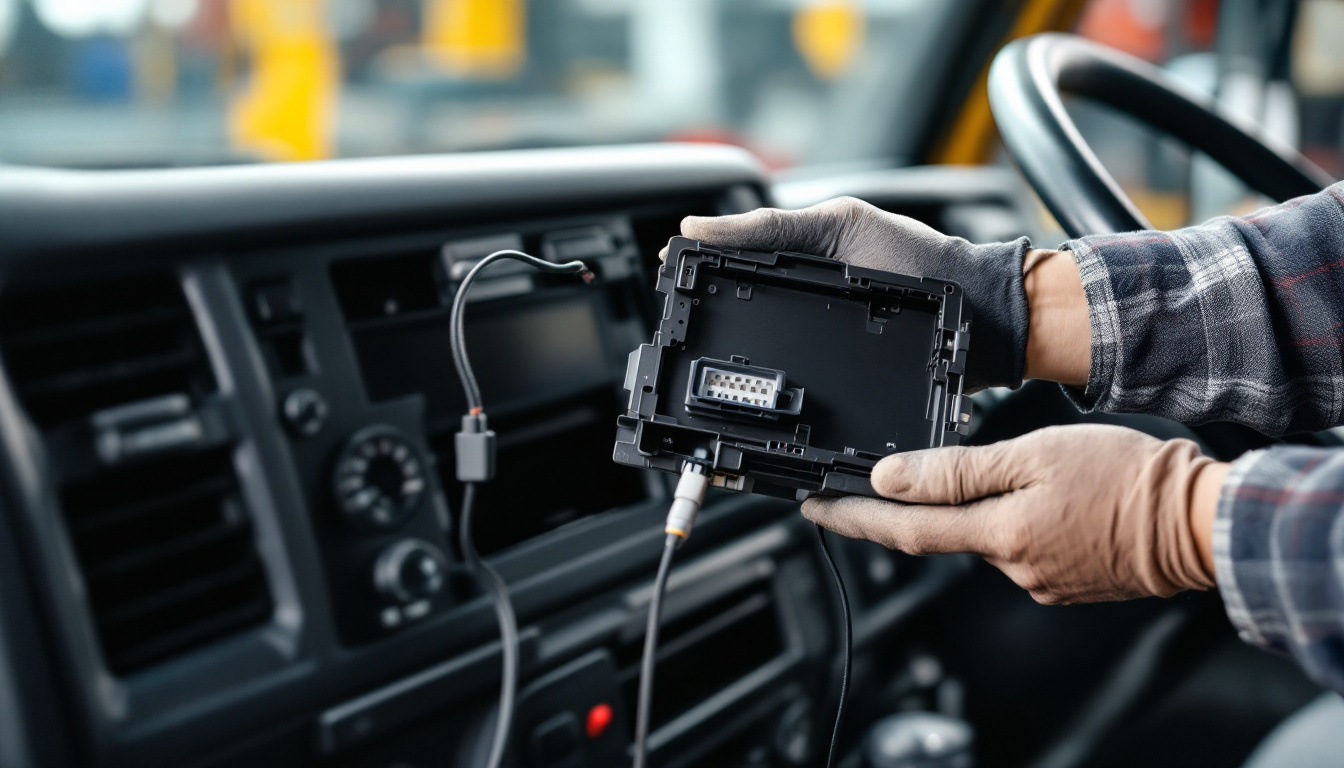
As of October 2026, a fleet truck with dead gauges or a dark dash in Dallas–Fort Worth starts with a $95–$185 mobile diagnostic, usually credited toward the repair; cluster coding, mileage documentation on a replacement and immobilizer pairing are then quoted by VIN, and re-syncing the keys afterward runs $120–$250. The expensive version of this fault is the one a shop creates by fitting a used cluster: the gauges come back, the mileage is now someone else’s, and on many trucks the engine no longer starts. Call (817) 813-8746 with the VIN before a part is ordered.
Quick Answer: Four Different Faults That Look the Same
The dash is dark but the truck runs and drives. Usually power, ground, a fuse or the dimmer control — or a cluster that has failed internally. Check the cheap things first.
The display is lit but the needles lie. Gauges stuck, pegged, or reading nonsense while the odometer still shows. That is typically the cluster itself, and it is repairable more often than it is replaced.
The dash is dark and other things are wrong too. Locks misbehaving, no crank, warning chimes, a radio that resets. The cluster is probably a witness, not the culprit. Look at battery voltage and the body module.
The dash works again after a repair, and now the truck will not start. A replacement cluster has been fitted and not programmed. The mileage is wrong, the security light is on, and the anti-theft system does not recognize the new part. This is a programming job and it is the reason most fleets end up calling us about a cluster.
Symptom, Likely Cause and What It Costs
Typical DFW mobile ranges from our own work. Where a line says quoted by VIN, that is deliberate: cluster work varies too much by platform for a single number to be honest.
| What the driver reports | Most likely cause | Who fixes it | Typical DFW mobile cost |
|---|---|---|---|
| Whole dash dark, truck drives normally | Fuse, dimmer setting, cluster power or ground | Your mechanic, often in minutes | $95–$185 diagnostic if the cause is unclear |
| Needles stuck or wrong, odometer still displays | Internal cluster failure | Cluster repair, then coding if replaced | Quoted by VIN |
| Dash dark plus locks, lamps or chimes misbehaving | Low voltage or body module fault | Mobile module technician | $180–$450 if the body module needs configuration |
| Used cluster fitted, mileage now wrong | Donor cluster carrying its own reading | Mobile module technician | Quoted by VIN, documented |
| New or used cluster fitted, security light on, no start | Cluster not paired to the anti-theft system | Mobile locksmith with programming equipment | Pairing quoted by VIN; key re-sync $120–$250 |
| Scan tool cannot communicate with the cluster | Network or wiring fault, or a dead cluster | Diagnosis first | $95–$185, usually credited |
Read the table from the top. The first row costs almost nothing and gets skipped constantly, because a dark dash looks like an expensive problem and somebody orders a cluster before anyone has checked whether the dimmer wheel was rolled to zero by a driver’s knee.
Step One: Rule Out the Free Causes
Before anything is diagnosed, a fleet manager or a yard mechanic can clear three things in ten minutes.
The dimmer. On many trucks the instrument illumination control can be turned down until the cluster appears dead at night while every gauge is working. It sounds too simple to be worth saying. It accounts for a real share of the calls.
The fuses. The cluster usually has more than one feed — a constant supply and a switched one — and a truck that has had accessories added often has a fuse that was borrowed for something else. Check with a meter rather than by eye.
Battery voltage. A battery that is failing, or terminals that are corroded, produce a dash that flickers, resets or goes dark under cranking. If the truck has been jump-started recently, suspect this before any module. Low voltage makes healthy computers behave like broken ones, a pattern we describe in signs of car computer problems.
If all three are fine and the cluster is still dark or lying, the next question is whether the rest of the truck can still talk to it.
Step Two: Is the Cluster Dead, or Just Not Being Spoken To?
A modern instrument cluster is a computer on the vehicle’s data network. It does not measure speed or temperature itself; it displays what other modules tell it. That gives two very different failures that look identical from the driver’s seat.
In the first, the cluster has failed. Certain truck generations are widely known for it — gauge stepper motors that wear out, solder joints that crack with heat cycles, displays that fade. The cluster is the problem, and it can frequently be repaired rather than replaced, which keeps the original mileage and the original security pairing intact. From a fleet point of view that is the best outcome available, because nothing has to be reprogrammed.
In the second, the cluster is healthy and is not receiving data. A wiring fault, a corroded connector or a failing body module has cut it off. Replacing the cluster in that case fixes nothing and creates the programming problem described below. A scan tool settles which it is: if the other modules respond and the cluster does not, suspect the cluster or its wiring; if several modules are silent, the network or the power supply is the fault. Body-module causes and their prices are in fleet BCM programming cost in DFW.
This is what the $95–$185 diagnostic visit buys. It is the cheapest line on the page and it is the one that decides whether the truck needs a part at all.
Why a Replacement Cluster Can Stop the Truck From Starting
This is the part general repair shops are least prepared for, and it is not their fault — it differs from one manufacturer to the next and from one generation to the next.
On many vehicles the anti-theft system counts the instrument cluster among its members. On a number of Ford trucks and vans from the 2000s and early 2010s, for example, the cluster is the module that stores the programmed keys, so a different cluster means the truck no longer knows its own keys; the generation-by-generation picture for the one-ton trucks is in Ford Super Duty key replacement by generation. On many GM trucks the cluster is configured to the VIN and exchanges identity with other modules, and a mismatched unit produces warning lights and stored faults even where the engine runs; the GM heavy-duty key families are in GM work truck keys in DFW. European company vehicles are stricter again, and a used cluster on those is rarely a plug-in part.
The result is a sequence we see regularly. The gauges fail. A shop sources a used cluster because it is a third of the price of new. The cluster goes in, the dash lights up, and the truck cranks and will not fire, or starts and stalls after two seconds with the security lamp flashing. The shop has done its job correctly and the truck is worse than when it arrived.
The fix is programming: pairing the replacement cluster to the vehicle’s anti-theft system and, where the keys were stored in the old unit, enrolling the keys again at $120–$250. It is done at the truck through the diagnostic port. The same logic applies to engine and body computers, set out in a new module is in and the fleet truck still will not start, and the immobilizer side specifically is on our immobilizer repair page.
The Mileage Problem, and Why Fleets Should Care More Than Anyone
A used cluster displays the mileage of the vehicle it came from. For a private owner that is an awkward conversation at resale. For a fleet it corrupts the record the whole operation runs on.
Maintenance intervals are triggered by the odometer. So are lease mileage allowances, warranty claims, fuel-tax reporting and the resale description when the unit is disposed of. A truck showing forty thousand miles fewer than it has actually covered will miss services; one showing more will be sold for less than it is worth. And an odometer that does not reflect the true distance, with nothing on file to explain why, is a disclosure problem for whoever signs the title when the truck is sold.
Federal law prohibits altering an odometer to misrepresent mileage and sets out what must be done when one is serviced or replaced and cannot show the true figure. We are locksmiths and programmers, not lawyers, so the practical version is this: whenever a cluster is repaired or replaced, the reading before, the reading after and the date should be written down and kept in the vehicle file. We set a replacement to the truck’s true documented mileage where the platform supports it and we record what was done. We do not reduce a reading, for anyone, for any reason.
That is also the strongest argument for repairing the original cluster where possible. A repaired original never loses its mileage and never loses its security pairing, and both of those problems simply do not arise.
Real-World Example: The Cluster From an Online Seller
Situation. A plumbing company in Arlington had a half-ton service truck whose speedometer and fuel gauge had been unreliable for weeks before the whole cluster went dark. Their regular mechanic found a used cluster from an online seller and fitted it on a Friday afternoon. The dash lit up. The truck then cranked without starting, the security lamp flashed, and the odometer showed roughly sixty thousand miles more than the truck had on its last service sticker. It was blocking the shop’s bay over a weekend.
What we did. A diagnostic visit at the shop confirmed the donor cluster was healthy and simply unpaired. We paired it to the truck’s anti-theft system, re-enrolled both of the company’s keys at the $120–$250 line, and set the displayed mileage to the truck’s true figure using the last service record and the reading stored elsewhere on the vehicle as evidence. The before and after readings and the date went onto the invoice for the fleet file.
Result. The truck drove out on Monday morning. The diagnostic was credited into the programming. The mechanic now calls for a quote before ordering a used module rather than after fitting one, which is cheaper for everybody.
Nobody fits a used cluster expecting to disable the truck. It is a reasonable repair that is missing its last step, and the last step is the one that needs programming equipment. Ask before the part goes in and it is a planned hour. Ask afterward and it is a truck stuck in a bay. — senior mobile technician, Metroplex Locksmith
Dealership Versus Mobile
A franchised dealer can supply and program a new cluster for its own brand and, for a truck under warranty, that is where the job should go. Outside warranty, three things make it a poor fit for a working fleet.
A no-start truck needs a tow first, typically $100–$250, and that bill lands before anyone has looked at it. The service lane then replaces rather than repairs, which means a new part at list price. And most dealers will not program a used cluster supplied by the customer at all, which leaves a fleet that has already bought one with a part nobody will finish installing.
Mobile programming is done where the truck is parked — your yard, your mechanic’s bay, a job site. The related engine-computer costs are in fleet ECM and PCM programming cost in DFW.
Texas Licensing and Who Is Allowed to Touch This
Cluster work that involves the anti-theft system is security work. In Texas, locksmiths are licensed by the Department of Public Safety Private Security Program — not TDLR. Ask for the license number. For late-model vehicles, authorized access to manufacturer security functions runs through the National Automotive Service Task Force Vehicle Security Professional registry, and the Associated Locksmiths of America publishes the professional standards for the trade.
The anti-theft link is not a technicality. The National Insurance Crime Bureau recorded 850,708 vehicle thefts in the United States in 2024, with the Chevrolet Silverado 1500 among the most stolen at 21,666. Work trucks are targets, and the pairing between a cluster and the immobilizer is part of what stands in the way.
On price, the Federal Trade Commission’s consumer guidance on bait-and-switch applies: a quote given against a VIN should hold on arrival. The Bureau of Labor Statistics lists locksmiths and safe repairers as a distinct skilled occupation with a national average wage of roughly $50,000 a year. And before paying for any cluster, run the VIN through the NHTSA recall lookup — instrument panel campaigns do exist, and a covered repair costs nothing.
What to Have Ready When You Call
The VIN. Cluster part numbers and security architecture change within a model run. The VIN is the only reliable identifier.
The truck’s true mileage and how you know it. A recent service invoice, an inspection record, a telematics report. If a cluster is replaced, that is the evidence the corrected reading rests on.
Whether a replacement has already been fitted. And if so, where it came from. A donor from the same model and year is a very different job from one that merely looked the same.
What the security lamp is doing. Off, solid, or flashing. Have the driver watch it for the first few seconds after the key is turned.
Every key for the unit. If the keys have to be enrolled again, any key that is not present stops working.
We program clusters at yards and repair shops from Mansfield and Bedford to Lewisville and across the metroplex. The service detail is on our instrument cluster programming page, the full list of module work is under advanced services, and booking is through our contact page.
Frequently Asked Questions
Why will my truck not start after the instrument cluster was replaced?
On many vehicles the anti-theft system includes the cluster, and on some it stores the programmed keys. A replacement that has not been paired to the truck is treated as a foreign part, so the engine cranks without starting or starts and stalls with the security lamp flashing. Pairing it, and re-enrolling the keys at $120 to $250, resolves it.
How much does instrument cluster programming cost in DFW?
As of October 2026 it starts with a $95 to $185 mobile diagnostic that is usually credited toward the repair. Cluster coding, mileage documentation on a replacement and immobilizer pairing are quoted by VIN because they vary widely by platform. Re-syncing keys afterward typically runs $120 to $250.
A used cluster shows the wrong mileage. Can that be corrected legally?
A replacement can be set to the vehicle’s true, documented mileage where the platform supports it, and the before and after readings and the date should be recorded and kept with the vehicle. What cannot be done is reducing a reading to misrepresent the distance travelled. We set true mileage with documentation and nothing else.
Should we repair the original cluster or replace it?
Repair it where possible. A repaired original keeps its mileage and its pairing to the anti-theft system, so nothing needs programming afterward. Replacement makes sense when the original is beyond repair, and in that case ask for a quote on programming before the part is ordered rather than after it is fitted.
The whole dash is dark but the truck drives fine. Is that the cluster?
Not necessarily. Check the illumination dimmer, the cluster fuses with a meter, and battery voltage first, because all three produce a dark dash on a healthy cluster. If those are fine, a diagnostic visit at $95 to $185 establishes whether the cluster has failed or has simply lost its power or data feed.
Can you program the cluster at our mechanic’s shop?
Yes. The work is done through the diagnostic port wherever the truck is, including in another shop’s bay, at your yard or on a job site. That avoids a tow of typically $100 to $250 and lets the mechanic who fitted the part hand the truck back finished.
The Bottom Line
A dark dash on a fleet truck is four different problems wearing the same face. The cheapest is a dimmer or a fuse. The most expensive is a used cluster fitted without programming, which leaves the truck immobile and its mileage record wrong. A $95–$185 diagnostic visit tells you which one you have, and it is usually credited toward whatever comes next.
If a cluster has to be replaced, get the programming quoted before the part is ordered, have every key on site, and keep the before and after mileage in the vehicle file. Call (817) 813-8746 with the VIN, or use our contact page, and we will come to the truck or to your mechanic.