
GM Work Truck Keys in DFW: Silverado and Sierra HD, and the Low Cab Forward
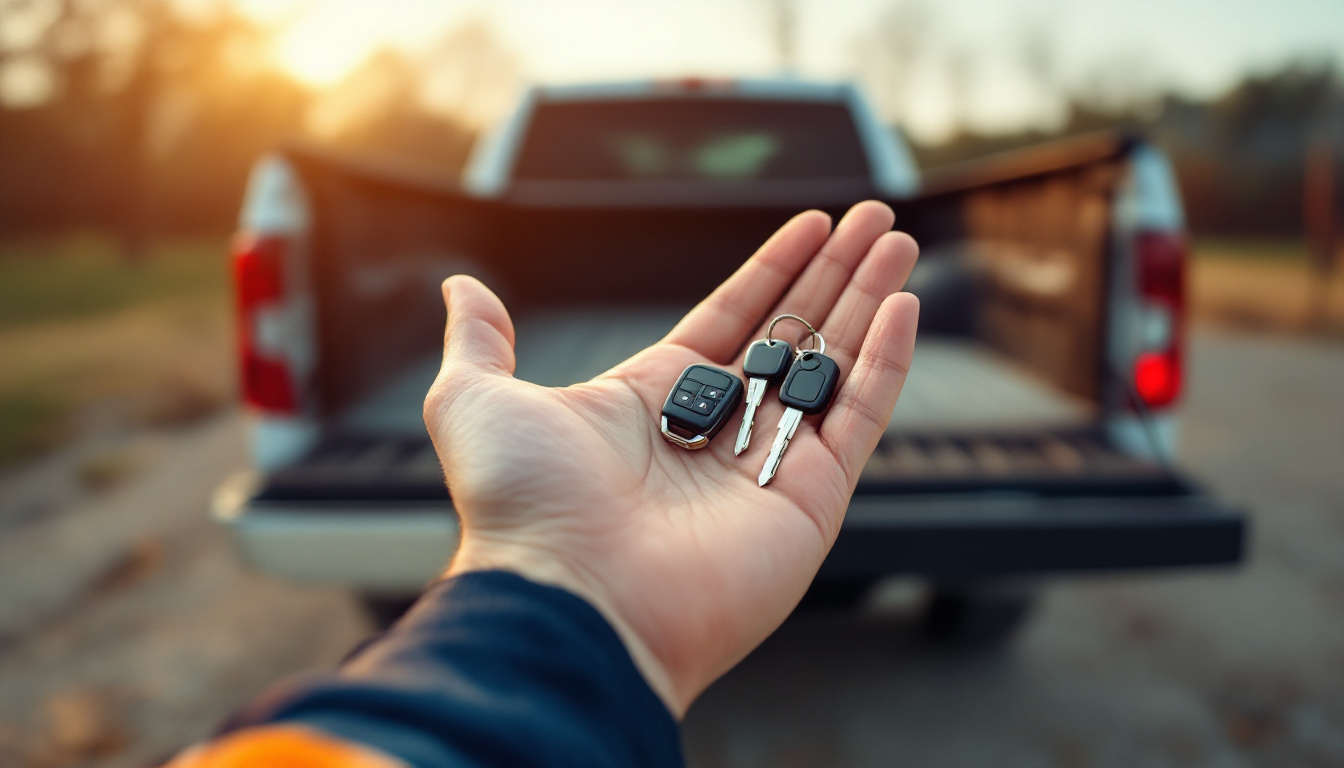
As of September 2026, keys for GM work trucks in Dallas–Fort Worth run $70–$180 for the mechanical and resistor-pellet keys still on older Silverado and Sierra heavy-duties, $130–$350 for the transponder and remote-head keys on most of the fleet in service today, and $250–$500 where a late unit uses a proximity fob — with the cab-over Low Cab Forward chassis at $130–$250, well below the push-button pickups parked beside it. Which band your truck falls into is decided by the VIN, not the badge. Call (817) 813-8746 and we will tell you before anybody drives out.
Quick Answer: Four Key Eras in One Fleet Yard
Resistor-pellet keys (older heavy-duties still working). GM’s first anti-theft generation used a resistance pellet moulded into the blade. No radio, no programming in the modern sense — the vehicle simply measures the pellet. These are cut-and-go work and sit at $70–$180.
Transponder keys. A chip in the head of the key talks to a receiver ring around the ignition. The blade must be cut and the chip must be introduced to the vehicle, which is why the band moves to $130–$350.
Remote-head and flip keys. Same transponder work plus the lock and unlock buttons integrated into the head, so the remote functions have to be programmed as well as the chip. Same broad band, typically toward the middle of it.
Proximity fobs on push-button units. Later and better-equipped trucks. No blade to cut in normal use, but the fob hardware itself costs real money and the security procedure is longer, which puts these at $250–$500.
The Low Cab Forward chassis. GM’s cab-over medium-duty is a different animal from the pickups sharing its badge — typically on a mechanical or basic transponder key at $130–$250, which is a long way below what a late push-button pickup costs.
What Each One Costs
Our own first-party mobile ranges, quoted at your yard rather than at a service drive.
| GM work truck key type | Typical DFW mobile range | Where you find it |
|---|---|---|
| Mechanical key, no electronics | $70–$180 | Older service-body pickups |
| Low Cab Forward cab-over, mechanical or basic transponder | $130–$250 | GM medium-duty cab-over chassis |
| Resistor-pellet key | $70–$180 | Long-serving older Silverado and Sierra units |
| Transponder key, cut and programmed | $130–$350 | The bulk of working fleets today |
| Remote-head or flip key | $130–$350 | Better-equipped pickups and crew cabs |
| Proximity fob, push-button start | $250–$500 | Late and upper-trim heavy-duties |
| Second key added in the same visit | $70–$180 | Any of the above |
| All keys lost on any of the above | $130–$500 | Origination rather than duplication |
| Ignition cylinder rebuild while we are there | $120–$280 | High-cycle units with worn locks |
The second-to-last row is the one fleets underestimate. With no key to copy, the pattern has to be derived from the vehicle and the security system taught the result, which is a different job at a different price — set out in all keys lost on a company vehicle in DFW. The row above it is the cheap fix for that, and it is covered in what a fleet spare key programme costs in DFW.
Why the VIN Decides and the Badge Does Not
Two trucks in the same yard, same model name, same year, can need different keys. GM builds heavy-duties across a wide trim range and changes hardware mid-generation, so a base work-spec unit and a well-equipped crew cab from the same model year frequently carry different key architectures.
Three things drive that spread. Trim is the obvious one — push-button start arrives on better-equipped trucks years before it reaches the fleet-spec ones. Build date matters more than people expect, because changes land partway through a model year. And chassis-cab and cutaway units built for upfitting often carry different equipment from the pickup that shares their name.
So the useful question on the phone is never “what does a Silverado key cost.” It is the VIN, which resolves all three at once and sets the price band before a technician leaves. The consumer-side version of the same generational map, with the model detail, is in Chevy and GMC key replacement in DFW, and the service page is Chevrolet and GMC key service.
The Low Cab Forward Is Not a Pickup With a Flat Nose
GM’s cab-over medium-duty sits in a lot of DFW fleets — landscaping, rental, delivery, municipal — and it surprises people twice.
The first surprise is good: these chassis typically run a mechanical or basic transponder key at $130–$250, which puts them well below the late-model pickups in the same yard rather than above them. Fleet managers budgeting from what their newest pickup cost routinely over-provision for them.
The second surprise is that the cab-over is a Japanese-designed chassis wearing a domestic badge, and its keys, locks and parts availability follow that lineage rather than the pickup line beside it. If you have run Isuzu N-series or Hino units, the Low Cab Forward will feel familiar in exactly the ways the Silverado next to it does not — and that family is covered in box truck key replacement for Isuzu NPR and Hino in DFW.
One practical consequence for mixed fleets: do not assume a single key strategy across the yard. The pickups, the cab-overs and any vans are three different key populations with three different cost profiles, and the van side of that is in cargo van key replacement for Transit, Express and ProMaster.
Upfits, Aftermarket Boxes and the Faults They Create
A GM chassis cab rarely goes to work as it left the factory. Service bodies, cranes, dump beds, lift gates, telematics units, cameras and remote starters all get added afterwards, and all of them involve somebody tapping into the vehicle’s wiring.
That produces a recognisable class of fault: a truck that suddenly does not recognise its key, or a security lamp that appears shortly after an upfit, or intermittent no-starts that track the weather rather than the mileage. The vehicle is usually fine and the installation is not. The same pattern on vans is documented in a van showing no key detected after an upfit, and it applies identically to a chassis cab.
Two habits save fleets money here. Record what was installed and when, because “the crane went on in March” is the most useful sentence in the diagnosis. And do the key work before the upfit rather than after, while the wiring is still standard and access to the column is unobstructed — spares are cheaper and faster to add at that point than at any later time in the vehicle’s life.
Theft Exposure, Because the Silverado Is the Truck Thieves Choose
GM pickups are not incidental targets. The National Insurance Crime Bureau’s most recent national figures list the Chevrolet Silverado 1500 among the most stolen vehicles in the United States at 21,666 units, within a national total of 850,708 vehicles stolen in 2024, itself down 17 per cent from 1,020,729 the year before.
A work truck raises the stakes twice over: the vehicle is a target and the contents are a second one. Two key-related practices reduce the exposure meaningfully. Do not label keys with the VIN — tag them to unit numbers so a lost key is not an address. And when a driver leaves without returning a key, get the old key erased from the vehicle rather than only cutting a new one, because until that happens the departed key still starts the truck.
Older GM anti-theft generations have their own considerations, since a resistor-pellet system is simple by modern standards and behaves differently when it faults. The service detail for that family is on our GM VATS and Passkey page.
Real-World Example: Nine GM Units, Three Key Populations
Situation. A rental and equipment company in Grand Prairie wanted spares across nine GM units and had budgeted from a single price they had been quoted for their newest crew cab. The yard held four heavy-duty pickups of various ages, three cab-over chassis with dump and flatbed bodies, and two older service-body trucks.
What we did. Ran the VIN list first, which split the nine into three populations rather than one. The two older service bodies were mechanical or pellet keys at the $70–$180 band and all three cab-overs came in at the $130–$250 cab-over line. Three of the four pickups were transponder or remote-head. Only the newest crew cab was a proximity fob, and it was the only unit anywhere near the price they had budgeted for all nine. Everything was cut and programmed in one visit and labelled to unit number.
Result. Full spare coverage for substantially less than the estimate they had walked in with, because seven of the nine were far cheaper than the vehicle they had priced from. One pickup’s ignition was visibly worn and was rebuilt in the same visit rather than left to fail on a Saturday.
People price a whole GM fleet off their newest truck and get a shock in the right direction for once. The cab-overs and the old service bodies are the cheapest keys in the yard, and they are usually the ones running without a spare. — senior mobile technician, Metroplex Locksmith
Hiring the Work Properly in Texas
GM fleet key work is common enough that plenty of people offer it and not all of them should.
Texas locksmiths are licensed by the Department of Public Safety Private Security Program — not TDLR. Ask for the licence number. For late-model units, ask whether the technician is registered with the National Automotive Service Task Force Vehicle Security Professional programme, the legitimate route to manufacturer security data.
Expect to prove the trucks are the company’s: registration or title in the company name and identification from whoever authorises the work. That step is the control that stops somebody else ordering keys to your fleet, so a vendor who waives it is a warning, not a convenience.
On price, the Federal Trade Commission’s guidance on locksmith bait-and-switch applies squarely: a quote given against a VIN should survive the visit, because the VIN already told us everything that sets the price. Conduct standards from the Associated Locksmiths of America describe the baseline, the Bureau of Labor Statistics treats locksmiths and safe repairers as a distinct skilled occupation with a national average wage near $50,000 a year, and for an outside benchmark on hardware the Kelley Blue Book survey of dealership fob pricing puts fobs at $150–$500 and up. While the VIN is out, the National Highway Traffic Safety Administration recall lookup is worth thirty seconds.
What to Have Ready When You Call
The VIN for every unit, not the model names. The VIN resolves trim, build date and chassis type in one step, which is exactly what sets the price.
Whether a working key exists. A duplicate and an origination are different jobs at different prices, and the answer changes what the technician brings.
What body or equipment is fitted. A crane, a dump body, a service box or a lift gate changes access and sometimes the wiring, and telling us in advance avoids a wasted trip.
Whether the truck is a chassis cab or a pickup. Easy to say in a sentence, and it frequently moves the price band.
We key GM work trucks at yards and job sites from Dallas to Hurst and across the metroplex. See car key replacement for the service detail, or go straight to our contact page.
Frequently Asked Questions
Why do two Silverados of the same year need different keys?
Because trim, build date and body style all change the hardware. Push-button start reaches better-equipped trucks years before fleet-spec ones, and chassis-cab units built for upfitting often differ from the pickup sharing the name. The VIN resolves all three, which is why we ask for it rather than the model year.
Is a Low Cab Forward key expensive because it is a big truck?
The opposite, usually. The cab-over chassis typically runs a mechanical or basic transponder key at $130–$250, well below a late push-button pickup at $250–$500. Fleets that budget for the big truck from their newest pickup consistently over-provision.
Can you do this at our yard rather than at a dealership?
Yes. Cutting, programming, adding spares, originating keys with none in existence and rebuilding worn ignitions are all mobile work done where the unit is parked. That matters most for a truck that will not start, because the alternative route begins with a tow before anything is diagnosed.
We only have one key for most of the fleet. What should we do first?
Batch the spares. The first vehicle of a visit carries the trip charge and each unit after it is $70–$180 for the common key types, so doing the yard in one morning costs a fraction of replacing keys one emergency at a time. Start with the trucks that run daily, since those are the keys that get lost.
A driver left and did not return the key. Is cutting a new one enough?
No. The departed key keeps starting the truck until it is erased from the vehicle’s security system, which is a separate operation from cutting a replacement. On any vehicle carrying tools or stock, erasing the old key is the part that actually closes the exposure.
Our chassis cab stopped recognising its key shortly after the body went on. Coincidence?
Rarely. Upfits involve tapping into vehicle wiring, and a pinched or back-probed wire near the column or a security module produces exactly this symptom. Tell us what was installed and when — that sentence usually shortens the diagnosis considerably, and the fault is in the installation rather than the truck.
The Bottom Line
A GM fleet is rarely one key population. The pickups, the cab-overs and the older service bodies span a range from $70 to $500 a key, and most fleets are weighted heavily toward the cheap end without realising it.
Send the VIN list rather than the vehicle count and the quote comes back exact. Call (817) 813-8746 or use our contact page, and we will work down the row at your yard.