
All Keys Lost on a Company Vehicle in DFW: What Actually Happens Next
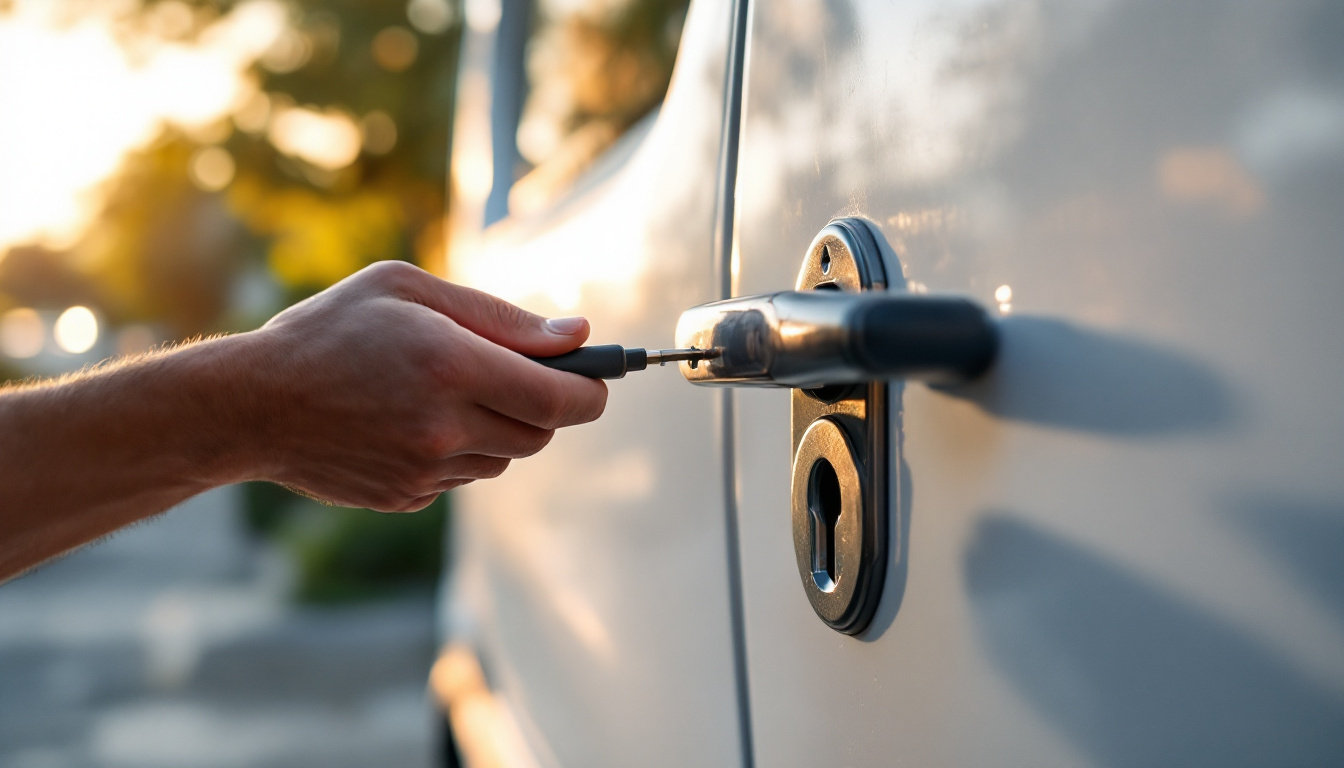
As of September 2026, an all-keys-lost recovery on a company vehicle in Dallas–Fort Worth runs $130–$500 for most work trucks and vans and $250–$500 where the unit uses a proximity fob, with European and executive vehicles quoted after a VIN check — and it is done at the yard or the job site rather than on the end of a tow truck. The difference between that and a $70–$180 duplicate is not the key; it is that there is nothing to copy, so the key has to be originated from the vehicle’s own data. Call (817) 813-8746 with the VIN and who owns the unit.
Quick Answer: What Changes When There Is No Key at All
Nothing can be copied, so the key is built from the vehicle. A duplicate is cut from an existing key in about the time it takes to describe it. With no key in existence, the cutting pattern has to be derived from the vehicle’s own key code or read from a lock, which is a different and slower job.
The immobiliser has to be taught the new key. On anything with a chip, cutting a blade that turns is only half the work. The vehicle’s security system has to accept the new key as authorised, and on many platforms that means a security wait period measured in minutes, not seconds.
Ownership has to be proved before anything starts. This is the step that catches fleets out, because the person standing at the truck is rarely the person named on the title.
It is still mobile work. The unit does not move. That is the main thing separating a locksmith recovery from the dealership route, where the vehicle has to arrive somehow and then wait in a queue.
Make the second key part of the same visit. Adding a spare while the technician is already there and already programming is $70–$180. Coming back for it later is a fresh visit.
What It Costs, and Why It Is Not a Duplicate Price
These are our own first-party mobile ranges across the metroplex.
| Situation | Typical DFW mobile range | What drives the number |
|---|---|---|
| Duplicate from a working key | $70–$180 | Cut and programmed from something that exists |
| All keys lost, mechanical key unit | $70–$180 | Code or lock reading, no programming |
| All keys lost, transponder or remote-head | $130–$350 | Origination plus immobiliser relearn |
| All keys lost, proximity fob | $250–$500 | Fob hardware plus a longer security procedure |
| European or executive unit | Quoted after a VIN check | Platform-specific security architecture |
| Second key added in the same visit | $70–$180 | Programming session already open |
| Anti-theft module work, if the system will not relearn | $180–$400 | Programming a module rather than a key |
The gap between rows one and three is the entire story of why a spare is worth having. Same truck, same key, same technician — the only variable is whether anything existed to copy. The proactive version of that arithmetic is in what a fleet spare key programme costs in DFW, and the general emergency baseline is in fleet key replacement cost in DFW.
The Ownership Question Nobody Plans For
A locksmith originating a key to a vehicle with no keys is doing the one job that, done carelessly, hands a stranger a working vehicle. So the documentation step is not bureaucracy; it is the thing that protects your fleet from somebody else ordering keys to it.
On a personal car this is simple: the driver produces a licence and a registration in a matching name. On a company vehicle the title says something like a holding entity, the registration is in a trading name, and the person at the truck is a crew lead with neither. Every fleet hits this at some point, usually at 7am with a customer waiting.
What makes it painless is preparation rather than persuasion. Have registration or title in the company name reachable from a phone, and have whoever authorises the work available — by phone is usually fine — with their own identification. A fleet that keeps a scanned registration per unit in the same system as the maintenance records turns a forty-minute hold-up into a two-minute one. The wider version of who can authorise keys to a company asset is covered in our fleet key replacement guide.
A vendor who skips this entirely is telling you something about how they would treat a request from somebody else concerning your vehicles. The Federal Trade Commission’s consumer guidance on locksmiths is written around exactly this class of risk.
How the Keys Actually Went Missing, and Why It Matters
The recovery is the same work, but the right next step afterwards depends on the story.
The last key broke. Common on fleets, because fleet keys are copies of copies carrying gate keys and padlocks. If half a blade is still in the ignition or a door, that changes the job — extraction first, then origination, and the cylinder is usually worn enough to deserve attention while it is open. The mechanics of that are in why car keys snap and what extraction costs.
A driver left and the key went with them. Then the vehicle is not just keyless, it is keyed to somebody outside the company. The correct response is not only a new key but erasing the old ones from the immobiliser so the departed key stops working — a different operation, covered in fleet rekey cost after driver turnover.
The keys were lost on a site. The benign case. A new key and a spare, and the fleet is better off than it was that morning because the unit now has two.
The vehicle was broken into or recovered. Then the ignition may be damaged as well as keyless, and the security system may need more than a key. Recovered units have their own sequence, set out in recovered stolen vehicle rekey in DFW. Theft remains a volume problem despite recent improvement: the National Insurance Crime Bureau recorded 850,708 vehicles stolen nationally in 2024, down 17 per cent from 1,020,729 in 2023.
Mobile Recovery Versus the Tow, in Fleet Terms
A dealership can originate keys. The problem is that a vehicle with no keys cannot be driven to one, so the quote opens with a recovery tow and continues with the unit sitting in a service queue.
For a fleet that is three costs, not one: the tow, the key work, and the asset out of service for a day or more. And the asset is frequently not empty — a loaded van or a truck with equipment on it is not something anybody wants winched onto a flatbed and parked in a lot overnight. Lockouts and key failures are ordinary events at fleet scale, and the American Automobile Association rescues roughly four million locked-out drivers a year.
The mobile route removes the first and third costs entirely. A technician arrives at the unit, originates the key where it stands, and the vehicle leaves under its own power. The straight comparison of the two routes is in auto locksmith versus dealership in DFW. Where a fleet runs European or executive vehicles the calculus changes a little, because some platforms genuinely are dealer-only for certain operations — we say so on the phone rather than on arrival. The pricing shape for those is visible in BMW key replacement in DFW, and for the domestic and import work trucks that make up most fleets, in Toyota key replacement in Fort Worth.
Real-World Example: A Loaded Van and No Keys at All
Situation. An HVAC contractor’s van was sitting at a customer’s property in Hurst with the day’s parts in it. The technician had put the only key down during an attic job and it never turned up. The office knew there was no spare — the van had come from a dealer auction with one key and nobody had got round to it.
What we did. Took the VIN over the phone and confirmed the key type before dispatching, which set the price band before anybody drove out. Registration in the company name came through by email while the technician was en route, and the owner authorised by phone. On site we originated a key from the vehicle’s data, completed the immobiliser relearn including the platform’s security wait, and cut and programmed a second key in the same session.
Result. The van drove away that afternoon with two keys, having never left the customer’s driveway. The second key cost a fraction of the first because the programming session was already open — and it is the reason this particular van will not generate this particular call again.
Every all-keys-lost job on a fleet vehicle ends the same way: we ask whether they want a spare while we are here, and the answer is always yes. It is the cheapest key anybody ever buys and it is bought one emergency too late. — senior mobile technician, Metroplex Locksmith
Hiring the Work Properly in Texas
Key origination is a regulated activity for good reason, and a fleet should treat the vendor check as part of the job.
Texas locksmiths are licensed by the Department of Public Safety Private Security Program — not TDLR. Ask for the licence number. For any late-model unit, ask whether the technician is registered with the National Automotive Service Task Force Vehicle Security Professional programme, which is the legitimate channel for manufacturer security data and the reason a properly equipped mobile locksmith can do this work at all.
Expect the phone quote to survive the visit. An all-keys-lost job priced honestly is priced from the VIN and the key type, both of which are known before dispatch, so a number that changes on arrival deserves a question. Professional standards from the Associated Locksmiths of America set the baseline, and the Bureau of Labor Statistics treats locksmiths and safe repairers as a distinct skilled occupation with a national average wage near $50,000 a year — the context for why originating a key is not a twenty-dollar errand. For an outside benchmark on the hardware itself, the Kelley Blue Book survey of dealership fob pricing runs $150–$500 and up.
What to Have Ready When You Call
The VIN. Everything downstream depends on it — key type, price band, whether the platform has a security wait, and whether it is a job we should be quoting at all.
Proof the vehicle is the company’s. Registration or title in the company name, and identification from whoever authorises the work. Getting this moving while a technician is en route is the single biggest time-saver on this class of call.
Whether a key exists anywhere. A key in a departed driver’s possession, a key that snapped, or genuinely nothing — these are three different jobs, and the third is the only true all-keys-lost.
Where the vehicle is and whether it is loaded. A unit at a customer’s property with stock in it gets treated differently from one parked at the yard.
We originate keys for company vehicles at yards, depots and job sites from Bedford to Lewisville and across the metroplex. See lost car keys and car key replacement for the service detail, or go straight to our contact page.
Frequently Asked Questions
Can you make a key with no working key and no dealer visit?
Yes, for the overwhelming majority of work trucks, vans and fleet vehicles. The key is originated from the vehicle’s own data rather than copied, then taught to the immobiliser on site. A small number of European and latest-generation platforms genuinely remain dealer-only for certain operations, and we say so on the phone rather than on arrival.
Why is it so much more than a duplicate key?
Because nothing exists to copy. A duplicate is a cutting job from a pattern already in your hand; an all-keys-lost recovery means deriving the cutting pattern from the vehicle and then completing a security procedure that many platforms deliberately slow down. Same key, different job, which is why it runs $130–$500 rather than $70–$180.
What proof of ownership do you need for a company vehicle?
Registration or title in the company name, plus identification from whoever is authorising the work. The awkward case is the crew lead standing at the truck who has neither, which is why having a scanned registration per unit reachable from a phone is worth setting up before you need it.
Does the vehicle have to be towed anywhere?
No. This is mobile work performed where the unit is parked, at a yard, a depot or a customer’s property. Avoiding the tow is most of the cost advantage over the dealership route, and it matters even more when the vehicle is loaded with stock or equipment that nobody wants left in a lot overnight.
Should we get a spare at the same time?
Almost always. The programming session is already open and the vehicle is already accessible, so a second key is $70-$180 rather than a fresh visit. It also removes the exact scenario that generated the call, which on a fleet vehicle recurs on a predictable schedule.
A driver left and took the key. Is a new key enough?
Not on its own. A new key gets the vehicle moving again, but the departed key still starts it until it is erased from the immobiliser. That erase is a separate operation and the correct one to ask for whenever a key has left the company rather than simply gone missing.
The Bottom Line
All keys lost on a company vehicle is a solvable problem that costs $130–$500 on most fleet units and needs no tow — but it is a problem that only exists because a spare did not. Every one of these calls ends with a second key being cut at a fraction of the price of the first.
Have the VIN and the ownership paperwork ready and the job gets much shorter. Call (817) 813-8746 or use our contact page, and we will come to the vehicle.