
Delivery Van Lockout Cost in DFW (2026): Courier, Last-Mile and DSP Fleets
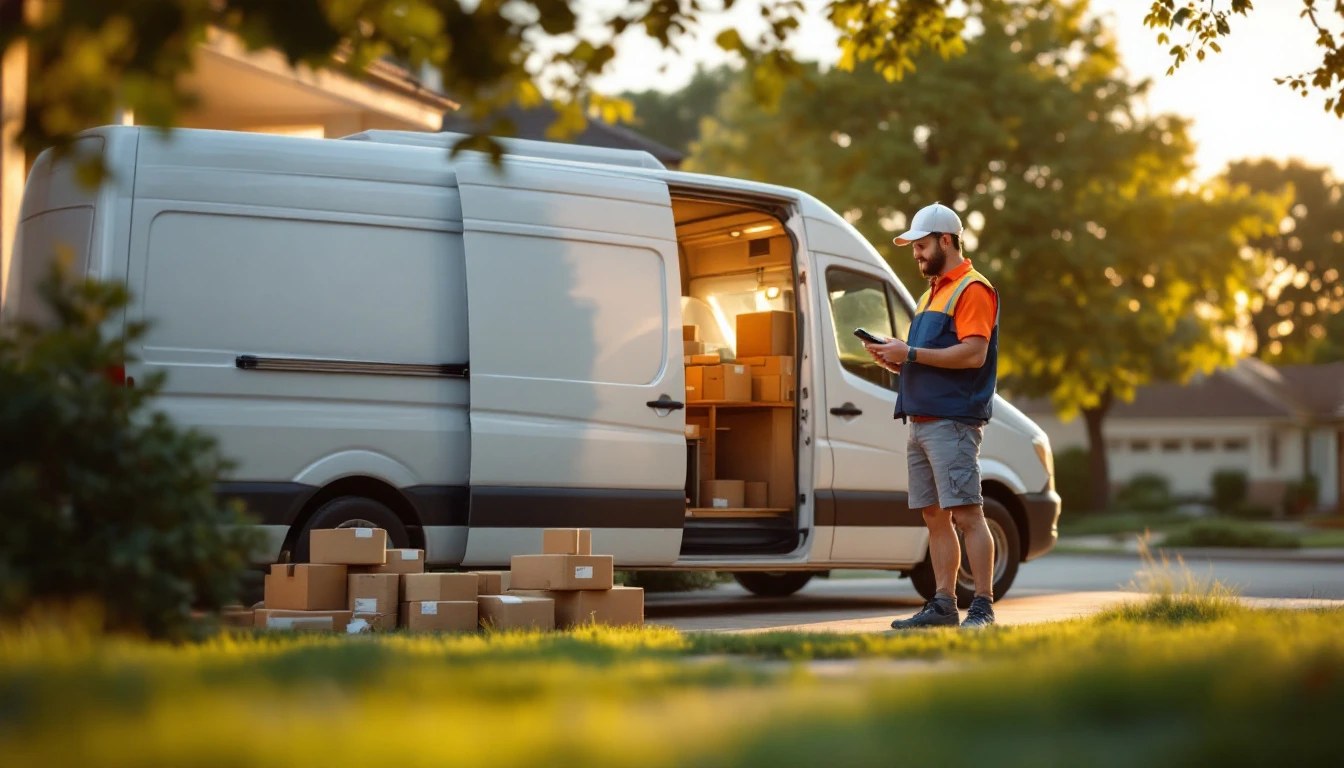
As of November 2026, a delivery van lockout in Dallas–Fort Worth costs about $75–$150 for a cab door, $85–$175 with the engine running, $95–$185 for the cargo area only, and $125–$225 after hours. A lockout at a customer stop falls in the $75–$175 band. If the driver’s key is not actually inside, it becomes key work at $150–$500 or more. Call (817) 813-8746 for a range before we roll.
Quick Answer: What a Courier or Last-Mile Lockout Really Costs
A delivery fleet does not experience a lockout the way a household does. A homeowner is stuck in a parking space. A delivery driver is stuck at stop 41 of 140, with a route clock running, a van full of other people’s packages, and a dispatcher who is already re-planning the remaining stops. The lock is the same lock. The cost of the hour around it is not.
1. The opening itself is a modest, predictable invoice. Our ranges for a commercial vehicle opening run $75–$225 depending on the door and the clock. That is the number you pay the locksmith.
2. The route is the real expense. Every stop that slides, every re-attempt, every late-window penalty belongs to a different budget line than the locksmith, and it is almost always larger.
3. A “lockout” sometimes isn’t. Drivers say the keys are inside when they could be in the last customer’s yard. When the technician opens the door and the seat is empty, the visit becomes a $150–$500 key job.
4. Calling early beats shopping. The cheapest lockout is the one dispatched in the first five minutes, not after three phone quotes and forty minutes of waiting.
DFW Delivery Van Lockout Pricing, Line by Line
These ranges come from our own mobile work on cargo vans, step vans and box trucks across the Metroplex, not from a national consumer average. They match what we publish for commercial vehicles in our fleet vehicle lockout cost guide; this page applies them to delivery routes specifically.
| Delivery situation | Typical DFW mobile range | Typical dealership path | What drives it |
|---|---|---|---|
| Cab door lockout, business hours | $75–$150 | Not offered | Standard front-door opening |
| Keys shut in, engine running at a stop | $85–$175 | Not offered | Live vehicle, driver stepped out for a handoff |
| Cargo area or sliding door only | $95–$185 | Not offered | Heavier hardware, different mechanism |
| Customer-stop or apartment-complex lockout | $75–$175 | Not offered | Gate access, parking constraints |
| Early-morning load-out or late-night return | $125–$225 | Closed | After-hours dispatch |
| Lockout that is really a lost key | $150–$500+ | Tow plus appointment | Key must be cut and programmed |
| Extra key cut on the same visit | $70–$180 each | Usually full price each | The cheapest line on the page |
| Tow instead of an opening | $100–$250 | Plus dealer labor | Relocates the problem without solving it |
Read the last two rows together. If the second key exists and is reachable, the lockout never happens. If it does not exist, cutting it during the lockout visit costs $70–$180, which is less than a tow.
Why Delivery Vans Lock Themselves With the Keys Inside
Delivery work produces more lockouts per vehicle than almost any other use, and the reasons are structural rather than careless.
The engine stays on. A driver making forty quick stops does not shut a van down and restart it for each handoff, especially in a DFW summer when the cab is a greenhouse. The van idles, the driver steps out, the door closes, and whether the van locks itself depends on how the vehicle is set up. Many commercial vans can be configured to lock on their own under certain conditions, and the setting is rarely something the person driving that day chose.
Several people share one van. A route van might be driven by a morning driver, an afternoon driver and a relief driver, all using one key or two keys among four people. Shared keys are lost keys waiting for a date. Our write-up on ignition wear on shared-driver trucks covers the mechanical side of the same habit.
The cargo area is a separate problem. A driver who can reach the cab but not the load still cannot work. Sliding and swing-out cargo doors use different hardware than the cab, which is why cargo-only access is its own line at $95–$185.
Doors get shut by reflex. A driver carrying a parcel in both hands pushes the door closed with a hip. On vehicles with a proximity key, whether the van locks with the fob inside depends on the model and its settings, and manufacturers handle that differently. Check your own fleet’s manual rather than assuming.
None of these is fixed by telling drivers to be more careful. They are fixed by a second key that lives somewhere other than inside the van.
The Math a Dispatcher Should Run Before Shopping for a Quote
Price a delivery lockout as route disruption, not as a door. Take any realistic version: a driver stalls mid-route, the dispatcher reassigns three stops to a neighbor, two time-window deliveries slip, and one customer calls to complain. None of that appears on the locksmith’s invoice, and all of it is avoided by the same phone call.
That is the reason we tell dispatchers to call the moment the door closes. A quote shopped for forty minutes saves a few dollars and burns the window that justified calling a mobile service in the first place. If a technician is five minutes from the dispatch decision rather than forty-five, the opening is the cheapest part of the day.
Two habits shorten the whole sequence. First, put the van’s year, make, model and whether it has a keyed or push-button ignition on a card in the dispatcher’s desk, so the information is ready in ten seconds instead of five minutes. Second, have the driver stand with the van and photograph the plate and the door being requested; it speeds the ownership check described below.
Cargo Door, Sliding Door or Cab: Which One Is Actually Locked
Before the call, have the driver try every handle. A delivery van often has three or four separate entries — the driver door, the passenger door, a sliding side door and rear doors — and any one of them may already be open. We have been called to open vans where the sliding door had never been latched.
If the cab is locked and the cargo area is open, the driver can usually get to the packages and the locksmith call becomes a lower-urgency scheduled visit rather than a stalled route. If the cab is open and the cargo area is locked, the driver can still sit and communicate, but the load is out of reach. If both are locked, that is the full cab-plus-cargo scenario and the quote should cover both openings.
Non-destructive entry is the standard on every one of these. A pry bar on a sliding door frame turns a $95 opening into a body-shop job, and a rod forced down a window channel can bend the linkage. If a vendor’s first move is a wedge, ask them to stop. Our mobile lockout service page explains how an opening is done without touching the paint or the seal.
Apartment Complexes, Gated Subdivisions and Dense Routes
Delivery routes in Dallas, Irving and Lewisville run through apartment communities, gated subdivisions and office parks, and access is a bigger variable than distance. A technician who cannot get through a gate cannot open a door.
When you call, say exactly where the van is: the complex name, which building or gate, whether visitors need a code or a call to the office, and whether the van is blocking a fire lane. A van in a fire lane is on a clock the locksmith cannot control. Say so, and we will dispatch accordingly.
The same applies to dense urban stops where parking is metered or restricted. A technician needs somewhere safe to work. If the van is in traffic, tell us whether it can be moved by someone else, and whether another driver is nearby to help block the lane.
A Typical Scenario: A Lockout Mid-Route in Irving
Situation (a composite of calls we commonly run, not one named customer): A courier company dispatcher in Irving called mid-morning. A driver had stepped out of a cargo van at an office park with the engine running to deliver a pallet, the door had swung shut, and the van was locked with the key in the cup holder. Two other vans were waiting on parcels the stranded van was supposed to hand over.
What we did: Mobile dispatch to the office park, non-destructive entry on the cab door with the engine still running, key recovered from the cup holder. While on site, the dispatcher asked how many other vans in the fleet had only one key. The answer was four. We scheduled those for spares on a quiet morning later that week rather than selling them as an emergency.
Result: The driver was back in the van and moving well inside the hour. The company paid one lockout instead of two re-routed vans and a missed delivery window, and the follow-up visit put labeled spares on the single-key units.
What Changes the Price on a Delivery Lockout
Time of day. Routes load before dawn and return after dark. A call at 5:15 a.m. or 9:30 p.m. is priced in the $125–$225 band because a technician is being pulled out of off-hours, not out of a daytime queue.
Which door. Cab, cargo and box openings are different mechanisms and different quotes.
Engine running or off. A live engine at a stop means exhaust, fuel burn and a driver who cannot leave the vehicle unattended. It is the $85–$175 line.
Whether a key exists. This is the one variable that changes the bracket. An opening with a key on the seat is $75–$175. An opening that reveals no key anywhere becomes the key job described below.
Vehicle type. Most step vans and full-size cargo vans use hardware we open every week. A newer proximity-key van is a different technical job than an older keyed one, and if the lockout becomes a key problem, the key type sets the price: $130–$250 for a transponder blade key, $180–$350 for a remote-head key and $250–$500 for a proximity fob.
When the Lockout Turns Into a Lost-Key Job
This is the trap for delivery fleets. A driver radios that the key is locked in the van. The technician opens the cab and the seat is empty. The key is back at the last stop, in the pocket of a driver who clocked out, or in a jacket in another vehicle.
At that point the visit becomes key replacement, and the price depends on the vehicle: a transponder key, a remote-head key or a proximity fob, with an additional $75–$200 when no working key survives anywhere. The work needs proof of ownership — registration or an insurance card plus photo identification from the person on site, and a call to the fleet manager if names do not match.
The alternative is worse. A tow to a dealership runs $100–$250 for the hook alone, then an appointment, then a van you cannot see. Doing the key work in your lot costs less and keeps the van where your dispatcher can reach it. Our all-keys-lost guide for company vehicles walks through the full process, and car key replacement describes the service.
Spare Keys: The One Cheap Fix on This Page
Everything above is a cost you pay after something goes wrong. The one line item that prevents the problem is the additional key at $70–$180 each when cut during a visit you are already paying for. Compare that against a first key at $130–$500 or an emergency lockout at $75–$225 and the arithmetic is simple.
Two rules make spares work. Label every key to a van number, and store at least one spare outside the van it opens — in a dispatch lockbox or office cabinet. A spare in the glovebox of the same van is not a spare; it is a second key locked inside the same vehicle. Our fleet spare key program guide covers a full audit, and fleet rekey after driver turnover explains what to do when drivers leave with keys.
Vetting a Lockout Vendor and Avoiding Bait-and-Switch Ads
Locksmith licensing in Texas sits with the DPS Private Security Program. Ask any vendor for a license number and proof of insurance before they touch a company van. A real one answers without hesitating.
Be wary of listings that promise a $19 or $29 lockout. The advertised figure is rarely the invoice, and the on-site price can bear no resemblance to the phone quote. A fleet dispatcher is a juicy target for this pattern because the pressure to get a van moving is high. Three questions filter most of it out: Will you give me a range before dispatch? What is your Texas license number? Will the invoice carry the company name I called?
If your dispatchers keep a standing list of two vendors they have vetted, no one is choosing from a search page with a van stranded and a driver waiting.
What to Have Ready When You Call
The exact location. Complex, gate, building, or lot, and whether the van is blocking a lane.
Year, make and model, plus ignition type. A cargo van, a step van and a cutaway with a box are three different jobs. Say whether the van has a keyed ignition or a start button.
Which door, and whether the engine is running. It changes the tooling and the quote.
An honest answer about the key. Is it visibly inside, or does nobody actually know? That single answer decides between an opening and a key job.
Who is authorized to approve work. Keep a short list of who can authorize work on which vans, and a registration copy in each van.
Locations across the Metroplex — Arlington, Grand Prairie, Denton and the rest — are all served fully mobile from dispatch, with no shop visit. See our arrival-time guide for what to expect on timing.
Frequently Asked Questions
How much does a delivery van lockout cost in Dallas–Fort Worth?
A cab door lockout during business hours runs about $75 to $150. Keys shut in with the engine running run $85 to $175, cargo-area-only access $95 to $185, and after-hours calls $125 to $225. A lockout at a customer stop is $75 to $175 depending on access.
Can you open a delivery van with the engine running?
Yes. It is the most common version for delivery drivers who step out for a handoff. Tell us the engine is running when you call so the technician arrives prepared. That job is quoted at $85 to $175.
Do you open the cargo area as well as the cab?
Both, but they are priced separately because they are different mechanisms. Cargo-only access runs $95 to $185. Box truck roll-up hardware and padlocks vary by upfitter, so anything beyond a straightforward opening is quoted after diagnosis.
What if the key is not inside the van?
The visit becomes key work. A new key has to be cut and programmed, which puts the job at $150 to $500 or more depending on the key type. Doing it on site is normally cheaper than a $100 to $250 tow plus a dealership appointment.
Do you need proof of ownership for a company van?
Yes. We ask for registration or an insurance card plus photo identification from the person on site, and we call the fleet manager when names do not match. A short list of authorized approvers makes the process quick.
How do we stop delivery lockouts from happening?
Put a labeled spare on every van and store at least one away from the vehicle it opens. An additional key cut during a visit you are already paying for runs $70 to $180 each. Most delivery lockouts we handle would never have been dispatched if a reachable spare existed.
The Bottom Line
A delivery van lockout is a small invoice attached to a large disruption. The opening costs between $75 and $225 depending on the door and the hour. What it buys is a driver back on the route this morning instead of this afternoon. Call the moment the door closes, tell us honestly whether anyone knows where the key is, and let the same visit put spares on your single-key vans. We are fully mobile across Dallas–Fort Worth. Call (817) 813-8746 or reach us through our contact page.