
Used Car Dealer Lot Key Cost in DFW (2026): Second Keys, No-Key Units and Erasing Old Ones
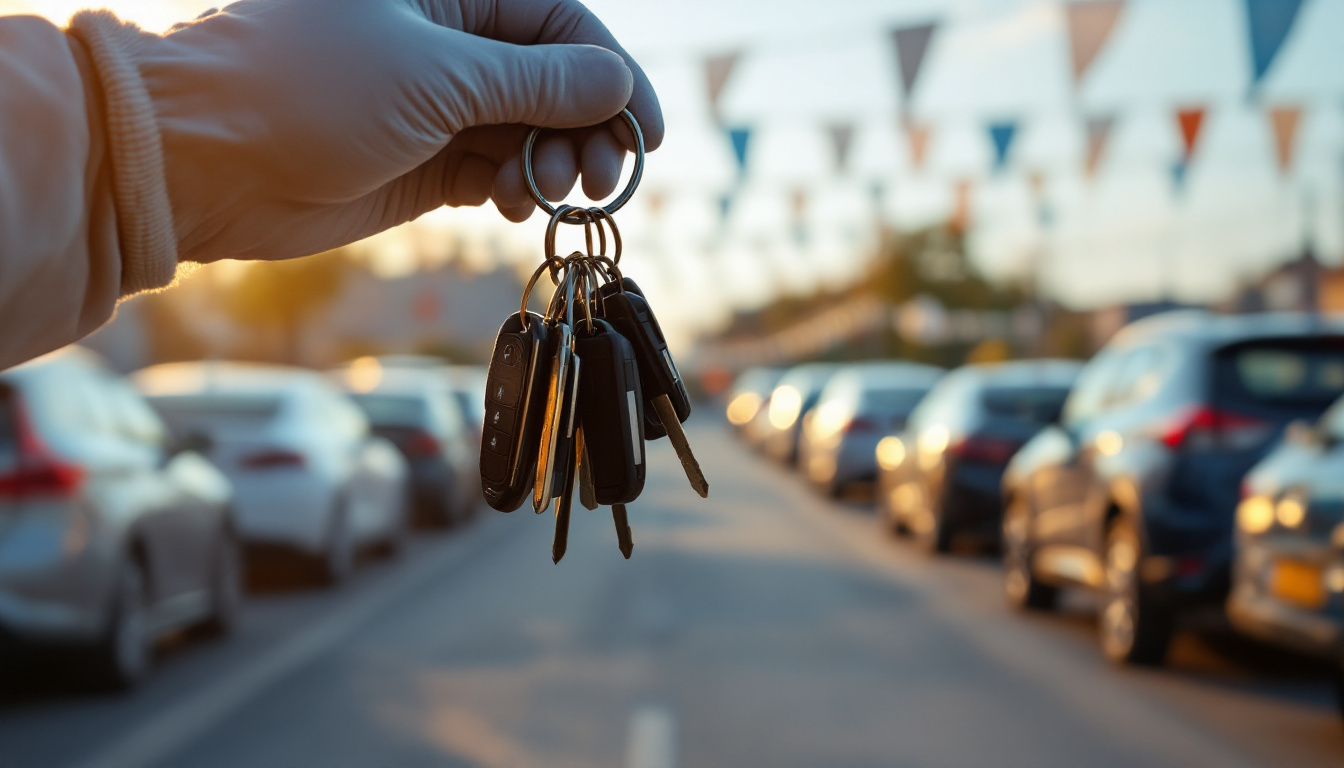
As of October 2026, keys for used-car inventory across Dallas–Fort Worth run $130–$250 for a transponder blade key, $180–$350 for a remote-head or fobik key and, for a push-button proximity fob, $250–$500, with a second key cut in the same visit at $70–$180, an all-keys-lost unit adding $75–$200, and erasing the previous owner’s keys from the car at $120–$250. A lot does not buy keys the way a driver does. It buys them in batches, against a recon budget, for cars it intends to sell within weeks. Call (817) 813-8746 with a list of stock numbers and VINs.
Quick Answer: What a Lot Actually Pays For
The first key on a unit — $130–$500. Priced by key type, not by the badge on the grille. Transponder blade keys sit at $130–$250, remote-head and fobik keys at $180–$350, proximity fobs at $250–$500.
The second key, same visit — $70–$180. This is the number that matters to a dealer. The technician, the equipment and the programming session are already paid for by the first key, so the second costs little more than the hardware.
No key at all — add $75–$200 per unit. Repossessions, some auction units and trade-ins where the key walked off. The car has to be opened, a key cut from code, and the immobilizer started over.
Erasing keys you do not hold — $120–$250 per unit. The previous owner’s spare still starts the car you are about to retail. This clears it.
Volume terms. We quote a lot visit as a visit, from the list of VINs. We do not publish a discount schedule, and anyone who quotes a per-key lot price without seeing the list is guessing.
The Dealer Price Table
These are first-party mobile ranges from our own work on DFW lots, given from VINs before we arrive. The right-hand column is the franchised-dealer parts and service route that independents tell us they use when they have no mobile vendor.
| Job | Typical DFW mobile range | Franchised-dealer route, typically | Notes for a lot |
|---|---|---|---|
| Transponder blade key, first key on the unit | $130–$250 | $200–$400 plus transport | Older economy cars and base trims |
| Remote-head or fobik key | $180–$350 | $250–$500 plus transport | Most 2000s and 2010s inventory |
| Proximity fob, push-button start | $250–$500 | $350–$650 plus transport | Late-model units; widest band |
| Additional key, same visit | $70–$180 each | Usually full price each | The reason to batch |
| All keys lost, per unit | Add $75–$200 | Tow required | Repos and no-key auction units |
| Erase unknown keys, re-pair the ones on hand | $120–$250 | Service-lane appointment | Before retail delivery |
| Lockout, key visible inside | $75–$150 | Not offered | Porters lock keys in cars weekly |
| Ignition cylinder rebuild or replacement | $120–$380 | Column work, appointment | Forced or worn ignitions on repos |
| Transport to a franchised dealer | Not needed — mobile | $100–$250 each way if it cannot be driven | And the car is off the line for days |
Read the first three rows against the fourth. A lot that orders one key per car, one car at a time, pays the first-key price every time. A lot that walks us down a row of eight units pays it eight times and then buys the spares at the same-visit rate. The second approach is the only one that makes a two-key policy affordable.
What Changes the Price on Lot Inventory
Key type, which follows model year and trim. A base-trim sedan and the loaded version of the same car can sit in different rows of the table, because one turns a blade and the other has a start button. The VIN tells us which before we load the van. What a retail buyer pays for the same keys is laid out in car key replacement in Arlington, and the breakdown of fob pricing is in key fob replacement cost in DFW.
Whether one working key exists. A unit with a single key is a duplication job. A unit with none is a recovery job with the $75–$200 adder, because the vehicle has to be entered without damage and the security system has to be reset rather than added to. Our guide to all keys lost on a fleet vehicle walks through what that visit involves.
Brand security. Mainstream domestic and Asian inventory is same-day work; the common sedans and crossovers follow the pattern in our guide to Toyota key replacement in Fort Worth. Some European inventory is not, and BMW key replacement in DFW shows why. Certain brands tie key supply to proof of ownership and a factory ordering process, which adds days and narrows what any mobile vendor can do. If a lot carries European units, read European key replacement and proof of ownership before promising a customer a second key at delivery.
How many keys the car will accept. Many vehicles cap the number of keys their immobilizer will store. An ex-rental or ex-fleet unit can arrive with slots already used by keys that are long gone. On those the right job is an erase and re-pair, not an addition, and it is the $120–$250 line.
Aftermarket hardware under the dash. Buy-here-pay-here inventory and ex-fleet units often carry tracking devices or starter-interrupt relays from a previous life. They can interfere with key programming and with starting. We cover that case separately in a work truck that will not start after a GPS tracker install.
The One-Key Problem at Auction
Most auction inventory arrives with a single key, and a meaningful share arrives with a key that only half works: the blade turns but the remote buttons are dead, or the fob starts the car and the emergency blade was never cut. The auction condition report rarely distinguishes between these.
For a retail lot the missing second key is a pricing problem before it is a service problem. Buyers ask for it. Finance and warranty paperwork sometimes asks for it. A car sold with one key generates a call three weeks later when the buyer loses it and discovers what a replacement costs. A dealer who handles that call badly loses a review, and a dealer who handles it well eats the cost of the key at retail instead of wholesale.
The arithmetic is short. A second key bought during recon, as part of a batch, lands in the $70–$180 band. The same key bought later, alone, for one car, starts at $130 and runs to $500, and a buyer who lost the only key adds the all-keys-lost charge on top. The wholesale side of this decision is in auction vehicle key cost in DFW, and the policy version, written for fleets but directly applicable to a lot, is in what a spare key program costs.
Repossessions and No-Key Units
Buy-here-pay-here operations live with their own version of the key problem. A recovered vehicle comes back on a hook, usually without a key, sometimes with an ignition that has been forced, and often with the previous driver still holding a working key.
That is three separate jobs, and it helps to price them separately.
Getting a key. An all-keys-lost visit: the first-key price for the unit plus the $75–$200 adder. The key is cut from the vehicle’s code rather than copied, which also means it is a fresh, unworn cut.
Removing the old keys. If the car is going back on the line, the keys still in the previous customer’s kitchen drawer have to stop working. On an all-keys-lost job the security reset usually accomplishes this as part of the work. On a unit that came back with one key, it is the separate $120–$250 erase. The reasoning is the same as for a stolen-recovery vehicle, which we set out in rekeying a recovered stolen vehicle.
Repairing the ignition. A forced cylinder is rebuilt at $120–$280 or replaced and keyed to match at $180–$380. Not every recovered unit needs this, and the ones that do are obvious when a key will not turn smoothly.
One boundary is worth stating plainly. We make keys for the party that can show the right to possess the vehicle. For a dealer that is a title, an auction bill of sale or lien paperwork together with the dealer’s license, and we ask for it on every no-key unit. It is the same check that protects a lot from somebody making a key to one of its cars.
Erasing the Previous Owner’s Keys
This is the service most lots do not know to ask for. A modern car does not care who holds a programmed key. A spare that stayed with the previous owner, a key kept by a former employee of the fleet that sold the car, a valet key in a wholesaler’s desk: each of those starts the vehicle until it is deleted from the immobilizer’s memory.
The National Insurance Crime Bureau counted 850,708 vehicles stolen in the United States in 2024, down 17 percent from the year before. Theft with a working key leaves no broken glass and no forced ignition, and it is the hardest kind for a buyer to dispute with an insurer. A retail buyer assumes the keys in their hand are the only ones that exist. An erase and re-pair makes that assumption true for $120–$250, and it is an easy line to put on a delivery checklist.
It also matters on the lot itself. Inventory with unknown keys in circulation is inventory that can be driven away at night without a tow truck.
Batch Visits: How Lots Keep the Number Down
The cheapest key is the one cut while the technician is already standing next to the car. Three habits follow from that.
Send the VIN list ahead. Blanks, fobs and codes are prepared before the van leaves. A visit with a list is far quicker than a visit where each car is a surprise, and time on the lot is what a visit is made of.
Group by row, not by urgency. Eight cars in one visit cost far less per key than eight visits. Lots that hold their key work for a standing weekly or fortnightly call spend less than lots that phone whenever a deal is pending.
Do the erase with the keys. If a unit needs a second key and has unknown keys outstanding, both are the same programming session.
The planning version of this, with numbers per vehicle, is in what a fleet locksmith visit costs per truck. The logic is identical for sedans on a lot.
Real-World Example: Nine Units Before a Weekend Sale
Situation. An independent lot in Irving had taken delivery of nine units from two auctions on a Tuesday, with a sale advertised for the weekend. Six had one key. Two had one key with dead remote buttons. One, a repossession bought as a no-key unit, had none. The owner’s usual approach was to drive cars to franchised dealers one at a time.
What we did. One visit on Thursday from a VIN list sent the night before. Seven units received a second key at the same-visit rate. The two with dead remotes turned out to need new remote-head keys rather than batteries, and each got a pair. The no-key unit was opened, cut from code and programmed as an all-keys-lost job, which cleared its old keys in the process. Three of the one-key units showed more stored keys than the lot held, and those were erased and re-paired.
Result. Nine units on the line with two keys each by Thursday evening, none of them moved off the lot, and a per-car key cost the owner described as less than he had been paying in fuel and porter time to shuttle cars.
A lot that buys keys one car at a time is paying retail for a wholesale problem. Give me the list the night before and a row of cars in the morning, and the second key on each one costs about what the blank does. — senior mobile technician, Metroplex Locksmith
The Franchised-Dealer Route, Honestly
For a nearly new unit of a brand with restrictive key supply, the franchised dealer is sometimes the only source, and we say so when it is. For everything else the route has costs that do not appear on the parts invoice.
The car has to go there. If it has a key it needs a driver and a ride back. If it has none it needs a tow at $100–$250. Then it waits in a service queue behind retail customers, off your line and out of your photos. And the price follows the published dealer pattern: Kelley Blue Book’s survey of dealership fob pricing puts replacement at $150–$500 or more, with about $150 for a 2017 Honda Accord, $200–$400 for a 2020 Subaru Forester and roughly $500 for a 2023 BMW X7. Those are single-key prices with no second-key discount.
The general comparison is in auto locksmith versus dealership in DFW.
Texas Licensing and Choosing a Key Vendor
A lot hands its inventory, its key codes and its security data to whoever makes its keys. That vendor should be licensed. In Texas, locksmith companies are licensed by the Texas Department of Public Safety Private Security Program, and a license number is a reasonable thing to keep in a vendor file.
Access to manufacturer key codes and security functions on late-model vehicles is credentialed through the National Automotive Service Task Force, which maintains the Vehicle Security Professional registry. Trade conduct standards come from the Associated Locksmiths of America. A vendor who makes keys for no-key cars and never asks for paperwork is a liability to the lot that hires them.
On quoting, the Federal Trade Commission’s consumer guidance on bait-and-switch pricing describes the pattern to avoid: a low figure on the phone and a different one at the car. A quote built from a VIN list should hold. The Bureau of Labor Statistics lists locksmiths and safe repairers as a distinct skilled occupation with a national average wage of roughly $50,000 a year, which is a useful check on any per-key price that looks too low to cover a trained technician.
Before retailing any unit, a lot can also run its VIN through the National Highway Traffic Safety Administration recall lookup. It costs nothing and occasionally returns an open ignition or security campaign.
What to Have Ready When You Call
The VIN list, with stock numbers. This is the whole quote. Year, make and model are not enough to identify the key.
The key count per unit. None, one, or one that only partly works. Say which.
Paperwork for no-key units. Title, auction bill of sale or lien documents, and the dealer license.
Where the cars are. One row, or spread across a main lot and an overflow lot. It changes how long the visit takes.
Any deadline. A weekend sale or a pending delivery decides which units go first.
We work lots across the metroplex, from Dallas and Arlington to Lewisville. Service detail is on our car key replacement and key duplication pages, and booking is through our contact page.
Frequently Asked Questions
How much does a second key cost for a used car on a dealer lot in DFW?
As of October 2026, a second key cut during a visit we are already making runs $70 to $180. Ordered alone, the same key is priced as a first key: $130 to $250 for a transponder blade, $180 to $350 for a remote-head or fobik key, and, for a proximity fob, $250 to $500.
What does it cost to make a key for a repossessed car with no key?
Budget the first-key price for the vehicle, $130 to $500 depending on key type, plus an all-keys-lost adder of $75 to $200. The car is opened without damage, a key is cut from the vehicle’s code, and the immobilizer is reset, which also stops the previous driver’s keys from working.
Can you delete the previous owner’s keys before I sell the car?
Yes. Erasing every stored key and re-pairing only the ones you hold runs $120 to $250 per unit. It is done through the diagnostic port on the lot. After it, a spare left with a previous owner or a former fleet driver will no longer start the vehicle.
Do you offer a volume price for dealers?
We quote each lot visit from its VIN list rather than from a published discount schedule. The saving comes from batching: once we are on the lot, additional keys run $70 to $180 each instead of the $130 to $500 first-key price, so the per-car cost falls as the list grows.
What paperwork do you need for a car with no keys?
Proof of the right to possess the vehicle: a title in the dealership’s name or assigned to it, an auction bill of sale, or lien and repossession documents, together with the dealer license. We ask on every no-key unit. It is the same check that keeps someone else from keying your inventory.
Can every car on my lot get a second key the same day?
Most domestic and Asian inventory can, in one visit, when we have the VINs in advance. Some European brands tie key supply to factory ordering and ownership verification, which adds days. We identify those from the list before the visit so you are not promising a buyer a key that is a week away.
The Bottom Line
Keys for used-car inventory in DFW cost $130–$500 for the first one on a unit and $70–$180 for each additional key in the same visit, with $75–$200 added when a car arrives with none and $120–$250 to erase keys you cannot account for. The lever a lot controls is not the price of a key. It is how many keys are bought at the first-key price.
Send a VIN list, group the cars, and decide before the visit which units get a second key and which need old keys erased. Call (817) 813-8746 or use our contact page, and we will come to the lot.