
Work Truck Will Not Start After a GPS Tracker Install: What to Check and What It Costs in DFW
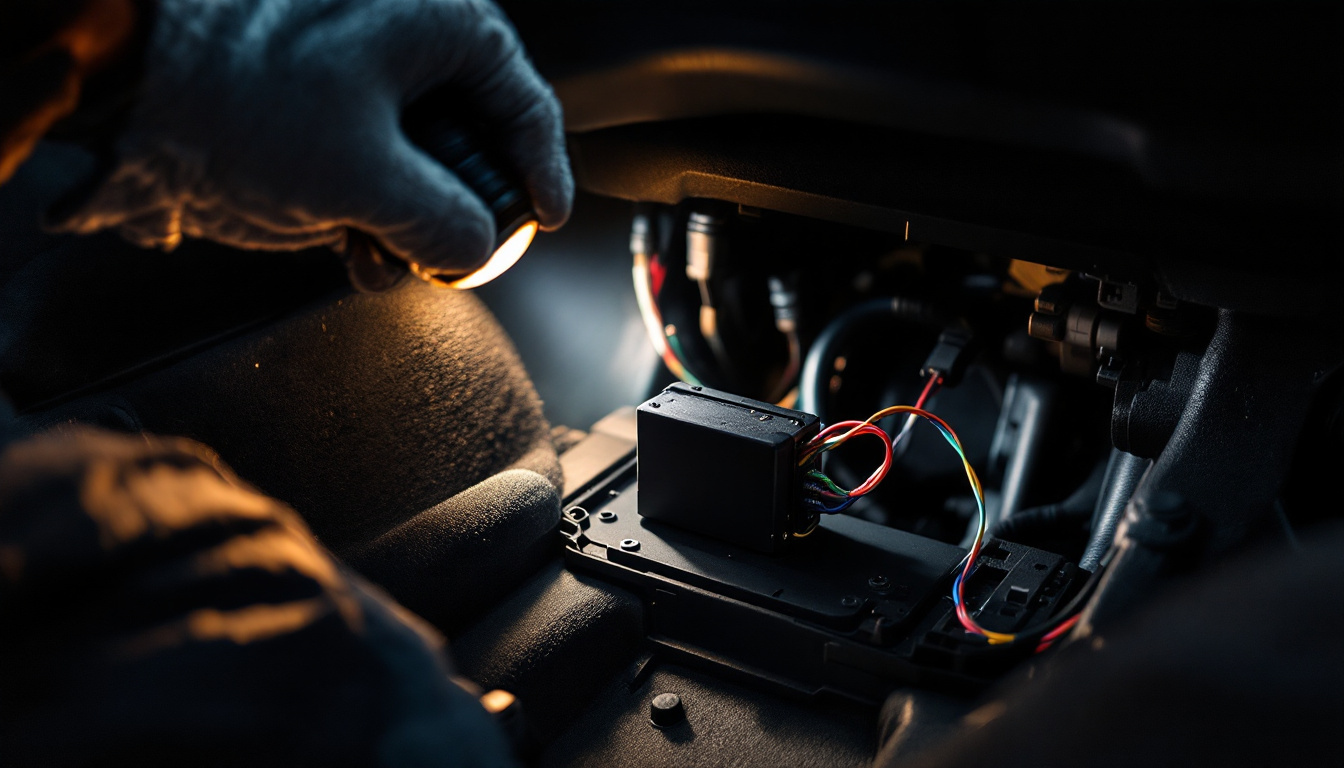
As of October 2026, diagnosing a work truck that stopped starting after a GPS tracker, telematics unit or starter-interrupt device was installed runs $95–$185 across Dallas–Fort Worth, usually credited toward the repair, with immobilizer re-registration at $150–$350, a damaged ignition switch at $150–$350 and a key re-sync at $120–$250 when the truck has forgotten its keys. In most of these cases the tracker did not break the truck. The way it was wired in did. Call (817) 813-8746 and tell us what was installed and when.
Quick Answer: The First Ten Minutes
Unplug anything in the diagnostic port. If the tracker is a plug-in device under the dash, pull it out, wait a full minute, and try the key again. If the truck starts, you have found the problem and it cost nothing.
Check the battery before anything else. A tracker that never lets the truck’s computers go to sleep will flatten a battery over a weekend. A slow crank or a rapid clicking is a battery, not an anti-theft fault.
Note exactly what the truck does. Turns over and never fires. Does nothing at all, with the dash lit. Starts and stalls. Shows a key or security symbol. Each of those points somewhere different.
Do not start cutting wires. A hardwired device is spliced into circuits the truck needs. Pulling it out without restoring those circuits leaves the truck exactly as dead, with fewer clues.
If it still will not start: a diagnostic visit at the yard is $95–$185 and usually comes off the repair.
What It Costs, Line by Line
These are first-party mobile ranges from our own work at DFW yards. The right-hand column is what fleet operators tell us the dealership route involved for the same fault.
| Job | Typical DFW mobile range | Dealership route, typically | When it applies |
|---|---|---|---|
| Diagnostic visit, no-start after an install | $95–$185, usually credited | Diagnostic fee, plus the tow in | Cause unknown |
| Immobilizer credential and re-registration work | $150–$350 | Service-lane appointment | Truck no longer recognizes its keys |
| Antenna ring, receiver or module at fault | $250–$700 | Parts plus programming | Hardware damaged during the install |
| Electrical ignition switch | $150–$350 | Column work, appointment | Switch harness tapped or overloaded |
| Key re-sync after module or battery events | $120–$250 | Separate visit | Keys present, pairing lost |
| Body module configuration | $180–$450 | Service-lane appointment | Settings scrambled by a voltage event |
| Extra key while we are at the truck | $70–$180 | Separate appointment | Any unit running on one key |
| Tow to a service lane | Not needed — mobile | $100–$250 before work starts | Truck cannot move under its own power |
Most trucks we see for this complaint leave on the first row alone, or the first row plus a wiring correction that belongs to whoever did the install. The lower rows exist because an installation occasionally does real damage. We do not quote them until the diagnosis says they are needed.
Three Kinds of Device, Three Kinds of Trouble
Fleet managers tend to call everything a tracker. The differences between the devices matter, because each fails in its own way.
Plug-in devices. These push into the diagnostic port under the dash and draw power and vehicle data from it. They are popular because installation takes ten seconds. Their weakness is that the diagnostic port is the truck’s own communication line. A plug-in device that talks too much, talks at the wrong moment or keeps asking questions after the key is off can keep modules awake and drain the battery. On some trucks it disturbs the conversation between the key system and the engine computer at the moment of starting. The fault is intermittent, and it tends to appear after a software update to the device rather than on the day it was installed.
Hardwired trackers. These are spliced into power, ground and an ignition signal, usually behind the dash or around the steering column. Done well they are invisible to the truck. Done quickly, with clip-on connectors on the nearest wire of the right color, they create resistance in circuits that were never meant to have any. The ignition switch harness and the wiring to the key antenna ring both live in the column, inches from where installers work.
Starter-interrupt devices. These add a relay to the starter circuit so the vehicle can be disabled remotely. They are standard on buy-here-pay-here inventory and common on rental and leased equipment. The relay is a deliberate break in the circuit that cranks the engine. When the relay fails, loses its own power or is commanded off, the truck is silent when the key is turned, with a fully lit dash and a healthy battery. That symptom is the one most often mistaken for a bad ignition switch.
Heavy trucks add a fourth category in the electronic logging device, which connects to the round data plug used on commercial chassis. The key systems on those trucks are described in heavy truck keys for Freightliner, Peterbilt, Kenworth and International.
Reading the Symptom
How the truck fails is the best evidence available before anyone opens a panel.
Dash lights up, key turned, complete silence. The starter circuit is open. On a truck with an interrupt relay, that relay is the first suspect. Without one, look at the ignition switch and the neutral-safety circuit. The mechanical side of this symptom is in a work truck key that turns and nothing happens.
Engine turns over normally and never fires. The starter circuit is fine. The engine computer is withholding fuel or spark, and the usual reason is that the anti-theft system did not approve the key. A flashing key or padlock symbol on the dash confirms it. This is where a disturbed antenna ring or a noisy data line shows up. The full checklist is in a work truck that cranks but will not start.
Slow crank, clicking, dim dash. Battery. A tracker that draws current around the clock, or one that prevents the truck from sleeping, is a parasitic load. The truck starts fine on a jump and fails again two days later.
A message that no key is detected. On push-button trucks the key system and the added electronics may be competing. We see the same message after other accessory work, described in a van that reports no key detected after an upfit.
It worked for weeks, then stopped. Corrosion in a clip-on splice, a relay that has aged, a device firmware update, or an account change at the tracking provider. An install that was marginal on day one fails on day forty.
Why the Key System Gets Caught Up in This
A tracker has nothing to do with keys. The anti-theft system gets involved for three physical reasons.
First, location. The ring-shaped antenna that reads the chip in the key sits around the ignition cylinder. The wiring that feeds it runs down the column. That is the same space an installer reaches into for an ignition-switched wire. A pinched or partly cut antenna lead produces a truck that reads its key on some turns and not on others.
Second, voltage. Immobilizer modules are sensitive to supply voltage during the fraction of a second in which they authenticate a key. A tracker spliced into the wrong feed can pull that voltage down at exactly the wrong time. A battery that the tracker has drained deeply and repeatedly can also cause some trucks to lose stored settings, which is where the body module configuration row in the table comes from.
Third, communication. On late-model trucks the key module, the body module and the engine computer authorize a start by exchanging messages on the same data network the diagnostic port exposes. A device that injects traffic onto that network at the wrong moment can cause the exchange to fail. The truck is not broken. It was interrupted.
None of this requires a new computer. It requires finding which of the three happened. The service detail is on our immobilizer repair page, and the general signs of a module-level fault are in signs of a car computer problem.
Whose Device Is It? The Question Before Any Removal
This matters more than the wiring, and we ask it on every call.
Your company installed it. It is your device on your truck. We can identify where it connects, isolate it for testing and tell you what we find. Removing or rewiring it is your decision, and it is usually a job for the telematics installer, who should correct their own work.
It came with a used truck. Trucks bought at auction or from another fleet often carry a dormant tracker or an interrupt relay nobody mentioned. If the title is clear and in your name, the device is abandoned hardware and can be removed and the circuit restored properly. Used-fleet purchases are covered in auction vehicle key cost in DFW.
A lender or lessor installed it. If the truck is financed and the device belongs to the lienholder, it is there under a contract. We do not remove or bypass a lienholder’s device. If it has failed and is keeping a current customer’s truck from starting, the call to make is to the lender, who can authorize a repair or send their own installer. We will tell you plainly when a no-start traces to a device we should not touch.
That boundary is not red tape. It is the same proof-of-authority principle that governs who we cut keys for.
Real-World Example: Fourteen Trucks and One Software Update
Situation. An HVAC contractor based near Lewisville had fitted plug-in telematics units across fourteen service vans eight months earlier without trouble. Over one week, three vans of the same model began refusing to start on the first attempt. They cranked, did not fire, and started on the second or third try. One morning a van would not start at all. A parts store read no stored codes. The dispatcher suspected bad keys, since all three vans had spares made at the same time.
What we did. A diagnostic visit at the yard, at the $95–$185 line. All six keys for the three vans read correctly. With the telematics unit removed from the diagnostic port, each van started every time across repeated attempts. With the unit plugged back in, the fault returned on two of the three. The provider confirmed a firmware update had gone out to that device model ten days before. We documented the test, left the units unplugged on the affected vans, and the provider replaced them with a version that connects through a pass-through harness.
Result. No parts, no keys, no programming. The diagnostic fee was the whole invoice, and the contractor had evidence to hand the telematics vendor instead of a guess.
When a truck quits starting right after something was added to it, the something is where I look first. The key system is usually the messenger. I would rather spend twenty minutes proving a tracker is the cause than sell a customer a module they did not need. — senior mobile technician, Metroplex Locksmith
Dealership or Mobile When the Truck Is Dead in the Yard
A franchised service department is equipped to diagnose an immobilizer fault on its own brand. Two things make that route awkward for this particular problem.
The truck has to be towed, at $100–$250, because it does not start. And service departments commonly decline to diagnose around non-factory electronics. The first instruction is often to remove all aftermarket equipment and bring the truck back, which sends a fleet to its telematics vendor and then back to the dealer, with the truck down for the whole circuit.
A mobile visit tests the truck where it sits, with the device in and with it out, in one appointment. That comparison is the diagnosis. For the wider trade-offs see auto locksmith versus dealership in DFW.
Texas Licensing and Who Should Touch the Anti-Theft System
Work on a vehicle’s immobilizer is security work. In Texas, companies that perform it are licensed by the Texas Department of Public Safety Private Security Program. A telematics installer is not a locksmith, and an installer who offers to bypass an immobilizer to get a truck running is offering something you should decline.
Credentialed access to manufacturer security functions runs through the National Automotive Service Task Force, which maintains the Vehicle Security Professional registry. The Associated Locksmiths of America publishes the conduct standards for the trade. And the Federal Trade Commission’s consumer guidance on bait-and-switch quotes applies here as everywhere: a diagnostic price given by phone should be the price charged.
The theft-prevention case for tracking is real. The National Insurance Crime Bureau counted 850,708 vehicles stolen nationwide in 2024, with the Chevrolet Silverado 1500 among the most stolen at 21,666. A tracker is a reasonable response to that. It should not cost a fleet its mornings.
Two more references are useful. The National Highway Traffic Safety Administration recall lookup will show by VIN whether an open ignition or electrical campaign could explain the fault on its own. And the Bureau of Labor Statistics lists locksmiths and safe repairers as a distinct skilled occupation with a national average wage of roughly $50,000 a year, which is context for what a competent diagnostic hour costs.
What to Have Ready When You Call
What was installed, by whom, and on what date. Plug-in or hardwired. Brand and model if you know it.
Who owns the device. Your company, a previous owner, or a lender.
Exactly what the truck does. Silent, cranks without firing, slow crank, or a dash message. Whether it is every time or some of the time.
The VIN and every key for the unit. If the fault turns out to be on the key side, all keys need to be present.
How many units have the same device. One truck is a fault. Three trucks of the same model is a pattern, and patterns are diagnosed faster.
We diagnose no-starts at yards and job sites from Dallas and Irving to Arlington and across the metroplex. Related service pages are ignition repair and car computer reprogramming, and booking is through our contact page.
Frequently Asked Questions
Can a GPS tracker stop a truck from starting?
Yes, in three ways. A plug-in device can disturb the data network the key system uses to authorize a start, a hardwired device can be spliced into ignition or antenna wiring badly, and a starter-interrupt relay can fail or be switched off. Any tracker can also drain the battery if it keeps the truck awake.
How much does it cost to diagnose a no-start after a tracker install in DFW?
As of October 2026, a mobile diagnostic visit runs $95 to $185 and is usually credited toward the repair. Many of these trucks need nothing beyond that visit and a wiring correction by the installer. Immobilizer re-registration, when it is needed, runs $150 to $350.
The truck starts when I unplug the tracker. Is the tracker defective?
Not necessarily defective, but it is the cause. The device may be incompatible with that truck’s data network, running problem firmware, or drawing power in a way the truck does not tolerate. Leave it unplugged, document that the truck starts without it, and take that evidence to the telematics provider.
Will you remove a starter-interrupt device from a truck?
If the device belongs to you, or came with a truck you own outright, it can be removed and the starter circuit restored properly. If it belongs to a lender or lessor on a financed vehicle, we will not remove or bypass it. The lienholder has to authorize any work on their device.
Did the install damage my keys?
Almost never. Keys are rarely affected. What gets disturbed is the antenna ring around the ignition, its wiring, or the supply voltage to the immobilizer. If the truck has lost its pairing after a deep battery drain, re-syncing existing keys typically runs $120 to $250.
Do I have to tow the truck to a dealership?
No. The diagnosis is done where the truck is parked, which avoids a tow of $100 to $250. Testing the truck on site with the device connected and then disconnected is the most direct way to prove the cause, and it is hard to do once the truck has been moved and the equipment stripped.
The Bottom Line
A work truck that stopped starting after a tracker or telematics install is a $95–$185 diagnosis in DFW, usually credited, and most of the time it ends there. The device or its wiring is interrupting the starter circuit, the key antenna or the data network, and the truck’s own parts are fine. The repair bands above, $150–$350 for immobilizer or ignition switch work and $120–$250 for a key re-sync, apply only when the diagnosis finds real damage.
Unplug what can be unplugged, check the battery, write down exactly what the truck does, and find out who owns the device. Then call (817) 813-8746 or use our contact page, and we will come to the yard.