
Police and Security Patrol Vehicle Keys in DFW: Ford, Chevrolet and Dodge Pursuit Platforms
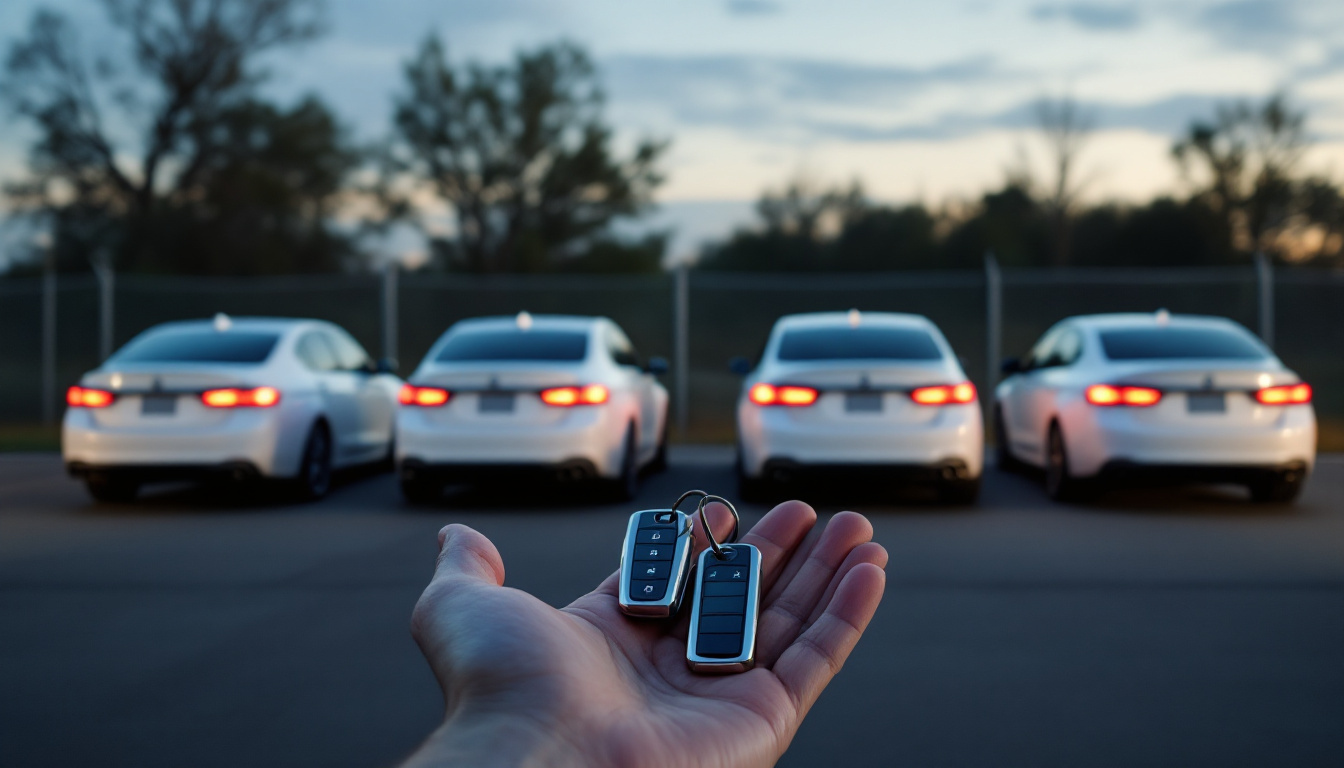
As of October 2026, keys for police-package and security patrol vehicles across Dallas–Fort Worth run $130–$250 for a transponder blade key, $180–$350 for a remote-head or fobik key and, where the car takes a proximity fob, $250–$500, with additional keys in the same visit at $70–$180 and an erase of every key you cannot account for at $120–$250 per unit. These vehicles are keyed differently from the retail cars they are based on, and a retired patrol unit carries its old fleet’s key habits into its next life. Call (817) 813-8746 with the VIN and tell us whether the unit is in service or decommissioned.
Quick Answer: What Is Different About a Patrol Car Key
Many are keyed alike. Agencies and large security fleets often order vehicles so one mechanical cut opens and turns every unit. Convenient in service. A liability the day one of those units is sold.
Many kept a turn-key ignition. Police packages frequently retained a conventional key after the retail version of the same vehicle moved to a start button. The key for a patrol unit may not be the key the model year suggests.
Many can idle with the key out. Police packages commonly include a feature that keeps the engine running after the key is removed, so the car can be left locked and idling. After decommissioning, the wiring around that feature is a regular source of odd ignition behavior.
The fix for a retired unit is an erase, not just a copy. Deleting unknown keys from the vehicle’s memory runs $120–$250. Where the mechanical cut is shared with a whole fleet, the cylinders may need attention too.
Everything is quoted by VIN. Police-package build details vary by agency order, and the VIN is the only reliable description of the car.
Keys by Platform
These are the patrol platforms we see most in DFW, in service with security companies and smaller agencies and in second lives as work vehicles. The ranges are first-party mobile pricing from our own work. Key types are stated as what is commonly found; individual orders differ.
| Platform | Commonly found key | Typical DFW mobile range, first key | What to know |
|---|---|---|---|
| Full-size rear-drive Ford police sedan, built through the early 2010s | Metal blade key; many ordered without a chip | Quoted by VIN; chipped versions $130–$250 | Frequently keyed alike across an agency |
| Ford police sedan and utility, 2013 onward | Transponder blade or remote-head key, turn-key ignition on most | $130–$250 blade, $180–$350 remote-head | Retail trims of the same years are often push-button |
| Chevrolet police-package SUV and sedan | Transponder blade key on most; remote-head on some | $130–$250 blade, $180–$350 remote-head | Turn-key ignition kept after retail trims changed |
| Dodge pursuit sedan and SUV, earlier generation | Fobik key inserted in the dash | $180–$350 | Key authorization lives in a dash-mounted receiver |
| Dodge pursuit sedan and SUV, later generation | Proximity fob with push-button start | $250–$500 | Widest band; newest units quoted by VIN |
| Any platform: additional key, same visit | Same type as the first | $70–$180 each | The cheapest key a fleet buys |
| Any platform: no key at all | Cut from code, programmed from zero | Add $75–$200 | Common on auction units |
| Any platform: erase unknown keys | Existing keys re-paired | $120–$250 | The first job on a decommissioned unit |
The pattern in that table runs against expectation. A patrol vehicle is usually simpler to key than the luxury trim of the same model, because it kept the older, plainer key system. The complexity is not in the key. It is in the fleet history.
Ford Police Sedans and Utilities
For decades the default American patrol car was a full-size, rear-drive Ford sedan, and a great many of them are still working as security vehicles, taxis and parts runners. These cars use a simple double-sided blade key. Many police-package examples were ordered without the chip-based anti-theft system that the civilian version carried, which means a correctly cut metal key is all the car asks for. Some were ordered with it. The VIN and a look at the existing key settle the question in a minute.
The successor vehicles, a sedan and a utility built on Ford’s crossover platforms from the 2013 model year onward, moved fully to transponder keys. Most police-package units kept a conventional turn-key ignition where the retail version offered a start button. On many of these the keys are stored in the body module, which has a practical consequence for fleets: a body module replacement means every key has to be present and reprogrammed. That case is covered in fleet BCM programming cost in DFW, and the general Ford key picture is in Ford key replacement in DFW.
Ford patrol fleets are the ones most often keyed alike. An agency with sixty units and one key cut has sixty vehicles that any one of its keys will mechanically open.
Chevrolet Police-Package SUVs and Sedans
The full-size Chevrolet SUV in police trim is now one of the most common patrol vehicles in North Texas, in agency service and with private security companies. On most police-package units of the past decade and a half the key is a transponder blade, cut on the side of the blade on later generations, turned in a conventional ignition. Retail trims of the same truck moved to proximity fobs and push-button start years earlier, so a parts counter looking up the key by model year alone may reach for the wrong one.
A rear-drive Chevrolet police sedan was also sold to agencies for several years in the 2010s. It was never offered to the public in that form, which makes keys and parts less familiar to general shops. It is ordinary transponder work with the correct blank.
On many late-model GM trucks the body module takes part in the anti-theft handshake. A replaced module needs a security relearn before the engine will run. The key side of the family is in our guide to Chevy and GMC key replacement in DFW.
Dodge Pursuit Sedans and SUVs
Dodge pursuit vehicles split into two key generations. Earlier cars use a fobik, a plastic key with no metal blade in normal use, pushed into a receiver in the dash and turned. The receiver is the security component. When it fails, the car will not recognize a good key, and that repair is described on our WIN module and RF hub repair page.
Later cars use a proximity fob and a start button. Authorization moved to a radio-frequency hub elsewhere in the vehicle. These are the most expensive patrol keys in the table at $250–$500, and the newest model years are always quoted by VIN because security access on them has tightened.
Both generations hide a short backup blade in the fob body, and it fits the door on the driver’s side. On fleet cars it is frequently uncut. The work-truck version of that problem is in a work truck that will not unlock when the fob dies, and the broader Dodge, Ram and Jeep key picture is in Ram, Dodge and Jeep work truck keys.
Keyed Alike: Useful in Service, a Problem at Resale
Keyed-alike ordering exists for a good reason. A sergeant can move any car in the lot. A security company can send any guard out in any unit. Nobody hunts for the right key at shift change.
There are two layers to understand. The mechanical layer is the cut of the blade, and on a keyed-alike fleet it is identical across every unit. The electronic layer is the chip, on vehicles that use one. Each vehicle keeps its own list of approved chips. Depending on the platform, a single chipped key can sometimes be registered to more than one vehicle, and some fleets do exactly that.
When a unit leaves the fleet, both layers go with it.
On a car with no chip system, every key that fleet ever cut still opens the door and starts the engine. The only real fix is mechanical: the ignition and door cylinders are rekeyed or replaced so the old cut no longer works. Cylinder work runs $120–$280 for a rebuild and $180–$380 for a replacement keyed to a new cut.
On a car with a chip system, the old fleet’s keys still open the door mechanically, and any of them that were registered to this vehicle still start it. The erase at $120–$250 removes the starting authority. It does not change the door cut. A buyer who cares about the contents of the car, and a security company certainly does, should ask about the door cylinders as well.
For a working fleet that wants to keep keyed-alike convenience and still control who can drive, the tool is the same erase, run whenever a key goes missing or a driver leaves. We set out that routine and its cost in fleet rekeying after driver turnover.
Buying a Decommissioned Patrol Car
Retired police vehicles reach the public through government surplus auctions and specialist resellers. They are attractive: heavy-duty cooling, upgraded electrical systems, maintenance records. They also arrive in a predictable condition.
One key, sometimes none. Agencies keep or destroy the rest. A no-key unit is the first-key price plus $75–$200. Budget a second key at $70–$180 in the same visit. The wholesale arithmetic is in auction vehicle key cost in DFW.
Unknown keys still approved. Until the erase is done, assume other keys start the car.
Equipment removed in a hurry. Light bars, radios, cages, consoles and computers are stripped before sale. The wiring that fed them is often cut rather than disconnected, and some of it was tied into ignition and body circuits. Symptoms show up later as intermittent no-starts, a key that will not release, or accessories that stay live. A diagnostic visit is $95–$185 and is usually credited toward the repair.
The idle feature. The engine-running-with-key-removed function was wired or configured for patrol use. On a decommissioned unit it can leave the ignition behaving unlike any civilian example of the same vehicle. It is a configuration matter more often than a fault. The related symptom is in a work truck key stuck in the ignition.
A worn ignition cylinder. A patrol car is started and stopped more in a year than most cars in five. On keyed vehicles the cylinder and the key wear together. A fresh key cut from code, rather than copied from the worn original, is the right first step. Shared-driver wear is covered in ignition wear on trucks with shared drivers.
Real-World Example: Six Ex-Patrol Sedans for a Security Contractor
Situation. A private security company operating around Arlington bought six retired patrol sedans from a surplus sale to replace its aging patrol fleet. Each came with one key. All six keys were visibly the same cut. The owner wanted two keys per car and wanted to keep the convenience of one cut across his fleet, but did not want the selling agency’s keys to work.
What we did. One visit to the company’s lot from a VIN list. Four of the cars used a chip system and two did not. On the four, we erased all stored keys and registered two new keys to each. On the two without a chip system, an erase was not possible because there was nothing electronic to erase, so the owner chose to have the ignition cylinders on those two replaced and keyed to a new common cut. We cut the new keys for all six from code rather than from the worn originals. One car had an ignition that would not release the key reliably; that traced to cut equipment wiring under the dash and was corrected by the owner’s installer.
Result. Six cars with two keys each, a new shared cut the previous fleet never had on the two cars that needed it, and no previously issued key able to start any of them.
A retired patrol car comes with one key and an unknown number of cousins. Copying that key just gives you a seventh cousin. The job on a decommissioned unit is to end the old key list first and build the new one second. — senior mobile technician, Metroplex Locksmith
The Dealership Route, Honestly
A franchised dealer can cut and program a key for a police-package vehicle of its brand, and for a current-generation unit under warranty it is a sensible first call. For older and decommissioned vehicles the route has friction.
Parts lookups keyed to model year return the retail key, which is often the wrong one for a police build. A no-key unit has to be towed in at $100–$250. A keyed-alike rekey is not a service-lane menu item. And the pricing follows the retail pattern: the Kelley Blue Book survey of dealership fob pricing puts replacement at $150–$500 or more per key. The general comparison is in auto locksmith versus dealership in DFW.
Texas Licensing: The Same Program Covers Both Trades
There is a neat piece of Texas regulation here. Locksmith companies and private security companies are both licensed under the Texas Department of Public Safety Private Security Program. A guard company already knows the license lookup it uses for its own business. The same lookup verifies its key vendor.
That matters more for a patrol fleet than for most. The vendor who keys security vehicles holds the cut and the key data for cars that carry access to client properties. Credentialed access to manufacturer key codes runs through the National Automotive Service Task Force, which maintains the Vehicle Security Professional registry, and trade conduct standards are published by the Associated Locksmiths of America.
For buyers of surplus units, two free checks are worth a minute each. The National Highway Traffic Safety Administration recall lookup shows open campaigns by VIN; fleet vehicles are not always brought in for them. And the National Insurance Crime Bureau’s count of 850,708 vehicles stolen nationwide in 2024 is a reminder that a car with unaccounted-for keys is an easy one.
On price, the Federal Trade Commission’s consumer guidance on bait-and-switch quotes applies: a figure given from a VIN should be the figure charged.
What to Have Ready When You Call
The VIN for each unit. Police-package details do not follow the retail catalog. The VIN does.
In service or decommissioned. And if decommissioned, where it was bought and what paperwork came with it.
How many keys you hold, and whether they are all the same cut. Lay two side by side and compare the blades.
What you want the fleet to look like. Keyed alike or keyed differently, and how many keys per unit.
Anything odd about the ignition. A key that sticks, an engine that keeps running, a start that fails now and then.
We key patrol and security fleets across the metroplex, from Dallas and Irving to Denton. Service detail is on our car key replacement and ignition repair pages, and booking is through our contact page.
Frequently Asked Questions
How much does a key for a police-package vehicle cost in DFW?
As of October 2026, typical mobile ranges are $130 to $250 for a transponder blade key, $180 to $350 for a remote-head or fobik key, and, for a proximity fob, $250 to $500. Additional keys cut in the same visit run $70 to $180 each, and a unit with no key at all adds $75 to $200.
I bought a retired police car with one key. Can other keys still start it?
Assume so until it is checked. Fleet vehicles commonly have several keys registered, and the selling agency does not hand them all over. Erasing every stored key and re-pairing only yours runs $120 to $250. On cars with no chip system, the ignition cylinder has to be rekeyed instead.
What does keyed alike mean on a patrol fleet?
It means every vehicle in the fleet was ordered with the same mechanical key cut, so one key opens and turns them all. It is convenient in service. When a unit is sold, every key the fleet ever issued still fits its locks, which is why decommissioned cars should be erased or rekeyed.
Why does my ex-police SUV use a regular key when the same model has push-button start?
Police packages frequently kept a conventional turn-key ignition after retail trims moved to a start button. It is normal for the build, and it usually makes the key less expensive: a transponder blade at $130 to $250 where a proximity fob would be $250 to $500.
Can a security company keep all its patrol cars on one key?
Yes. We can cut a common key for the fleet and register it to each vehicle where the platform allows, and we can change that common cut on cars bought from another fleet. Cylinder work to change a cut runs $120 to $280 for a rebuild and $180 to $380 for a replacement.
The key will not come out and the engine keeps running. Is that the police idle feature?
It may be. Many police packages can keep the engine running with the key removed, and wiring cut during decommissioning can leave that system behaving unpredictably. A diagnostic visit at $95 to $185, usually credited toward the repair, separates a configuration issue from a worn ignition cylinder.
The Bottom Line
Keys for police-package and security patrol vehicles in DFW cost $130–$500 for the first key depending on type and $70–$180 for each additional one in the same visit. That part is routine. What is not routine is the history: fleets keyed alike, several keys registered per car, an idle feature most shops have never seen, and equipment wiring cut out before the sale.
For a unit in service, keep a second key and erase missing ones. For a decommissioned unit, erase first at $120–$250, cut new keys from code, and deal with the door and ignition cylinders if the old fleet shared a cut. Call (817) 813-8746 with the VINs, or use our contact page.