
Shuttle, Church Van and Passenger Bus Key Costs in DFW (2026)
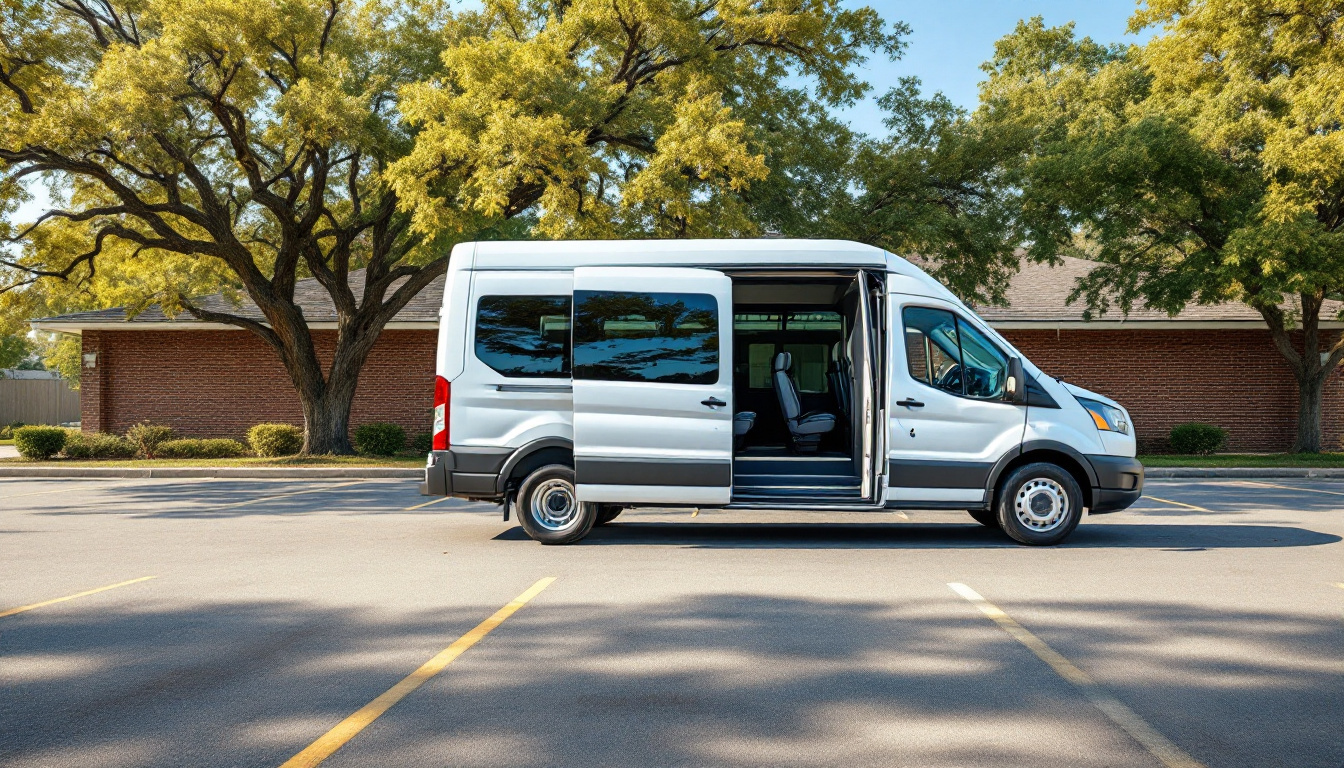
As of August 2026, keys for shuttle vans, church buses and passenger fleets across Dallas–Fort Worth run about $70–$180 for a plain mechanical bus-body key with no chip, $130–$250 for a transponder blade key, $180–$350 for a fobik or remote-head, and $250–$500 for a proximity fob on a late-model passenger wagon. If nothing on the unit still starts it, add $75–$200 for the all-keys-lost procedure. Which of those four you are buying depends on the chassis under the body, not on how the vehicle looks. Call (817) 813-8746 with a VIN and we will tell you before we roll.
Quick Answer: Four Things That Decide a Passenger-Fleet Key Price
1. The chassis, not the body. A fourteen-passenger shuttle is a cutaway van chassis with a coach body bolted to it. The key belongs to the chassis. A body builder in Indiana has no say in what the ignition wants.
2. Whether there is a transponder at all. Many purpose-built bus bodies and older cutaways still run a plain mechanical ignition key with no chip in it. Those are the cheapest keys in this entire trade and the least secure vehicles on your lot, and both facts matter to you.
3. Whether a working key still exists. One good key means we can usually duplicate and pair quickly. No working key means an all-keys-lost visit, a longer procedure and proof of ownership in the organisation’s name before anything starts.
4. Who has to be able to drive it. Passenger fleets are shared by definition — volunteers, part-time drivers, weekend rotations. That drives key count up, and key count is where a sensible programme saves money.
Typical DFW Passenger-Fleet Key Pricing, Line by Line
These are the ranges we quote across the Metroplex before anyone looks at the vehicle, drawn from our own mobile work on shuttles and passenger vans rather than a national consumer average.
| Line item | Typical DFW mobile range | Typical dealership path | Notes for a passenger fleet |
|---|---|---|---|
| Mechanical ignition key, no transponder | $70–$180 | Parts counter, if the blank exists | Common on bus bodies and older cutaways |
| Transponder blade key | $130–$250 | $200–$400 plus tow | E-Series, older Express and Savana cutaways |
| Fobik or remote-head key | $180–$350 | $250–$500 plus tow | Sprinter and 2000s–2010s passenger wagons |
| Proximity fob, push-button start | $250–$500 | $350–$650 plus tow | Late-model Transit and Sprinter passenger trims |
| Additional key on the same visit | $70–$180 each | Usually full price each | The line that fixes a shared-driver fleet |
| All keys lost on the unit | Add $75–$200 | Tow plus appointment | Longer visit; ownership proof required |
| Erase old keys and re-pair the ones you hold | $120–$250 | $200–$400 plus tow | After a driver leaves or a ring goes missing |
| Lockout with passengers waiting | $75–$175 | Not offered | Job-site and terminal calls; after hours runs higher |
Compare the first row with the fifth. A fleet running mechanical keys can hand every driver a key for very little money. The reason many do not is that nobody ever priced it, and the whole operation runs on one key taped inside a visor.
The Chassis Under the Body Is the Whole Answer
Passenger vehicles in this segment come in three broad shapes, and the shape tells you almost nothing until you look underneath.
Factory passenger wagons. A Ford Transit passenger van, a Chevrolet Express passenger van or a Mercedes-Benz Sprinter passenger model leaves the factory as a complete vehicle. Its key is the key any van of that platform uses, and it prices exactly like the cargo versions we covered in our guide to cargo van key replacement across DFW. Platform ancestry matters here too: a Ram ProMaster passenger build carries European-derived immobilizer architecture rather than Ram truck hardware, which is why it behaves more like the vehicles in our Fiat key replacement guide than like a domestic pickup. Option content decides whether you have a blade, a remote-head or a proximity fob — not the year, and certainly not the seat count.
Cutaway shuttles. This is the airport-hotel shuttle, the retirement-community bus, the church fourteen-seater. A bare chassis with a cab — Ford E-350 or E-450, Chevrolet or GMC cutaway, occasionally a Transit or Sprinter cutaway — goes to a body builder who bolts on the coach. The ignition and the transponder belong to the chassis maker. So a shuttle body from one manufacturer sitting on two different chassis needs two different keys, and fleets with mixed procurement years discover this at the worst moment.
Purpose-built bus bodies. Full-size school and activity buses are their own vehicles, and their ignition hardware is frequently a simple mechanical switch with no immobilizer. On many of those, keys are shared across an entire model line by design, so that a driver in one district can start a bus in another. That convenience is exactly why key control on this class of vehicle deserves separate thought.
None of this is visible from the curb. When a shuttle in Irving calls us at five in the morning with a lost key, the first question is always the VIN, because the VIN identifies the chassis and the chassis identifies the key.
Why Passenger Fleets Lose Keys More Than Anyone Else
A service van has one driver, and that driver is paid to keep track of the key. A shuttle has eight drivers, half of them volunteers, several of them driving on a rota with weeks between turns. Nobody owns the key, so everybody assumes somebody else has it.
The failure patterns are consistent enough that we can predict them. The single key lives in the office and moves to whoever is driving. The spare is either taped somewhere on the vehicle — which defeats the point — or is a key nobody has ever tried. And because these units often sit for six days out of seven, a fob battery dies unnoticed and the discovery happens with fifteen passengers standing in the sun.
The cost of getting it wrong is a call-out rather than a scheduled visit, and lockouts on a passenger unit tend to happen with people standing beside it — the same economics we set out in our guide to fleet vehicle lockout cost in DFW.
Two habits fix nearly all of it, and neither is expensive. Buy enough keys that the vehicle never depends on one, using the $70–$180 same-visit price rather than paying full price for each key on separate calls. And test the spare on a schedule instead of trusting it. We wrote at length about that second failure — the spare that turned out never to have been programmed — in our piece on fleet spare keys that stopped working.
The Sprinter Is the Expensive Outlier
A Mercedes-Benz Sprinter passenger van costs more to key than a comparable domestic shuttle, and the reason is not brand pricing. Sprinters use Mercedes immobilizer architecture, and depending on generation the key work can require handling that goes well beyond cutting and pairing a blade.
In practice this means three things for a fleet in Lewisville or anywhere else in the Metroplex. Lead times can be longer if a component must be sourced. All-keys-lost is a materially bigger job on these than on an E-Series. And the price sits at the top of the ranges above rather than the middle. The same underlying platform economics apply to Mercedes passenger cars, which we broke down in our guide to Mercedes key replacement cost in DFW.
We say all of that on the phone. A shuttle operator planning a budget deserves the real number for the vehicle they own, not the number for the one they wish they owned.
One passenger fleet sits outside all of this: executive car services and black-car operators, who run luxury sedans and vans where a single fob can cost more than three shuttle keys combined. The pricing shape for that end of the market is in our guide to BMW key replacement in DFW, and the same one-key-per-vehicle problem shows up there just as reliably.
Real-World Example: A Church Bus and One Key
Situation. A congregation in Grand Prairie ran a fourteen-passenger cutaway shuttle and a fifteen-seat passenger van. Between them they had two keys total: one per vehicle, both originals, both fifteen years old. A volunteer driver lost the shuttle key on a Saturday afternoon with a trip scheduled the next morning.
What we did. We took the VIN over the phone, confirmed the chassis and the key type before leaving, and reached the lot within the hour. The shuttle needed an all-keys-lost procedure. While we were on site we cut and programmed two additional keys for that unit at the same-visit rate, and did the same for the passenger van, which had never had a spare either. Total keys on the property went from two to six.
Result. The Sunday trip ran on time. The organisation now keeps two keys in a labelled box in the office and one with each regular driver, and the emergency-call risk on a weekend afternoon dropped to something close to zero.
Nearly every passenger-fleet emergency we drive to is a vehicle that had exactly one key. The vehicles with three keys call us on a Tuesday to add a fourth, and it costs them a fraction of what the Saturday call costs. — senior mobile technician, Metroplex Locksmith
Security on a Vehicle That Carries People
A shuttle is a different risk profile from a work truck. Vehicle theft nationally fell hard in 2024 — the National Insurance Crime Bureau recorded 850,708 vehicles stolen, down 17 percent from 1,020,729 the year before — but the concern with a passenger unit is rarely resale theft. It is unauthorised movement: a vehicle taken for a joyride, a former volunteer who still has a key, a bus started by someone the organisation never screened.
That is a key-control problem, not a lock problem, and on vehicles with an immobilizer it has a clean fix. Erasing the old keys from the module and re-pairing the ones you hold costs $120–$250 and makes every unaccounted key inert. On the mechanical-key bus bodies, where no immobilizer exists to erase, the honest answer is different: you control access by controlling the physical keys and where the vehicle is parked, and we will say so plainly rather than sell you a programming job that the vehicle cannot use.
Whoever you hire should ask you for proof that the organisation owns the vehicle. Locksmith work in Texas is licensed through the Department of Public Safety Private Security Program, and many vehicle-security technicians additionally register with the National Automotive Service Task Force Vehicle Security Professional programme or hold Associated Locksmiths of America credentials. A company that will make a key for a fifteen-passenger bus without checking the paperwork is telling you something about who else they would make one for.
Dealership Versus Mobile for a Shuttle
The dealership route has one structural problem for this class of vehicle: a shuttle that will not start does not drive to a service lane, and towing a cutaway with a coach body is neither cheap nor quick. That tow is $100–$250 before any key work begins, and the vehicle is then parked at a dealership that may schedule it days out.
Dealer key pricing itself is no bargain either. Kelley Blue Book puts fob replacement at dealerships at roughly $150 to $500 and up on ordinary passenger cars, with about $200 to $400 for a 2020 Subaru Forester as a midpoint example. Commercial chassis do not price lower.
Mobile work removes the tow, the lane and the wait. For an operator in Denton whose vehicle is needed at seven in the morning, that difference is the entire decision. We laid out the full comparison in our piece on auto locksmith versus dealership, and the same logic that governs car key replacement cost in Fort Worth applies with the downtime multiplied by the number of people waiting on the vehicle.
Locksmiths and safe repairers are tracked as their own skilled occupation by the Bureau of Labor Statistics, and the vehicle side of the trade now runs on diagnostic equipment as much as on cutting machines. That is why a single mobile visit can handle a mechanical bus key, a transponder cutaway and a proximity-fob wagon on the same lot.
What to Have Ready When You Call
Passenger-fleet calls quote faster when you have four things at hand.
- The VIN of each unit. Not the body-builder plate — the chassis VIN. It settles the key type and the price band immediately.
- How many working keys exist for that unit, honestly. A key that has never been tested is not a working key for planning purposes.
- Proof the organisation owns the vehicle. Registration or title in the entity name, plus ID from someone authorised to act for it.
- When the vehicle is needed next. A trip at seven tomorrow morning changes how we schedule the visit.
If a unit has an intermittent no-start rather than a key problem, say so — that is a different diagnosis. Open safety recalls are worth checking at the same time through the NHTSA VIN lookup, particularly on older cutaways that have been in service for a decade or more. Larger straight-truck and bus-chassis work follows the same pattern we described for box truck key replacement.
Frequently Asked Questions
Why is a key for our fourteen-passenger shuttle priced like a van key?
Because it is a van key. A cutaway shuttle is a chassis from a van manufacturer with a coach body added afterward, and the ignition, transponder and immobilizer all belong to the chassis. The body builder does not change the key system, which is why we ask for the chassis VIN rather than the seat count.
Our bus key has no chip in it. Is that a problem?
It is cheap to duplicate and weak on security. Many purpose-built bus bodies use a plain mechanical ignition with no immobilizer, and on some model lines the same key pattern is shared widely by design. Keys cost $70–$180, but access control has to come from physical key custody and where you park, because there is no module to erase a lost key from.
How much does it cost to add spare keys for our volunteer drivers?
Additional keys cut and paired during the same visit run $70–$180 each, against $130–$500 for a first key on a separate call-out. For a fleet where several people drive the same vehicle, buying three or four keys in one visit is the cheapest insurance available in this trade.
A former driver never returned a key. What do we do?
On any unit with a factory immobilizer we erase every key the module knows and re-pair only the keys you hold, for $120–$250. The missing key stops starting the vehicle immediately. On a mechanical-key bus body there is no module to erase, so the answer is different and we will tell you that upfront.
Can you come to a church lot or a hotel drive rather than a shop?
Yes. We are fully mobile across Dallas–Fort Worth and the work happens where the vehicle is parked, which for a shuttle usually means a church lot, a terminal drive, a community centre or a yard. That also avoids a $100–$250 tow on a vehicle that cannot be started.
Is a Sprinter passenger van more expensive than a Ford or Chevrolet shuttle?
Usually yes. Sprinters use Mercedes immobilizer architecture, and depending on generation the procedure is more involved and parts can take longer to source, so pricing sits at the upper end of the ranges and all-keys-lost is a bigger job. We quote the specific generation from the VIN rather than giving a brand-wide number.
The Bottom Line
Passenger fleets are priced by the chassis under the body, and the spread is wide: $70–$180 for a mechanical bus key, $130–$250 for a transponder blade, $180–$350 for a fobik or remote-head, $250–$500 for a proximity fob, plus $75–$200 when nothing on the vehicle still starts it. The cheapest thing you can do is buy the spare keys before you need them, at $70–$180 each on a visit you already scheduled.
Send us the chassis VIN and the number of working keys per unit and we will quote the whole lot in advance. Call (817) 813-8746 or reach us through the contact page to book a mobile visit anywhere in the Metroplex, and see our car key replacement, transponder key and lost car key pages for the underlying services.