
Push-Button Start Work Truck Repair Cost in DFW (2026): Fobs, Antennas and Modules
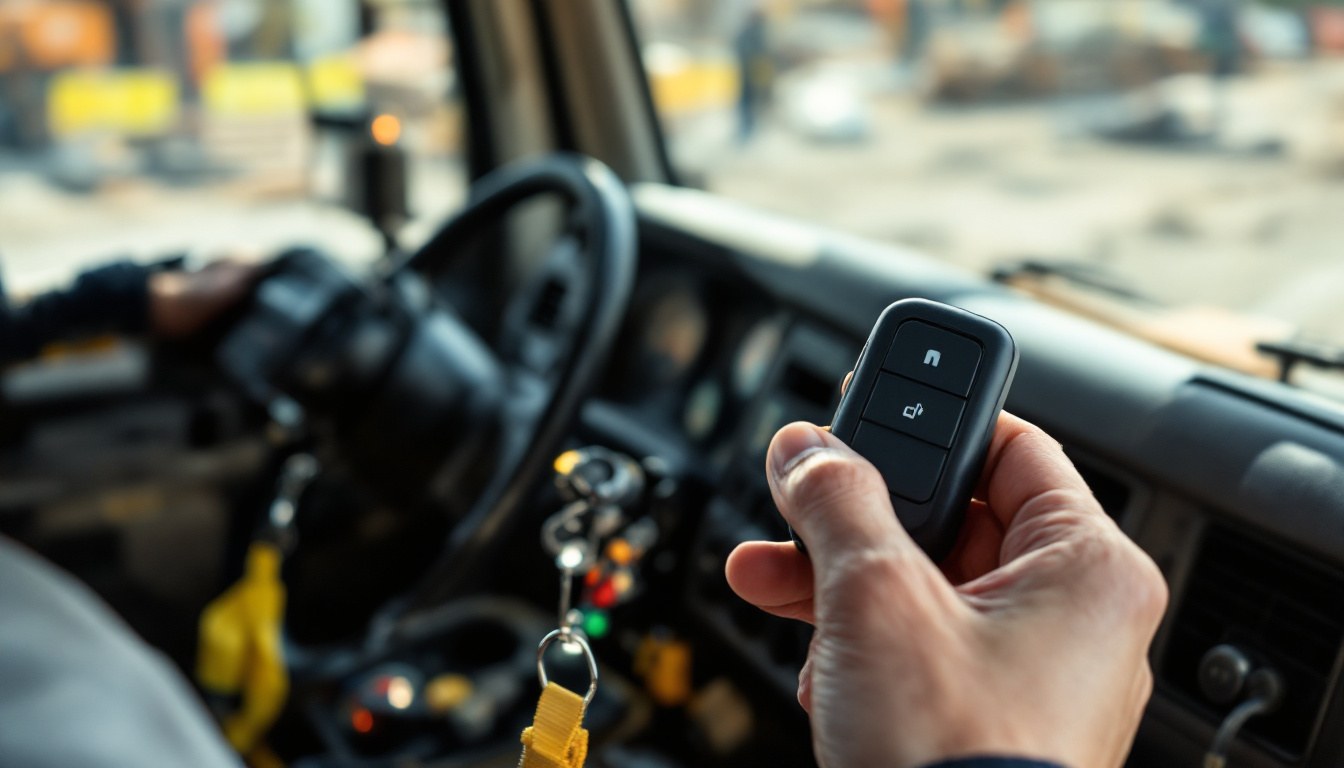
As of November 2026, repairing a push-button start work truck in Dallas–Fort Worth starts with a $95–$185 mobile diagnostic that is usually credited into the repair; a replacement proximity fob runs $250–$480, an extra fob cut and programmed in the same visit $70–$180, immobilizer re-registration $150–$350, and the electrical ignition switch behind a keyed truck $150–$350. Start-button hardware, steering-lock parts and the antenna ring are quoted after diagnosis because they differ by platform. Call (817) 813-8746 with the VIN.
Quick Answer: Why a Push-Button Truck Is a Different Repair
A keyed truck has a mechanical lock, a switch and a transponder. A push-button truck has none of the first, and its ignition is a conversation between a fob, antennas, a body module and, on many platforms, an electronic steering lock. When the button does nothing, the fault could be in any of those, and the price depends on which.
That is why the first number on a push-button work truck is a diagnostic, not a repair. The $95–$185 visit separates four cases that look identical to a driver: a dead fob battery, a failed or lost fob, an antenna or module fault, and a part that was swapped without the keys being re-registered. Three of those four are cheap. The fourth is where the money goes, and the diagnostic is what tells you which one you are in.
The prices we publish, so you can budget. Fob replacement $250–$480 with all keys lost adding about $75–$200; extra fob in the same visit $70–$180; immobilizer re-registration $150–$350; module-side repair $250–$700; key re-sync after module work $120–$250. Anything not on that list is quoted after we have seen the truck.
The Price Table
| Job on a push-button work truck | Typical DFW mobile range | Dealership route, typically |
|---|---|---|
| Diagnostic, button does nothing or “key not detected” | $95–$185, usually credited | Diagnostic fee plus the tow in |
| Replacement proximity fob, programmed on site | $250–$480 | Commonly higher, plus a tow if no working fob |
| Extra fob in the same visit | $70–$180 | Separate appointment |
| All fobs lost, added to a replacement | Add $75–$200 | Tow, proof of ownership, queue |
| Immobilizer credential / re-registration | $150–$350 | Service-lane appointment |
| Module-side repair (antenna, receiver, module) | $250–$700 | Part at list price plus programming |
| Key re-sync after body or engine module work | $120–$250 | Second visit, often second tow |
| Start-button, steering-lock and antenna hardware | Quoted after diagnosis | Part list price plus labor |
The dealership column is what operators report to us rather than a published tariff. The point of showing it is the shape, not the decimals: the dealer route adds a tow and a wait to every line.
How Push-Button Start Works on a Work Truck
When a driver gets in and presses the brake, the truck sends a low-power signal from antennas in the cab and listens for a fob to answer. If the right credential responds, the body module allows the start button to engage the ignition. On many platforms an electronic steering lock has to release first, and the engine computer has to agree before fuel and spark are enabled.
So the start button is the last link in a chain, not the cause of a no-start. The same symptom — button pressed, nothing happens — can be a flat fob battery, a fob left in a pocket full of metal tools, an antenna that has gone quiet, a steering lock that will not release, or a low truck battery that cannot power the whole sequence. Each of those has a very different price, which is why the cheap tests come first.
The Five Cheap Checks Before Any Repair
1. The emergency start position. Most proximity trucks let you hold the fob against the start button or a marked spot on the column and start with a dead fob battery. If that works, the truck is fine and the fob needs a battery. Our guide to work truck key fob dead and can’t unlock the door covers the entry side.
2. The fob battery. A coin cell costs almost nothing, and a weak one produces a wide range of confusing symptoms before it dies completely, including a fob that only works up close, which we explain in work truck key fob only works up close.
3. The other fob. If a second fob starts the truck, the truck is healthy and the first fob has failed. That is a $70–$180 problem, not a module problem.
4. The truck battery. Push-button systems draw more power than a keyed ignition during startup and they misbehave at low voltage in ways that look like security faults. A weak battery is the single commonest misdiagnosis we see.
5. The metal around the fob. A fob in the same pocket as a second transponder, a card key or a bunch of steel can fail to read. Moving it to a cup holder takes ten seconds.
If all five come back clean, the fault is in the truck rather than in the fob, and the diagnostic becomes worth paying for.
What We Find When the Cheap Checks Fail
A failed or lost fob
Fobs fail from water, from drops on concrete and from the pressure of a job-site pocket. Replacement is $250–$480 on site, and with every fob lost the price rises by roughly $75–$200 because the job begins with originating a fob from the VIN. The general case is explained on our key fob programming page.
An antenna or module fault
The cab antennas are passive parts that fail by cracking or by wiring damage, and the body module that listens through them can lose its configuration after a jump start or a low-voltage event. This is the $250–$700 end of the range. It is worth confirming before paying for it, because the fault frequently turns out to be configuration rather than hardware.
A part swapped without the fobs
A body module, a cluster or an engine computer replaced elsewhere arrives without your fob credentials. Until the fobs are registered to it the truck refuses them. This is the $120–$250 re-sync line, and it is covered in more depth in fleet immobilizer repair and key re-sync cost in DFW.
A steering lock that will not release
Many push-button platforms carry an electronic steering lock. When it fails, the button can be pressed all day and the truck will not start. Parts and procedures vary by platform, so this is a quoted-after-diagnosis item, and our steering lock repair page describes the service.
The Fleet Problem With Proximity Keys: Nobody Knows How Many Exist
A bladed key announces itself: it is a physical object, it hangs on a hook, and you can count it. A proximity fob is easy to misplace and invisible once it is gone. It may be in a driver’s jacket, a customer’s truck bed or a previous employee’s pocket, and the truck keeps accepting it anyway.
This is the operational reason fleet managers should treat push-button trucks differently. The trucks start for whoever carries a registered fob, so the number of registered fobs is the number of people who can drive away. On a used or auction-sourced unit, fobs registered to previous owners can remain valid until somebody erases them, which is the topic of auction fleet vehicle key cost in DFW. An erase-and-reregister visit on a push-button truck is a re-registration job at $150–$350, and it is the cheapest security upgrade a fleet can buy.
Real-World Example: A Start Button That “Died” on a Monday
Situation. A building-maintenance company in Lewisville had a crew truck that would not start on a Monday morning: button pressed, a dim dash and a “key not detected” message. A parts-first shop had already suggested an ignition module.
What we did. We began with the cheap tests. The emergency start position got the truck going, which proved the fob was transmitting poorly rather than dead. The fob battery was low, and the truck battery measured weak after a weekend parked with a work light plugged in. A new coin cell and a charge fixed the immediate fault. The second fob in the office drawer worked perfectly, so we left the module alone.
Result. Diagnostic fee credited against a small repair, no part ordered, and a spare programmed for the driver at the extra-key line. The “ignition module” was a flat battery and a tired coin cell.
On a push-button truck the button is the last thing to fail and the first thing people blame. If you start at the button you will usually pay for a part the truck did not need. — senior mobile technician, Metroplex Locksmith
What Changes the Price
Platform and year. Where a truck sits in the $250–$480 fob range depends on the platform and the generation of its security system, not on the badge. Two trucks in the same yard can land in different bands.
Keys on hand. One working fob makes the job a duplicate; none makes it an origination at an added $75–$200.
What else changed. A recent battery change, tracker install or module swap changes the diagnosis. See work truck won’t start after GPS tracker install.
Number of units. Extra fobs and re-registrations across several trucks in one visit cost marginal time only.
Location. We work mobile across the metroplex, from Denton to Mansfield, with no tow line on the invoice.
Mixed Fleets: Keyed and Push-Button Trucks in the Same Yard
Very few fleets are all one kind. A yard bought across five years usually holds older keyed trucks with a transponder blade, a few fobik-style remote-head keys, and the newest units on proximity fobs. That mix is the real budgeting problem, because each type lives in a different price band and fails in a different way.
The older keyed units wear mechanically: cylinders, switches and worn keys, which is the territory of ignition repair and of our fleet ignition cost guide. The push-button units fail electronically: batteries, antennas, modules and registrations. A fleet manager who budgets for both with a single “ignition” line is going to be wrong about both.
The practical approach is to split the fleet by key type once, on paper, and keep that list with the spare keys. For each keyed unit, record whether the keys are originals or copies. For each push-button unit, record how many fobs exist and where they are. When something fails, the list tells you which band to expect, and when you call us it shortens the conversation to a sentence. A truck-by-truck list also makes the case for a spare programme obvious, because the cost of a spare fob in the same visit as any other work is $70–$180 against $250–$480 for a fob you are forced to replace after all keys are gone.
One more mixed-fleet habit is worth breaking: moving a fob from a retiring push-button truck to a new one. It does not work, but drivers try it, and when it fails the truck is blamed. Fobs are registered to a specific vehicle. Keeping a labelled box of spare fobs by unit number removes the guesswork, and it costs nothing.
If you take only one habit from this guide, make it the written list. It turns a vague “the new truck won’t start” into a unit number, a key type, a count of fobs and a likely price band, which is everything we need to quote you honestly over the phone and to arrive with the right equipment the first time.
Licensing and Standards
Texas locksmiths are licensed by the Department of Public Safety Private Security Program, never TDLR. For modern push-button platforms ask whether the provider is registered with the NASTF Vehicle Security Professional registry. The Federal Trade Commission publishes guidance on locksmith bait-and-switch pricing; the Associated Locksmiths of America sets professional standards; the Bureau of Labor Statistics classifies locksmiths as a skilled occupation; the NHTSA recall lookup is free by VIN; and the Kelley Blue Book fob replacement guide gives dealership context.
What to Have Ready When You Call
The VIN and the unit number. The VIN tells us which security architecture the truck carries.
Every fob you can find. Including the one in the office drawer, and a note of which one the driver uses.
The exact message on the dash. “Key not detected,” a flashing key light and a steering-lock warning are three different faults.
Recent changes. Battery, installs, module swaps, a long weekend parked.
See our car key replacement page for the service, or use our contact page.
Frequently Asked Questions
How much does it cost to repair a push-button start work truck in DFW?
It starts with a $95–$185 diagnostic, usually credited into the repair. A replacement proximity fob is typically $250–$480, an extra fob in the same visit $70–$180, and immobilizer re-registration $150–$350. Hardware such as start-button, steering-lock and antenna parts is quoted after diagnosis because it differs by platform.
The start button does nothing. Is the button broken?
Rarely. The button is the last link in a chain that includes the fob, the cab antennas, the body module and often an electronic steering lock. A flat fob battery, a weak truck battery or a fob surrounded by metal produces the same symptom, so the cheap checks come before any part is ordered.
What does it cost if every fob to the truck is lost?
Add roughly $75–$200 to the $250–$480 replacement range, because the work begins with originating a fob from the VIN. Have the registration or title and a company ID ready, and tell us the VIN when you call so we can confirm the platform.
Can a dead fob battery stop the truck from starting?
Yes, but most proximity trucks have an emergency start position where you hold the fob against the button or a marked spot and start the engine anyway. If that works, the truck is fine and the fob needs a new coin cell, which is a very small cost compared with a module.
Do fobs from previous owners stop working when we buy a used truck?
No. They can remain valid until somebody erases them. On used or auction trucks we recommend an erase-and-reregister visit so only the fobs you hold can start the truck. It is a re-registration job in the $150–$350 range.
Is it cheaper to handle several push-button trucks in one visit?
Yes. The first truck carries the trip and each later unit is only marginal time. Re-registering fobs, programming spares and testing batteries across a yard in one morning costs a fraction of separate call-outs.
The Bottom Line
A push-button work truck that will not start is rarely a start-button repair. Test the emergency start position, the fob battery, the second fob and the truck battery first. If those pass, a $95–$185 diagnostic tells you whether you need a $250–$480 fob, a $150–$350 re-registration or a $250–$700 module-side repair, before any part is ordered.
Call (817) 813-8746 with the VIN, or use our contact page, and we will come to your yard.